Honestly, the term Yellowstone National Park ticket is a bit of a misnomer. Most folks show up at the West Entrance thinking they're buying a paper ticket for a show. It’s actually a pass. A flat fee for your vehicle. You’re paying for the right to drag your SUV over the 45th parallel and hope a bison doesn't decide to use your side mirror as a scratching post. If you've ever sat in the three-mile backup at West Yellowstone in July, you know that the logistics of just getting through the gate can make or break your entire vacation.
People get stressed. They worry about sell-outs. For a deeper dive into similar topics, we suggest: this related article.
But here is the reality: Yellowstone doesn't really "sell out" in the way a concert does, because there isn't a timed entry system—at least not yet. Unlike Glacier or Arches, you don't have to fight a computer at 8:00 AM six months in advance just to drive the Grand Loop. But that freedom comes with a price, mostly measured in hours of your life spent idling behind a rental RV.
The Raw Cost of Your Yellowstone National Park Ticket
Let’s talk money. For a private vehicle, your Yellowstone National Park ticket costs $35. That covers everyone in your car for seven consecutive days. It’s a bargain when you think about it. You could spend $35 on two mediocre burgers in Jackson Hole, or you could spend it on 2.2 million acres of geothermal weirdness and grizzly bears. To get more context on this development, extensive reporting is available at AFAR.
If you're on a motorcycle, it’s $30. If you’re that brave soul biking or hiking in, it’s $20.
But here is the catch. If you plan on visiting more than one park this year—say, you're swinging down to Grand Teton or heading over to Devil's Tower—the individual $35 fee is a waste of cash. You should be looking at the America the Beautiful Pass. It’s $80. It covers every National Park in the country for a full year. If you hit Yellowstone and the Tetons, you’ve already nearly broken even.
I’ve seen people at the gate try to "math" this out while a line of fifty cars honks behind them. Don't be that person. Decide before you hit the ranger station.
Where the Real Mistakes Happen
Most visitors assume they have to buy their Yellowstone National Park ticket at the physical gate. You can, of course. The rangers are lovely, and they’ll take your credit card. But doing this during peak hours—roughly 9:00 AM to 3:00 PM—is basically choosing to sit in a parking lot.
Digital is better.
You can hop on Recreation.gov and buy your digital pass before you even leave your house. You download it to your phone. Or better yet, print it out. Cell service in Wyoming is famously terrible. If you rely on a shaky 5G signal at the North Entrance to pull up a QR code, you’re going to have a bad time.
There’s a common myth that having a pre-purchased Yellowstone National Park ticket lets you skip the line. That’s sort of true, but mostly not. Some entrances have a "Pre-Paid" lane, but if the main road is backed up, you're still stuck in the same physical queue of cars until you reach the split. The real benefit is the transaction speed. Scanning a code takes five seconds. Processing a credit card and handing out maps takes two minutes.
The Seasons and the Secret Closures
Yellowstone is not a year-round park for cars. This is the biggest shock for travelers who fly into Bozeman in November.
By early November, almost every road in the park closes to regular vehicle traffic to prepare for the snow. Your standard Yellowstone National Park ticket won't get you to Old Faithful in a Chevy Suburban during the winter. From mid-December to mid-March, the park belongs to snowcoaches and snowmobiles.
The only road that stays open year-round for "normal" cars is the stretch between the North Entrance at Gardiner and the Northeast Entrance at Cooke City. This is the Lamar Valley route. It's spectacular for wolf watching, but you aren't seeing the geyser basins without a specialized tour.
- Spring: Roads start opening in stages in April.
- Summer: Everything is open, but the crowds are thick.
- Fall: Late September is the sweet spot. The elk are bugling, and the crowds thin out, though some services start to shut down.
Why You Might Not Need to Pay at All
There are legitimate ways to bypass the fee.
First, there's the "Every Kid Outdoors" program. If you have a fourth grader, that kid is your golden ticket. The U.S. government gives every 4th grade student a free annual pass that covers everyone in their vehicle. It’s a brilliant way to get families into the woods.
Then there are the Senior Passes. If you’re 62 or older, you can get a lifetime pass for $80. One payment, and you’re set for life. I’ve seen grandparents use this to get a whole suburban full of grandkids into the park for free. It’s the best deal in the federal government.
And don't forget the free days. The National Park Service usually has about five or six days a year where entry fees are waived. Usually, it’s MLK Day, the start of National Park Week in April, Juneteenth, the Great American Outdoors Act anniversary in August, National Public Lands Day in September, and Veterans Day.
Fair warning: Free days are absolute chaos.
The "Hidden" Entrances Strategy
West Yellowstone is the busiest entrance. It’s a zoo.
If you want to use your Yellowstone National Park ticket without the headache, try the Northeast Entrance near Silver Gate and Cooke City. It’s remote. It’s quiet. You have to drive the Beartooth Highway to get there—which is arguably the most beautiful road in America—but you’ll glide right into the park while people in West Yellowstone are still arguing over a parking spot at the post office.
The East Entrance coming from Cody is also underrated. You get a massive climb over Sylvan Pass and some of the best views of Yellowstone Lake.
Digital Logistics and Reliability
If you go the digital route, take a screenshot of your pass. I cannot stress this enough. The moment you cross the park boundary, your internet will likely vanish. If your pass is buried in your email and won't load, the ranger might make you pay again or pull over to "find" it, which is embarrassing and slow.
Also, your Yellowstone National Park ticket is linked to your ID. The ranger will ask for your driver's license to make sure the names match. They aren't trying to be difficult; they're just preventing people from passing around one digital code like a shared Netflix password.
Actionable Steps for Your Trip
Stop overthinking the "ticket" and start planning the entry.
- Buy the America the Beautiful Pass if you are visiting even one other federal site this year. It saves time and eventually money.
- Print the physical PDF of your pass. Digital is "cool" until your battery dies or your signal drops to zero bars in a canyon.
- Arrive before 8:00 AM. If you get to the gate at 9:30 AM, you've already lost the day to the queue.
- Check the Road Map daily. Yellowstone's website has a live "Road Status" map. Construction or a "bison jam" can shut down a road for hours, making your entry point irrelevant if you can't get to where you're going.
- Enter through Gardiner or Cooke City if you want to avoid the heaviest tourist traffic coming from the Idaho/Utah side.
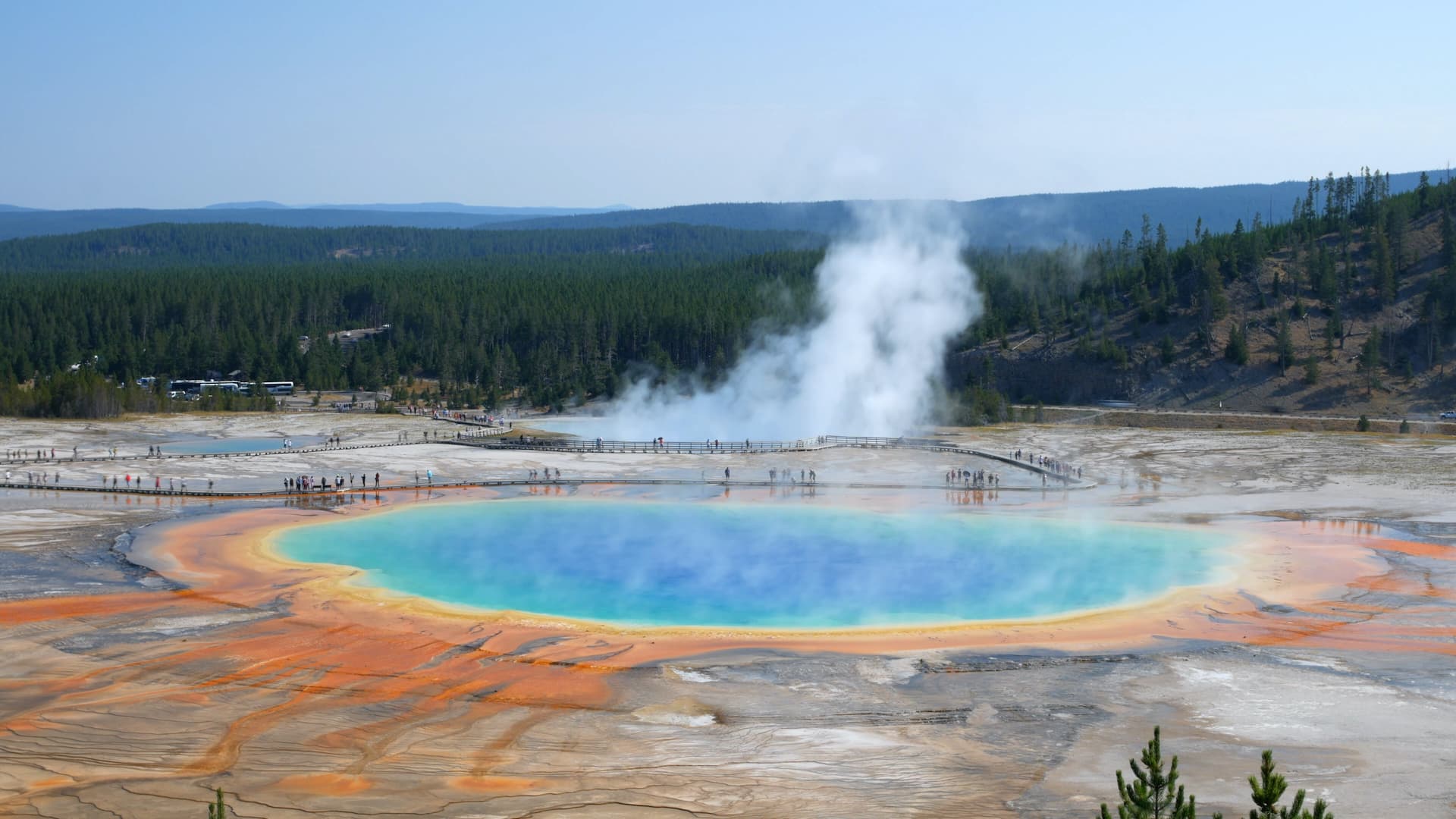
The park is massive. It’s bigger than Rhode Island and Delaware combined. Your entry fee is the smallest part of the journey, but getting it right means you spend more time looking at Grand Prismatic Spring and less time looking at the bumper of a rental minivan.
Download the official NPS app before you leave. Toggle the "save for offline use" setting for Yellowstone. Between your printed pass and your offline maps, you'll be ahead of 90% of the people currently stuck in line at the West Entrance.