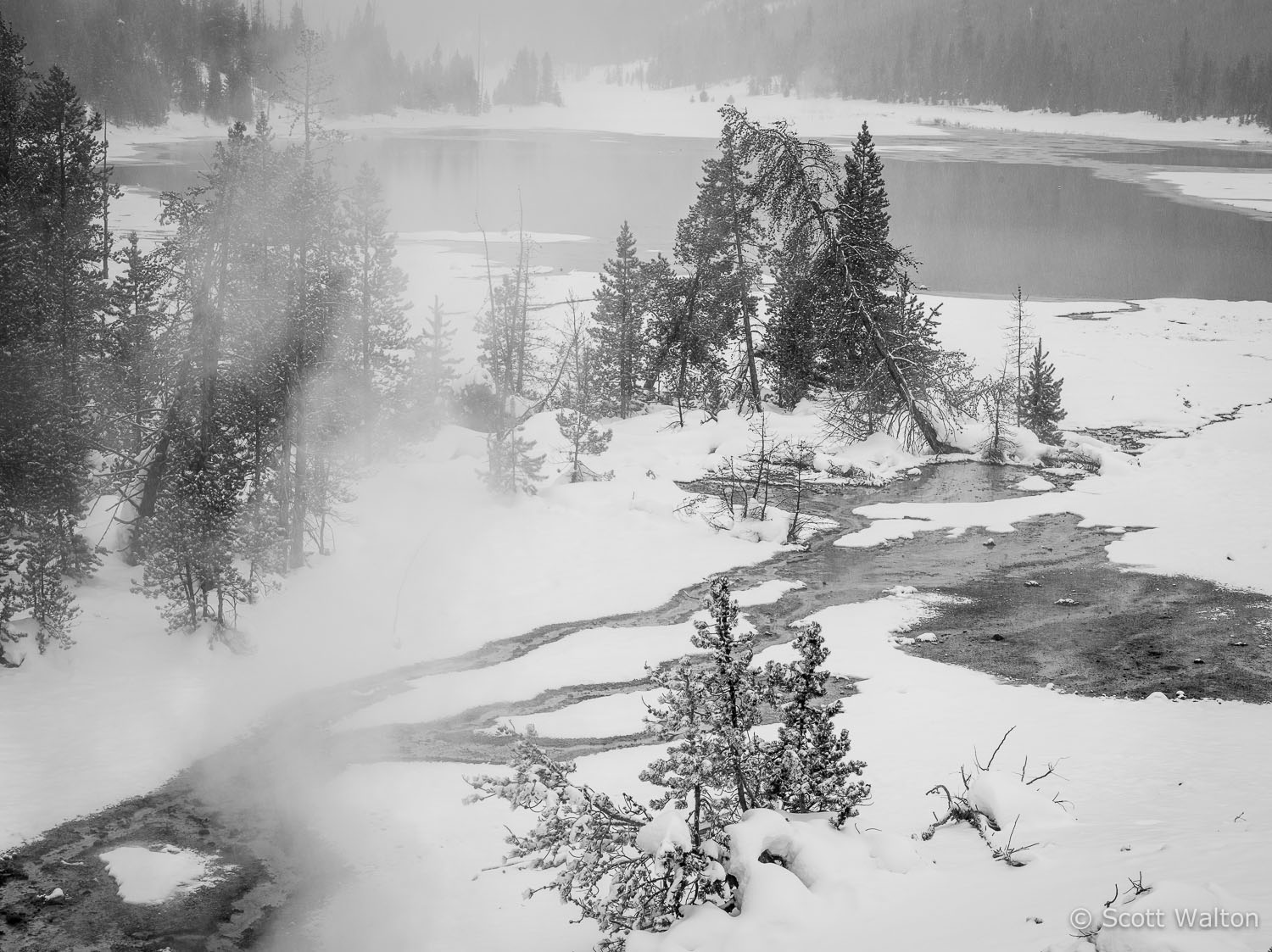
Yellowstone is a liar. It promises a crisp, golden autumn with bugling elk and gentle breezes, but then the sky turns a bruised shade of purple and dumps eight inches of heavy, wet slush on your rental car. That is the reality of a Yellowstone National Park snowstorm fall event. It isn’t just a "weather pattern." It’s a total system reset.
People come for the foliage. They stay because the Dunraven Pass just got shut down and they’re trapped on the wrong side of the Grand Loop Road. If you’ve never stood in the Lamar Valley while a sudden September blizzard obliterates your visibility, you haven't really seen the park.
The Chaos of the Transition Season
Most people think of "fall" as October. In the Greater Yellowstone Ecosystem, fall starts in late August and can end with a permanent snowpack by Halloween. The National Park Service (NPS) usually begins its seasonal wind-down in September, but the weather doesn't always read the manual.
It gets wild. One minute you're watching a grizzly sow dig for roots in the sun, and the next, the temperature has plummeted twenty degrees. The wind starts howling off the Gallatin Range. You can actually smell the snow coming—it’s that sharp, metallic scent that cuts through the smell of lodgepole pine.
Why the High Passes Close Early
Yellowstone isn't flat. That seems obvious, right? But travelers often forget that while it might be a rainy 45°F at the North Entrance in Gardiner, it’s a full-blown whiteout at 8,800 feet on Mount Washburn.
Sylvan Pass and Craig Pass are usually the first victims. The NPS rangers have a tough job here. They have to balance keeping the park accessible with the very real danger of tourists sliding their minivans off a cliff because they didn't bring tire chains to a "fall vacation."
Honestly, the park staff are the unsung heroes of the Yellowstone National Park snowstorm fall season. They’re out there in plow trucks while most of us are huddling over a lukewarm cocoa at Old Faithful Inn. They have to decide when the risk of black ice outweighs the benefit of keeping the road to Beartooth Highway open. Usually, by the time we hit the second or third week of October, the decision is made for them by Mother Nature.
The Wildlife Shift: Survival in Real Time
When that first big autumn storm hits, the animals don't panic. They pivot.
The elk rut is the big draw in September. If you've ever heard a bull elk bugle through a thick curtain of falling snow, it’s a sound you don’t forget. It’s haunting. The snow changes the acoustics of the park; everything goes silent except for that piercing, screeching whistle.
Bears are the ones on a deadline. It's called hyperphagia. They are basically biological vacuum cleaners at this point, trying to shove as many calories into their bodies before they head up to the high country to sleep it off. A Yellowstone National Park snowstorm fall can actually help them. It pushes the ungulates (the elk and deer) down to lower elevations, sometimes making for easier scavenging or hunting opportunities.
Bison just don't care. They are the tanks of the plains. I’ve seen bison standing perfectly still in a blizzard, their humps covered in three inches of snow, looking like prehistoric boulders. They just turn their heads into the wind and wait. They’re built for this. We aren't.
The Impact on the "Fall Colors"
Everyone wants those yellow aspens against a blue sky.
A heavy, wet snowstorm in late September can actually ruin the "leaf peeping" season. The weight of the snow on green or turning leaves snaps branches. More importantly, a hard freeze can kill the leaves before they have a chance to turn those brilliant oranges and reds. Instead of a golden forest, you end up with a lot of shriveled brown crunchy bits.
But there’s a trade-off.
The contrast of the remaining yellow leaves against a fresh white powder is, frankly, better than any standard fall photo. It creates a "layer cake" effect on the mountains: white peaks, a band of gold in the middle, and the deep green of the valley floor.
Logistics: When the "Road Closed" Signs Go Up
You need to know how the park shuts down. It’s not all at once. It’s a slow retreat.
- The Beartooth Highway (US-212): This is the first to go. It often closes by late September or early October. If a storm hits, it might close "temporarily" and then never reopen for the season.
- The Interior Roads: Most of the roads connecting Old Faithful, Canyon, and Grant Village close to wheeled vehicles in early November. A big October snowstorm can lead to "emergency closures" that last for days.
- The Northern Range: The road from Mammoth Hot Springs to the Northeast Entrance (Silver Gate and Cooke City) is the only road kept open year-round. If you get caught in a Yellowstone National Park snowstorm fall and everything else is closed, this is your escape hatch.
What to Pack (Because Your Windbreaker Isn't Enough)
If you are visiting between September 1st and Halloween, you are packing for three seasons. I'm serious.
You’ll start the day in a t-shirt and end it in a parka. Wool socks are non-negotiable. Don't even bother with cotton; if it gets wet in a Yellowstone blizzard, you’re going to be miserable (and potentially hypothermic).
- Layers: Base layers, a fleece, and a waterproof shell.
- Vehicle Prep: You need a full tank of gas. If a snowstorm strands you on a road for four hours, you don't want to be staring at the "Low Fuel" light while trying to stay warm.
- Food: Keep a stash of high-calorie snacks. The general stores start closing their doors in October, and your options for a hot meal get real slim, real fast.
The Photography Problem
Snow in the fall is a nightmare for cameras but a dream for the portfolio.
The main issue is exposure. Your camera’s light meter sees all that white snow and thinks, "Wow, it’s bright!" and then it underexposes the shot. You end up with gray snow and dark animals. You have to overexpose by a stop or two to get it right.
Also, condensation will kill your gear. If you’ve been out in a 20°F snowstorm and then you jump into a 75°F heated car, your lens is going to fog up instantly. This can lead to internal moisture. Put your camera in a sealed Ziploc bag before you get in the car. Let it warm up slowly.
Real Talk: Is it Worth It?
Honestly? Yes. It's better than summer.
The crowds vanish when the first snowflake hits the ground. The "tourons" (tourist + moron, a local term for people who pet the bison) usually head for the exits the second the weather turns sour. You get the geyser basins to yourself. Seeing Grand Prismatic Spring with steam rising into a snowy sky is otherworldly. The colors of the pool look even more vibrant when the surrounding ground is white.
But you have to be flexible. If you have a rigid itinerary, a Yellowstone National Park snowstorm fall will break your heart. You might not get to see the Canyon. You might get stuck in West Yellowstone for an extra two days.
If you can embrace the "stuck," it’s the most magical time to be there.
Expert Insights on Safety
I talked to a backcountry ranger once who said the biggest mistake people make is trusting their GPS. In a fall storm, Google Maps might tell you to take a shortcut through a forest service road that hasn't been plowed since 1994.
Stick to the paved roads. Even if they are slushy, they are patrolled. If you slide off into a ditch on a backroad in October, you might not be found until a snowmobiler passes by in January.
Also, watch the trees. "Widowmakers" are a real thing. Fall snow is heavy and wet. It clings to the needles of the lodgepole pines. The weight becomes immense, and branches—or entire trees—will snap without warning. If you’re hiking during a storm, keep your ears open for the sound of cracking wood.
Actionable Steps for Your Autumn Trip
Don't just wing it. If you're heading into the park and the forecast looks even slightly "frosty," do these things:
- Check the NPS App religiously. They update road closures in real-time. If the gate is closed, don't try to find a way around it.
- Rent a 4WD or AWD vehicle. Even if you're a great driver, a rear-wheel-drive sedan is a hockey puck on the Dunraven Pass.
- Download offline maps. Cell service is garbage in the best of times. In a storm, it’s non-existent.
- Buy a physical map at the visitor center. Old school works when the satellites don't.
- Check the "SNOTEL" data. If you’re a real weather nerd, look up the SNOTEL sites for the Yellowstone region. It gives you real-time snow depth and temperature at various elevations. It’s way more accurate than a general forecast for "Yellowstone."
The reality of a Yellowstone National Park snowstorm fall is that it's unpredictable, slightly dangerous, and absolutely stunning. It’s the park’s way of reclaiming its territory after the summer rush. If you’re prepared to deal with the cold and the road closures, you’ll see a version of Yellowstone that most people only see on postcards. Just make sure you have an extra pair of dry socks in the glove box. You're gonna need 'em.