You’re standing there, staring at a giant hole in the ground that’s literally boiling, and you realize something. Yellowstone is huge. Like, "larger than Rhode Island and Delaware combined" huge. If you try to wing it, you’ll spend eight hours staring at the bumper of a rental car in a buffalo-induced traffic jam. That’s usually when people start looking into the yellowstone national park circle of fire tour.
It sounds intense. Dramatic. Maybe even a little bit like a Johnny Cash song. But honestly? It’s basically the "Greatest Hits" album of the park's lower loop.
Most folks come to Yellowstone because they want to see the things they saw on postcards as kids. Old Faithful. The Grand Canyon of the Yellowstone. Those neon-blue pools that look like they belong on another planet. The Circle of Fire tour is designed to hit all those spots in one day without you having to navigate the chaotic parking lots or figure out exactly when a geyser is going to blow its top.
But there’s a catch. Or a few.
What the Yellowstone National Park Circle of Fire Tour actually covers
The name "Circle of Fire" isn't just marketing fluff to make a bus ride sound like a Marvel movie. It refers to the Yellowstone Caldera. This is a massive volcanic crater created by a "super-eruption" about 640,000 years ago. When you’re on this tour, you’re basically driving around the rim of a giant, sleeping volcano.
It’s wild.
Usually, these tours depart from places like West Yellowstone or the park’s internal lodges. You’ll hop into a high-top van or a classic yellow bus. The route focuses on the Lower Loop. You’ll hit Old Faithful—obviously—but also the Lower Geyser Basin. That’s where you find the "paint pots." They’re these goopy, gurgling mud puddles that smell like rotten eggs because of the sulfur. It’s gross. It’s fascinating. You’ll love it.
The big hitters on the itinerary
You’re going to see the Grand Canyon of the Yellowstone. No, it’s not the Grand Canyon, but the yellow rhyolite walls and the 308-foot Lower Falls are arguably more photogenic because of the sheer contrast of colors. Most guides will take you to Artist Point. It’s the spot where every famous landscape painting of the park was basically conceived.
Then there’s Lake Yellowstone. It’s huge, cold, and sitting right on top of the most active part of the volcano.
You’ll also likely stop at Hayden Valley. This is the place for critters. If you’re going to see a grizzly bear or a massive herd of bison blocking the road (a "bison jam"), it’s probably going to happen here. The guides are usually on a radio network, so they know if a wolf was spotted three miles up the road before you even get there. That’s a massive perk you don't get when you're driving your own SUV and yelling at Google Maps.
Why people get frustrated with organized tours
Let's be real for a second.
If you’re the kind of person who wants to hike five miles into the backcountry to find a secret hot spring, the yellowstone national park circle of fire tour might drive you crazy. You are on a schedule. The guide says you have 20 minutes at the mud pots, you have 20 minutes.
It can feel a bit like being a sheep.
Also, the weather in Wyoming is bipolar. I’ve seen it go from 75 degrees and sunny to a literal blizzard in the middle of July. If your tour date lands on a day when the fog is so thick you can't see your own hand, the "Circle of Fire" looks more like a "Circle of Gray."
But for most people? The trade-off is worth it.
Parking at Old Faithful during peak season is a nightmare that would make a New York City cab driver weep. On a tour, the driver drops you off at the front, goes to find a secret "bus only" spot, and tells you exactly where to stand to get the best photo. You aren't hunting for a spot for forty-five minutes while your kids complain in the backseat.
The science most people miss
One thing I love about the Circle of Fire is the geology lesson you get while moving. You aren't just looking at pretty water. You’re looking at extremophiles. These are the bright oranges and greens you see in the runoff of the geysers. They aren't chemicals; they’re bacteria that eat heat and minerals.
NASA actually studies these things to figure out how life might survive on other planets.
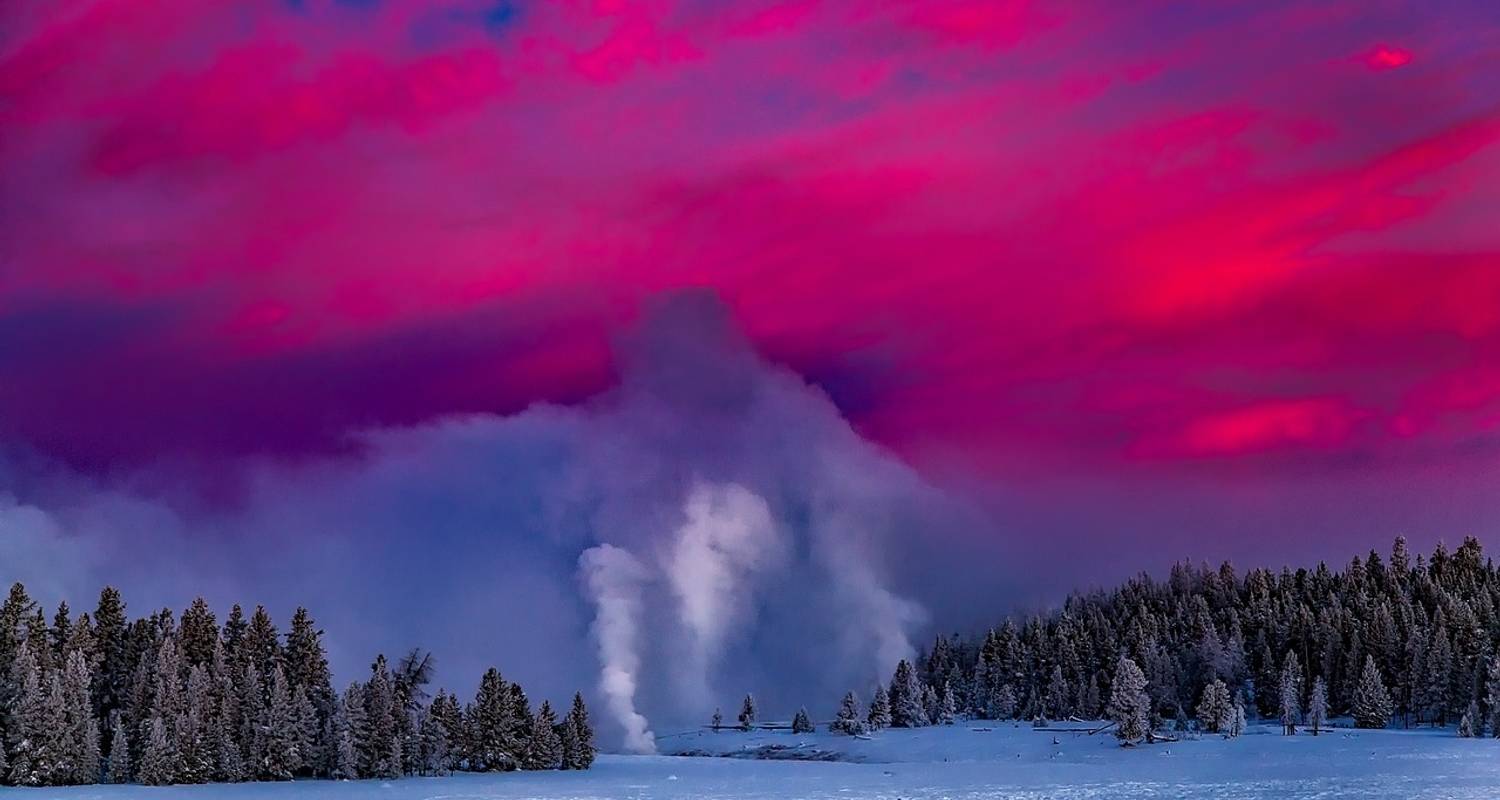
Your guide will probably talk about the "plumbing system." Beneath your feet, there’s a massive chamber of molten rock. Rainwater seeps down miles into the earth, gets superheated, and then tries to find a way back up. If the path is clear, you get a hot spring. If there’s a clog in the pipe, pressure builds until—boom—you get a geyser.
Is the "Circle of Fire" dangerous?
Technically, you’re standing on a supervolcano. Geologists like those at the Yellowstone Volcano Observatory monitor this place 24/7 with seismographs and GPS.
Is it going to erupt tomorrow? No.
Is it still "active"? Absolutely. The ground literally rises and falls by inches every few years. It’s breathing.
Comparing the options: Guided vs. Self-Drive
If you’re debating between booking the tour or just driving yourself, consider the "brain drain."
Driving in Yellowstone is exhausting. The roads are narrow, the drop-offs are steep, and everyone else on the road is looking at the scenery instead of the pavement. If you take the yellowstone national park circle of fire tour, you actually get to look out the window.
Plus, the guides know the history. They know about the 1959 Hebgen Lake earthquake that changed the park's thermal features overnight. They know which geysers are "predictable" and which ones are "wild."
However, if you have a dog, a tour is a no-go. Pets aren't allowed on the buses. And if you have a very specific photography hobby where you need to wait three hours for the perfect light on a specific rock, the group pace will be your enemy.
How to prepare for the tour
Don't show up in flip-flops. Just don't.
Even though you’re on a bus, you’ll be walking on boardwalks. Those boardwalks can be slippery from the steam and the silica. Wear actual shoes.
- Layer up. I cannot stress this enough. It will be freezing at 8:00 AM and scorching by noon.
- Bring a real camera. Your phone is great, but the scale of the Grand Canyon of the Yellowstone needs a wide-angle lens or a decent zoom for wildlife.
- Hydrate. You’re at a high altitude. If you aren't drinking water, you’re going to have a headache by lunch, and that’s a quick way to ruin the day.
- Binoculars. Even the cheap ones help. Sometimes that "brown log" in the distance is actually a grizzly bear sow with cubs.
Final thoughts on the experience
The yellowstone national park circle of fire tour is basically the "Introduction to Yellowstone" course. It’s not for the person who has visited the park ten times and wants to find the most obscure trail. It’s for the family that has one or two days to see the "must-see" spots and doesn't want to deal with the logistical headache of navigating a wilderness area the size of a small country.
It’s about the stories. It’s about the guy driving the bus who has been doing this for twenty years and can tell you exactly why the water in Morning Glory Pool changed from blue to green (spoiler: it’s because tourists kept throwing pennies in it).
If you want the most bang for your buck and want to actually learn something while you stare at the wonders of the earth, this is the way to do it.
Actionable Next Steps
- Book early. These tours often sell out months in advance, especially for the summer peak in July and August. Check official concessionaires like Xanterra or local operators in West Yellowstone.
- Pick your departure point. If you are staying outside the park, West Yellowstone is the most common hub for these tours. If you are inside, check the front desk at Lake Hotel or Old Faithful Inn.
- Check the "Full Loop" vs. "Lower Loop" options. The Circle of Fire usually refers to the Lower Loop. If you want to see the Mammoth Hot Springs or the Lamar Valley (the "Serengeti of North America"), you'll need a different tour or a second day.
- Download an offline map. Cell service in the park is basically non-existent. Even if you're on a tour, having a map like Avenza or a downloaded Google Map helps you track where you are when the guide is talking about specific basins.