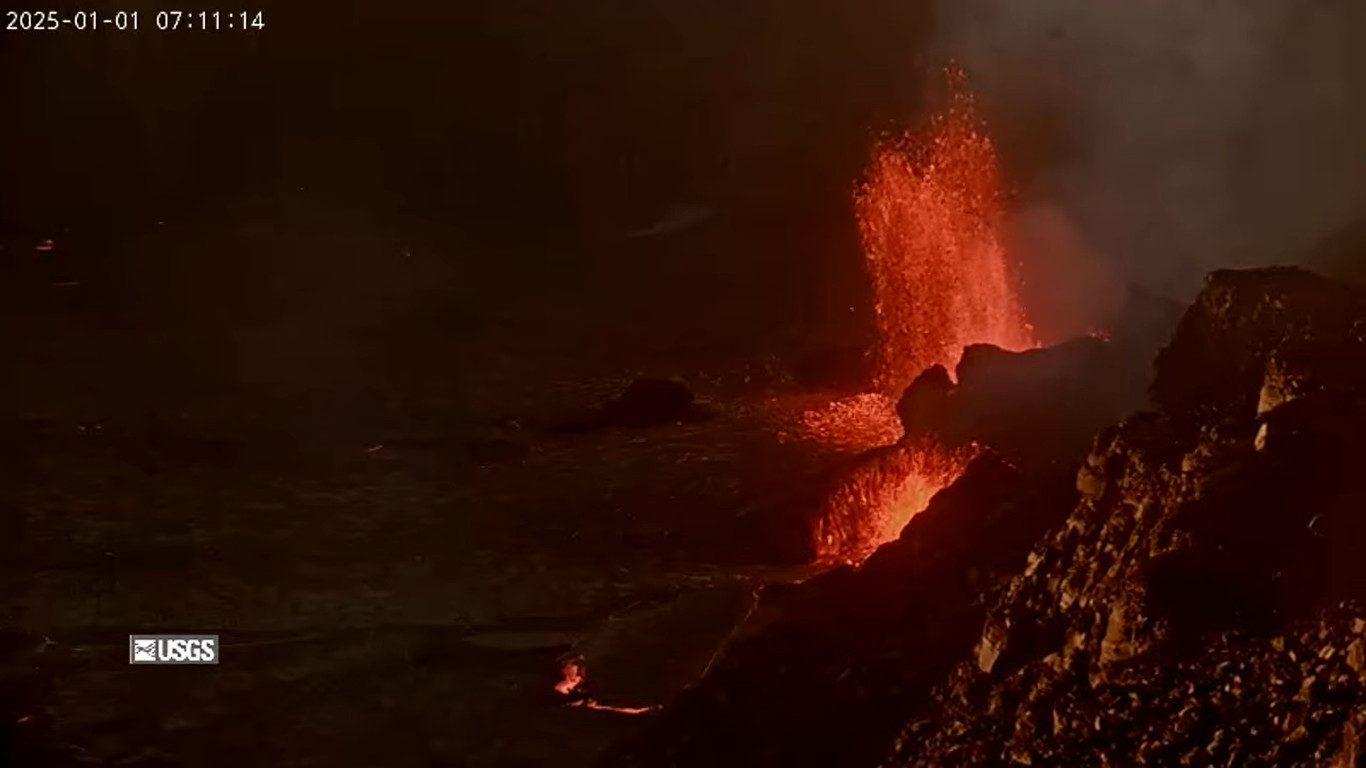
If you spent any time on TikTok or certain corners of "survivalist" YouTube recently, you probably saw it. A specific date. A looming sense of dread. The claim that the Yellowstone eruption May 22 2025 was a scheduled doomsday. People were literally mapping out ash fall zones for Idaho and Wyoming as if it were a weather forecast.
Here's the reality. It didn't happen.
We are currently in 2026, and the Old Faithful geyser is still doing exactly what it has done for centuries—spraying hot water for tourists while the "supervolcano" beneath it sleeps. But the frenzy surrounding that May date was a fascinating, and honestly kind of terrifying, case study in how geological misinformation goes viral. It wasn't just one random post. It was a perfect storm of misinterpreted USGS (U.S. Geological Survey) data, a minor earthquake swarm, and the way social media algorithms reward panic over boring, scientific reality.
The Yellowstone volcano is one of the most monitored spots on the planet. If it were actually going to blow, we wouldn't find out from a cryptic post with a "creepy" soundtrack.
The Anatomy of the Yellowstone Eruption May 22 2025 Rumor
Why that date? Why May 22?
Usually, these things start with a kernel of truth that gets stretched until it snaps. In early 2025, the Yellowstone Volcano Observatory (YVO) actually reported a standard series of "microseisms." This is normal. It's what volcanoes do. They breathe. They shift. According to Michael Poland, the scientist-in-charge at the YVO, the park experiences between 1,500 and 2,500 earthquakes every single year. Most of them are so small you couldn't feel them if you were standing right on top of the epicenter.
But someone took a screenshot of a standard seismic chart, misread the "noise" as a precursor to a "Big One," and assigned a deadline. It’s a classic move. By giving a fear a specific timestamp, like May 22, it feels more real. It feels like an appointment.
The internet loved it.
The algorithm doesn't care if a geological fact is accurate; it only cares if you stay on the app. And nothing keeps people scrolling like the idea of half the United States being buried under three feet of volcanic glass. It’s dark. It’s cinematic. It’s also, according to every actual volcanologist from UNAVCO to the University of Utah, statistically improbable in our lifetime.
What Actually Happens Under Yellowstone (The Boring Truth)
To understand why the Yellowstone eruption May 22 2025 narrative was so flawed, you have to look at what’s actually happening in the magma chamber.
Right now, the "reservoir" isn't a giant swimming pool of liquid fire. It’s more like a hot, mushy sponge. To have an eruption of the scale people fear—a VEI-8 super-eruption—you need a massive amount of melt. We’re talking about a significant percentage of that rock being liquid and under immense pressure. Currently, research using seismic tomography suggests the magma reservoir is only about 5% to 15% melt.
You can't pop a balloon if it's mostly filled with sand.
Hydrothermal Explosions vs. Magmatic Eruptions
Most people confuse these two. When things do go "boom" in Yellowstone, it’s almost always water. These are called hydrothermal explosions. They happen when superheated water trapped underground suddenly flashes to steam.
Think back to the Biscuit Basin explosion in July 2024. That was real. It sent rocks flying. It destroyed a boardwalk. It was scary for the tourists standing ten feet away. But it wasn't a "volcanic eruption" in the sense that the world was ending. It was just the plumbing system getting a bit too pressurized.
The Science of Monitoring a Supervolcano
If we were genuinely facing a Yellowstone eruption May 22 2025, or any other date, the "tells" would be massive. We aren't just talking about a few shakes.
- Massive Ground Deformation: The ground wouldn't just rise by millimeters. We would see entire sections of the park bulging upward. This is "uplift," and while it happens in cycles, a true eruption precursor would be off the charts.
- Gas Composition Changes: Scientists monitor the "breath" of the volcano. If they start seeing a massive spike in helium-3 or sulfur dioxide, they know magma is moving toward the surface. In early 2025, these levels remained totally baseline.
- Sustained Seismic Swarms: Not just a few pops, but thousands of quakes that get shallower and shallower over time.
Basically, you can't hide a super-eruption. The USGS, the Smithonisan Institution's Global Volcanism Program, and a dozen other independent agencies would all be seeing the same red flags at once. The idea that a government could "hide" an impending eruption of this scale is scientifically impossible because the data is public and monitored by universities worldwide.
Why We Love Doomsday Dates
Honestly, we’re wired for it.
There's a psychological comfort in thinking we know when the end is coming. It’s a weird form of control. If the Yellowstone eruption May 22 2025 was "the date," then at least the chaos has a schedule. But geology doesn't work on a human calendar.
The last three major eruptions at Yellowstone happened 2.1 million, 1.3 million, and 640,000 years ago. If you do the math, the intervals aren't regular. Volcanoes don't have an alarm clock. They don't "owe" us an eruption just because it's been a long time. In fact, many geologists argue that Yellowstone might be on its way out—that the hotspot is moving toward more stable crust and might eventually just peter out into smaller, less frequent events.
How to Handle Future Viral "Eruption" Warnings
The next time a date like May 22 starts trending, do yourself a favor.
Check the Yellowstone Volcano Observatory’s monthly update. They publish a plain-English summary every month. If they aren't worried, you shouldn't be either. Avoid the "breaking news" accounts on social media that use stock footage of lava from Hawaii or Iceland to represent Wyoming. They are just farming for clicks.
Real volcanic threats are local. If you live in the Pacific Northwest near Mount Rainier, that’s a real, tangible hazard you should have a plan for. If you live near the Bay Area, earthquakes are your reality. But Yellowstone? For the vast majority of us, it’s just a beautiful park with some very active plumbing.
Actionable Steps for Geological Preparedness
While the May 2025 "eruption" was a bust, being prepared for natural disasters isn't a bad idea. It just shouldn't be based on TikTok rumors.
- Follow Official Sources: Bookmark the USGS Volcano Hazards Program. They are the gold standard for real-time data.
- Understand Your Local Risk: Use the FEMA Map Service Center to see what actual risks (floods, quakes, wildfires) exist in your specific zip code.
- Ignore "Prophetic" Timelines: If a source claims a specific day for a natural disaster months in advance, it is 100% fake. Science cannot predict the exact day an eruption or earthquake will occur.
- Build a Basic Kit: Instead of worrying about a supervolcano, prep for a 3-day power outage. Water, non-perishable food, and a hand-crank radio will serve you better than a bunker.
Yellowstone isn't going anywhere. It’s a slumbering giant, sure, but it’s a giant that shows no signs of waking up anytime soon. May 22 came and went, and the only thing that erupted was a collective sigh of relief from people who realized they’d been tricked by an algorithm.