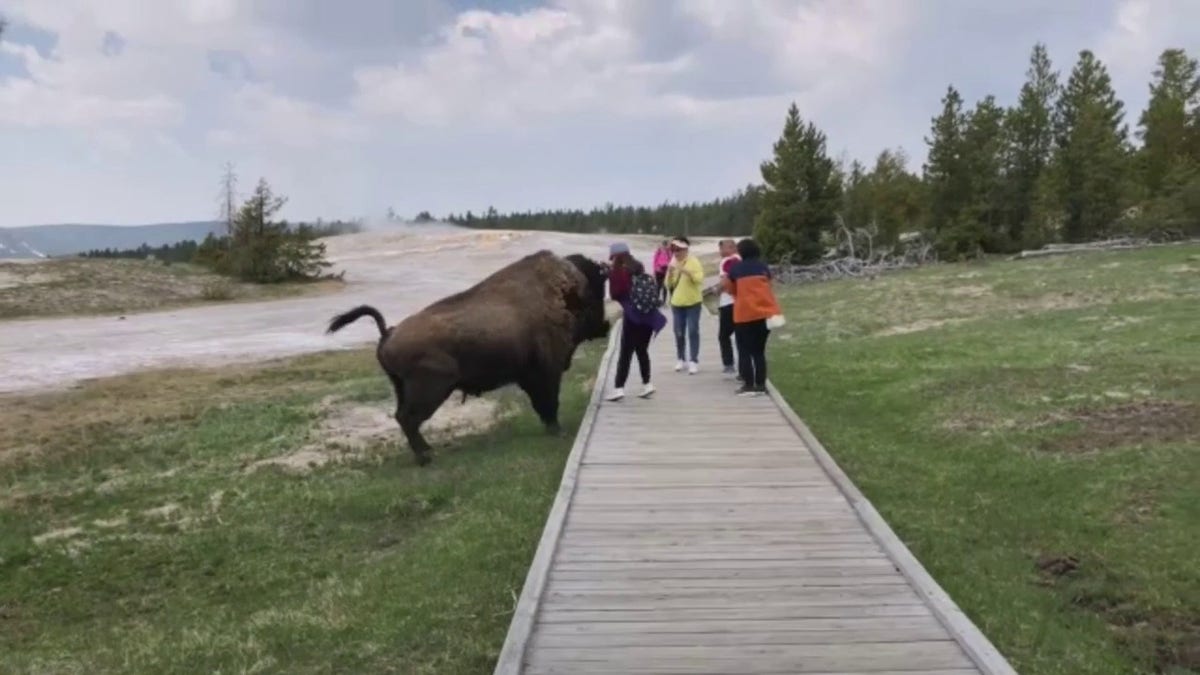
It happens faster than you can blink. One second you’re framing a perfect shot of a shaggy, prehistoric-looking giant against the backdrop of the Wyoming wilderness, and the next, you are airborne. This isn't a movie stunt. For a 30-year-old visitor near Lake Lodge, the reality of wildlife behavior turned into a nightmare when a Yellowstone bison gore incident left them with significant injuries. People often forget these animals aren't fuzzy cows. They are two thousand pounds of muscle, unpredictability, and raw power capable of running three times faster than you.
Honestly, the park Service is exhausted from saying the same thing. Stay back. Give them space. But the pull of the "perfect" photo is strong, and sometimes, that pull leads people straight into the danger zone. For a deeper dive into similar topics, we suggest: this related article.
The Physics of a Bison Charge
When we talk about a 30-year-old being gored, we have to look at the sheer scale of the encounter. A mature bull bison can weigh up to 2,000 pounds. They are the largest land mammals in North America. They look slow. They look like they are just lounging in the sagebrush, munching on grass like a lazy lawnmower. But they can pivot on a dime and sprint at 35 miles per hour. You cannot outrun that. You won't even get a head start.
The National Park Service (NPS) has a very specific rule: stay at least 25 yards away from bison and elk. That is about the length of two large school buses. Most people think they are safe at ten feet. They aren't. In the specific case involving the 30-year-old near the Lake Lodge area, the bison was likely feeling crowded or defensive of its space. Bison don't need a "reason" to charge in the way humans understand it; they respond to perceived threats to their personal bubble. If you enter that bubble, you're a target. For further details on this issue, in-depth reporting can be read at AFAR.
It’s kinda terrifying when you think about the mechanics of a goring. It’s not just a poke. It’s a massive upward thrust of the neck muscles—which are incredibly thick and strong—designed to toss predators (like wolves or bears) into the air. When a human is the recipient of that force, the results are often catastrophic, involving internal organ damage, broken bones, and deep lacerations.
Why the 25-Yard Rule Isn't Just a Suggestion
If you've ever stood in a "bison jam" in Hayden Valley, you know the vibe. It feels like a zoo. There are cars everywhere, kids yelling, and people stepping out of their SUVs with iPhones raised. This creates a false sense of security. You think, well, everyone else is close, so it must be fine. It’s not fine.
Expert rangers like those who manage the Yellowstone backcountry often point out that bison are "naturally aggressive." Unlike deer, which usually bolt, a bison’s first instinct is often to stand its ground or neutralize the threat. During the "rut" or mating season (usually July and August), the bulls are pumped full of testosterone and are looking for a fight. During the spring, mothers are fiercely protective of their "red dogs" (calves). There is never a "safe" time to be close to them.
The incident involving the 30-year-old tourist is a stark reminder that youth and agility don't save you. You can be in the best shape of your life, but you aren't faster than a beast that has been refined by evolution to survive grizzly bear attacks. Basically, if the animal changes its behavior because of your presence—if it stops eating, looks at you, paws the ground, or raises its tail—you are already way too close.
The "Tail Signal" and Other Warning Signs
Bison actually give hints before they wreck your day. Most people just don't know how to read them.
- The Tail: If the tail is hanging down and wagging naturally, the bison is generally relaxed. If it stands straight up like a question mark? That is a warning. It means the animal is agitated. If you see a tail standing up, you should have been moving away five minutes ago.
- The Stare: If a bison stops grazing and locks eyes with you, it’s assessing whether you need to be removed from the area.
- The Grunt: They make a low, rumbling sound. It’s not a greeting.
In many of these goring cases, including the recent one with the 30-year-old, the victim was within a few feet. It’s often a result of "selfie culture." We want the shot where the animal's head fills the frame. But the cost of that photo can be a life-flight helicopter ride to a trauma center in Idaho Falls or Billings. It's expensive, it's painful, and it's entirely preventable.
Realities of Medical Evacuation in the Wilderness
Yellowstone is huge. It’s bigger than some U.S. states. When an encounter like this happens, you aren't usually five minutes from a hospital. You might be an hour from a clinic. In the case of the 30-year-old near Lake Lodge, immediate medical attention is required because bison horns are dirty. Even if the physical trauma doesn't kill you, the risk of massive infection from the bacteria on the horn is high.
Emergency responders in the park have seen it all. They've seen people try to pet them. They've seen people put their children on the bison’s back for a photo. It sounds insane, but it happens every year. The 25-yard rule is the absolute minimum, but honestly, if you can see the bison's eyelashes, you're in the danger zone.
How to Actually Enjoy Yellowstone Without a Hospital Visit
You want the experience. I get it. Seeing a bison up close is one of the most spiritual, incredible things you can do in the American West. But you have to do it with a brain.
First, buy a long lens or a pair of high-quality binoculars. If you want a close-up, use technology, not your feet. If you find yourself accidentally close to one—maybe you rounded a corner on a trail and there he is—don't scream. Don't run immediately unless he's already charging. Back away slowly and keep your eyes on the animal. If he does charge, look for cover. A tree, a large rock, or even a car can save your life.
Bison see you as a predator. Even if you're just a tourist with a fanny pack and a hat, you are a strange, upright creature invading their space. Respecting that space isn't just about park rules; it's about acknowledging that we are guests in a landscape that doesn't care about our Instagram engagement.
Actionable Safety Steps for Your Next Visit
- The Rule of Thumb: Hold your arm out straight and pop your thumb up. If you can cover the entire bison with your thumb while one eye is closed, you are likely at a safe distance. If you can still see parts of the bison sticking out from behind your thumb, back up.
- Stay in the Car: If bison are on the road, stay in your vehicle. They might lick your salt-covered bumper or walk right past your window. That is the safest "close encounter" you will ever get.
- Watch the Group: If you see a crowd forming around an animal, don't join it. Crowds make animals nervous. A nervous bison is a dangerous bison.
- Report Close Calls: If you see someone harassing wildlife, tell a ranger. You might be saving that person's life, or the life of the next person who walks down that trail.
The 30-year-old gored by the bison is a tragic statistic in a long history of human-wildlife conflict in our national parks. It’s a reminder that nature is beautiful, but it’s also indifferent. It doesn't have a "safety mode." When you step into Yellowstone, you are stepping back in time to a world where humans weren't at the top of the local food chain. Treat it with that level of gravity.
Next Steps for Safety: Before your trip, download the official NPS Yellowstone App and toggle on the "Live Alerts" for wildlife safety. Purchase a telephoto attachment for your smartphone so you can get high-detail photos from the mandatory 25-yard distance. Most importantly, familiarize yourself with the Yellowstone Pledge, which outlines specific behaviors to keep both you and the park's inhabitants alive and well.