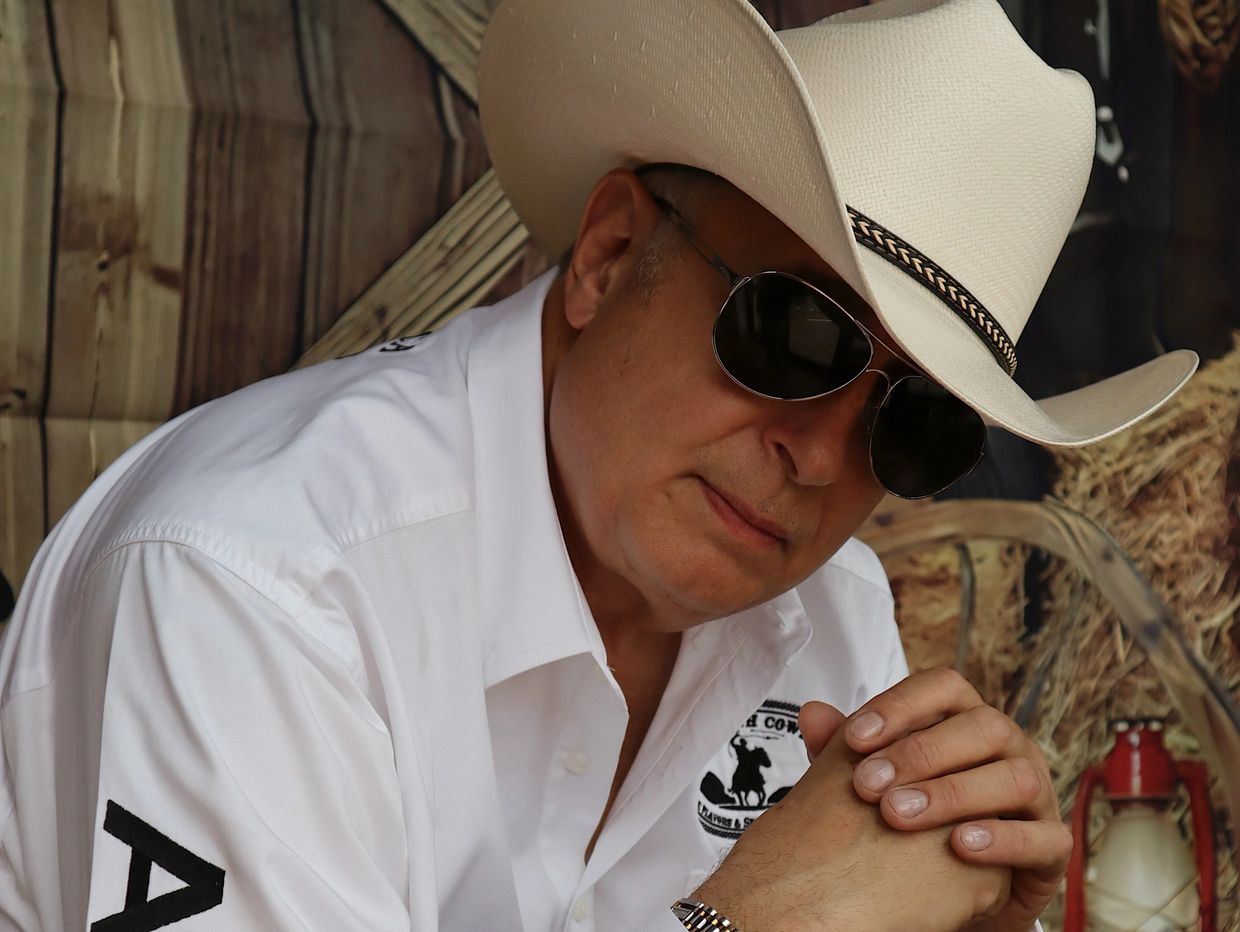
It started with a slow burn. Back in 2018, when Kevin Costner stepped onto the screen as John Dutton, nobody really knew if a modern western would actually stick. People thought the genre was dead. They were wrong. Dead wrong. Now, the cowboys tv show isn't just a niche category; it is a massive, multi-billion dollar cultural juggernaut that has redefined what we watch on Sunday nights.
Taylor Sheridan basically built an empire out of dirt, horses, and family feuds. But honestly, it’s not just about the hats or the spurs. It's about that specific brand of "Cowboy Nihilism" that resonates with people who feel like the modern world has gotten too noisy. You've got these characters who live by a code that feels ancient, yet they’re fighting developers from California and corporate lawyers. It’s relatable. Sorta.
The Taylor Sheridan Effect and the Neo-Western Boom
Before Yellowstone, the idea of a cowboys tv show felt a bit dated. Think Bonanza or Gunsmoke. Great for their time, sure, but not exactly "prestige TV" by today's standards. Then came the Duttons. Taylor Sheridan, who had already found success writing Sicario and Hell or High Water, leaned into the grit. He realized that audiences didn't want a sanitized version of the West. They wanted the blood. They wanted the complicated morality where the "heroes" are actually pretty terrible people sometimes.
This success sparked a gold rush. Suddenly, every network wanted their own version of a ranch drama. We got 1883, which was basically a brutal Oregon Trail simulator that didn't hold back on the tragedy. Then came 1923, bringing in heavy hitters like Harrison Ford and Helen Mirren. It’s a lot to keep track of, frankly.
But here is what most people get wrong: they think it’s all just about the scenery. While the cinematography in these shows is breathtaking—seriously, the way they film the Bitterroot Valley in Montana makes you want to quit your job and buy a horse—the real hook is the soap opera element. It’s Succession with cattle. Instead of boardrooms, you have barns. Instead of stock options, you have land deeds.
Why the Genre Is Exploding Right Now
There is a psychological shift happening. Experts like Dr. Andrew Nelson, a film historian who has studied the Western genre extensively, point out that Westerns tend to cycle back into popularity during times of intense social change. When the real world feels chaotic and the rules seem to change every day, there is something deeply comforting about a world where problems are solved with a fistfight or a straight-shooting conversation.
The cowboys tv show revival taps into a collective nostalgia for a rugged individualism that many feel is slipping away. It’s about autonomy.
Take Outer Range on Amazon Prime, for example. It mixes the traditional ranching drama with sci-fi elements—basically a giant, mysterious hole in the ground. Even with the weird time-travel stuff, the core of the show is still about a man trying to protect his family's legacy against an encroaching world. It shows that the "cowboy" archetype is flexible enough to handle almost any plot device you throw at it.
The Reality vs. The Fiction: What the Shows Get Wrong
Let's be real for a second. Life on a ranch isn't always a dramatic standoff against a rival billionaire. Most of it is just... chores. Lots of chores. Actual ranchers often laugh at the "Rip Wheeler" style of cowboying because, in the real world, you can't just go around making people "disappear" at the train station without a massive FBI investigation.
Specific details matter here. In a typical cowboys tv show, you see these pristine, high-end horses that look like they just stepped out of a shampoo commercial. In reality, a working horse is covered in sweat, dust, and probably some form of manure. The gear is different, too. While the shows use high-end custom saddles for aesthetic reasons, many real-deal ranch hands are using beat-up, functional equipment that has been repaired three times with duct tape and prayer.
Breaking Down the Sub-Genres
- The Period Piece: Shows like 1883 or the older Deadwood. These focus on the "Founding Myth" of America. They are usually much grittier and have a higher body count.
- The Neo-Western: Yellowstone, Joe Pickett, or Longmire. These take place in the present day and focus on the clash between old-school values and modern law.
- The "Weird" Western: Outer Range or The English. These take the tropes of the West and flip them on their head, adding elements of horror, sci-fi, or deep psychological trauma.
Key Players Shaping the Frontier
It isn't just Taylor Sheridan. We have to talk about the creators who are pushing the boundaries of what a cowboys tv show can be. Graham Yost gave us Justified, which, while technically a crime drama set in Kentucky, is a Western at its heart. Timothy Olyphant’s Raylan Givens is a cowboy in a suit. He has the hat, the drawl, and the lightning-fast draw.
Then you have the rise of more diverse voices in the genre. Dark Winds, based on the Tony Hillerman novels, focuses on Navajo Tribal Police officers in the 1970s. It provides a much-needed perspective that was missing from the classic Westerns of the 1950s, where Native Americans were often relegated to one-dimensional antagonists. This shift towards "Revisionist Westerns" is what keeps the genre from becoming a caricature of itself. It adds layers. It adds truth.
The Cultural Impact of Cowboy Fashion and Lifestyle
You've probably noticed it. The "Yellowstone Effect" has hit retail hard. Sales of Stetson hats, Tecovas boots, and Filson jackets have skyrocketed since these shows took over the airwaves. It’s become a lifestyle brand. People want to dress like Beth Dutton or Kayce Dutton even if the closest they’ve ever been to a cow is the dairy aisle at Kroger.
This isn't necessarily a bad thing, but it does create a strange tension between the "aesthetic" of the West and the reality of the West. Real ranching communities in Montana and Wyoming have seen property taxes spike because everyone wants to live on a "mini-ranch" like they saw on TV. It’s an ironic twist: the very shows that celebrate the preservation of the land are, in part, responsible for the influx of people that makes preserving that land harder.
The Longevity Factor: Is the Trend Dying?
Whenever a genre gets this big, people start talking about "fatigue." Is the cowboys tv show bubble about to burst? Honestly, probably not anytime soon. The numbers don't lie. Yellowstone remains one of the most-watched shows on linear television—a feat that is almost impossible in the era of fragmented streaming.
What we are seeing is an evolution. The stories are getting more specific. Instead of broad strokes about "the West," we are getting deep dives into specific regions and time periods. We are seeing the genre move into international territories, too. Look at the Australian "Outback Westerns" like The Tourist or Mystery Road. They use the same DNA—vast landscapes, rugged men, a sense of lawlessness—but apply it to a different frontier.
Actionable Insights for the Modern Viewer
If you are looking to dive deeper into the world of the cowboys tv show, don't just stick to the hits. There is a whole world of storytelling out there that goes beyond the Dutton ranch.
Broaden your watchlist. After you finish Yellowstone, check out Godless on Netflix. It’s a limited series about a town run entirely by women after a mining accident, and it’s one of the best-written Westerns in the last decade. The cinematography is incredible, and the tension is palpable from the first scene.
Research the history. If you enjoyed the brutal realism of 1883, read The Son by Philipp Meyer (or watch the AMC adaptation with Pierce Brosnan). It covers the rise of a Texas oil empire over several generations and provides a lot of context for why the land-grabs you see on TV are so historically significant.
Support the real thing. If you love the lifestyle portrayed in these shows, look into land conservation efforts in the American West. Organizations like the Western Landowners Alliance work to keep working lands intact, which is the very thing John Dutton is always yelling about.
Look for nuance. Pay attention to the "Revisionist" elements in newer shows. Notice how they handle the displacement of Indigenous people or the role of women on the frontier. The best shows in this genre are the ones that aren't afraid to look at the ugly parts of history alongside the heroic ones.
The cowboy isn't going anywhere. He’s just trading in his old film reel for a 4K streaming signal. As long as there is a horizon and a sense that justice isn't always found in a courtroom, the cowboys tv show will continue to ride high in the ratings. Grab your boots. It’s going to be a long ride.



