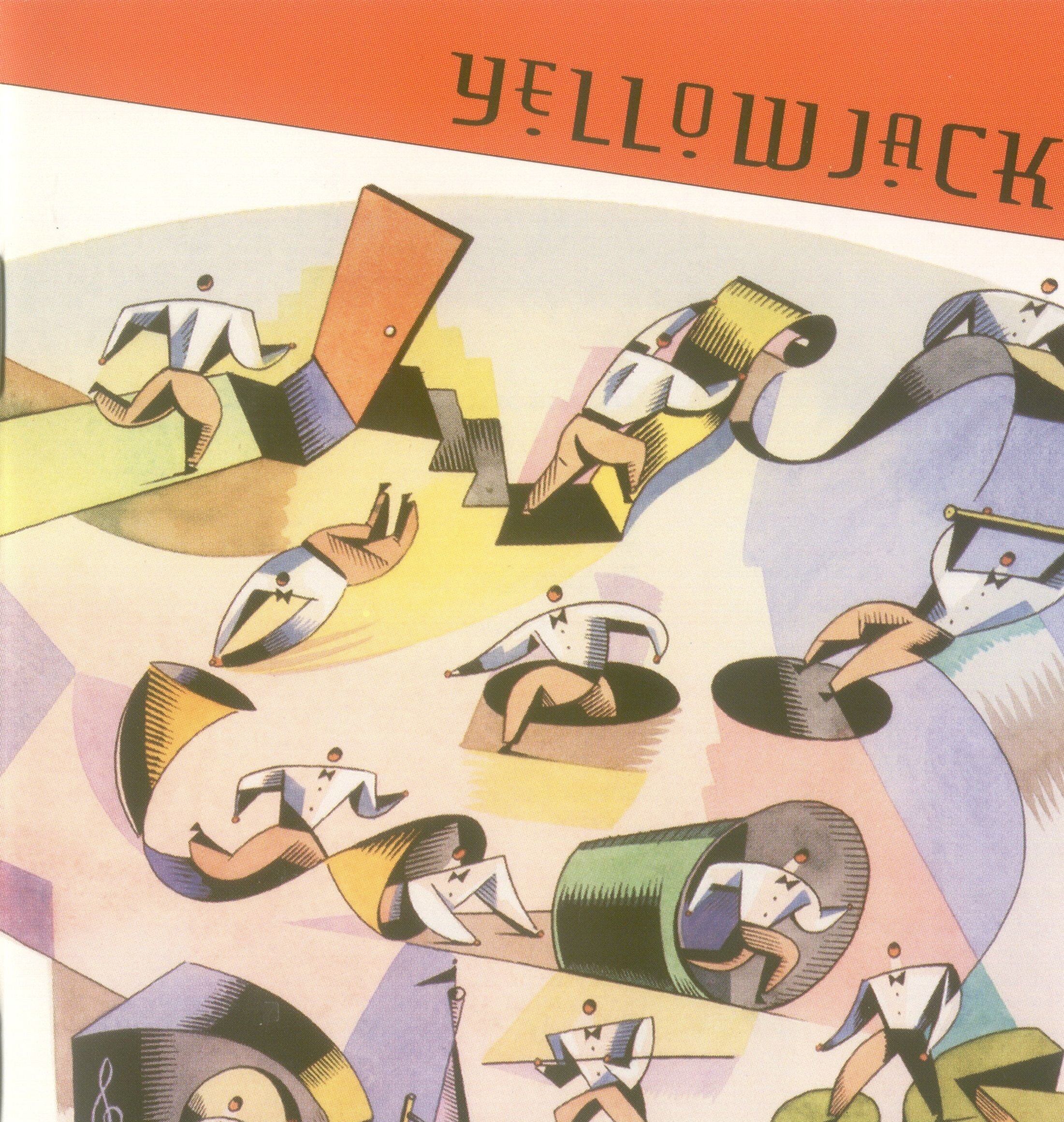
You’ve probably heard their music without even realizing it. Maybe it was a late-night weather report in the eighties, or perhaps a deep-cut jazz radio station during a long drive. The Yellowjackets are everywhere and nowhere all at once. They are the ultimate "musician's band." While other fusion groups from the era burned out or turned into cheesy caricature versions of themselves, these guys just kept evolving. It’s honestly kind of a miracle.
Jazz fusion gets a bad rap. People think of it as technical showing off—lots of notes, zero soul. But the Yellowjackets broke that mold early on. They found this weird, beautiful middle ground between R&B grooves, complex jazz harmony, and actual melodies you can hum. It wasn't just about how fast they could play, though they could play faster than almost anyone. It was about the feel.
The Robben Ford Era and the Birth of a Sound
The band didn't even start as the "Yellowjackets." Originally, they were just the backing band for guitarist Robben Ford’s 1979 album The Inside Story. You had Russell Ferrante on keyboards, Jimmy Haslip on bass, and Ricky Lawson on drums. They clicked. Like, really clicked. When Ford’s label wanted another record but he was moving in a different direction, the trio (plus Ford as a guest) became the Yellowjackets.
Their self-titled debut in 1981 was a literal lightning bolt for the Los Angeles scene. It was slick, sure, but it had grit. Ferrante’s compositions weren't just standard blues progressions. He was doing something sophisticated with synthesizers that most people hadn't figured out yet. He made the Yamaha DX7 sound like a living breathing instrument rather than a plastic toy.
Then things shifted. Robben Ford left to pursue his solo blues career, and the band had to figure out who they were without a guitar hero. This is where most bands would have folded. Instead, they brought in Marc Russo on alto sax. This changed everything. The "Yellowjackets sound" became defined by that piercing, soulful saxophone wail over deep, pocket-heavy grooves.
Moving Toward the Acoustic Side
By the mid-eighties, the band signed with MCA and released Shadowland and Politics. These records are foundational. If you want to understand why modern gospel and neo-soul musicians obsess over these guys, listen to "Evening Dance." The chord voicings Ferrante uses are basically a textbook for the next thirty years of keyboard players.
They weren't just playing fusion anymore. They were playing something they called "rhythm and jazz." It’s a subtle distinction, but a huge one. It meant the groove came first. Jimmy Haslip’s bass playing was the secret weapon here. He’s left-handed but plays a right-handed bass upside down, without re-stringing it. It gives his lines a unique tension and phrasing that you literally cannot replicate on a standard setup.
Around 1990, they moved to GRP Records. This was the "prestige" label for jazz at the time. They released Four Corners, which felt like a travelogue. It was cinematic. Then came Greenhouse. This record was a turning point because it brought in a heavy acoustic influence. They started using a real grand piano more often. They brought in strings. They were growing up.
The Arrival of Bob Mintzer
If there is one person who redefined the Yellowjackets for the modern era, it’s Bob Mintzer. He joined in 1991 for the album Greenhouse. Mintzer wasn't just a saxophonist; he was a world-class arranger and Big Band leader. He brought a sense of formal structure and "swing" that the band hadn't leaned into before.
He also brought the EWI (Electronic Wind Instrument).
For the uninitiated, the EWI is a synth you blow into. In the wrong hands, it sounds like a dying Nintendo. In Mintzer’s hands, it sounds like an otherworldly cello or a funky brass section. It gave the band a futuristic edge while they were simultaneously getting deeper into traditional jazz roots. This paradox is exactly why they’ve stayed relevant. They are old-school and hi-tech at the same time.
Why the Personnel Changes Didn't Kill Them
Most bands have a "classic lineup," and once it breaks, the magic dies. The Yellowjackets are more like a laboratory. When drummer Ricky Lawson left to play with Michael Jackson and Whitney Houston (yeah, he was that good), they brought in William Kennedy.
Kennedy is a polyrhythmic genius. He doesn't just play a beat; he dances around it. His work on albums like Blue Hats and Club Nocturne is legendary among drummers. He left for a while, replaced by Marcus Baylor (who later started The Baylor Project), and then eventually came back.
And then there’s the bass chair.
When Jimmy Haslip, a founding member, decided to step away after over 30 years, people were terrified. How do you replace the heartbeat of the band? They brought in Felix Pastorius. Yes, that Pastorius—the son of Jaco. Felix brought a raw, aggressive energy that pushed Ferrante and Mintzer into new territory. After Felix, they landed Dane Alderson, an Australian bassist who is frankly terrifying to watch. His technique is so fluid it doesn't look real.
This constant infusion of new blood is why they don't sound like a "legacy act." They sound like a band that is still trying to prove something.
The Secret Sauce: Ferrante’s Compositional Voice
Russell Ferrante is the soul of this band. He’s been there since day one. He doesn't get the same "jazz giant" press as someone like Herbie Hancock or Chick Corea, which is honestly a crime. His ability to write complex, multi-movement pieces that still feel like songs is unparalleled.
He uses "slash chords" and inner voice movement in a way that creates a constant sense of yearning. His music feels hopeful but a little bit melancholy. It’s "The Yellowjackets" vibe. It’s why people use their music for graduations, documentaries, and contemplative moments.
They also aren't afraid of being spiritual. Ferrante has been open about how his faith influences his writing. You can hear it in songs like "Revelation" or "Spirit of the West." There’s a communal, almost church-like feeling to their live shows. It’s not a stuffy recital. It’s an experience.
Facing the Critics: Is it Smooth Jazz?
Let’s address the elephant in the room. In the late eighties and early nineties, the Yellowjackets were often lumped in with the "Smooth Jazz" movement. This was largely because radio stations didn't know where else to put them. They were too funky for "straight-ahead" jazz stations and too jazzy for R&B stations.
It’s a label the band has always pushed back against.
True smooth jazz is often criticized for being "musical wallpaper"—easy to ignore, designed to stay in the background. If you actually listen to a Yellowjackets record like Lifecycle or Timeline, you’ll realize very quickly it’s not wallpaper. There are odd time signatures, aggressive solos, and harmonic shifts that would make a Berkeley professor sweat.
They survived the "smooth jazz" era by simply being better than it. They didn't dumb down their music for the charts. They just kept being the Yellowjackets.
How to Listen to the Yellowjackets Today
If you’re new to the band, don't just start at the beginning and work forward. It’s too much. Instead, try this approach to see which "version" of the band you like best:
- The Funk/Fusion Foundation: Go for Mirage a Trois (1983). It’s punchy, energetic, and perfectly captures that early 80s LA studio sound.
- The Sophisticated Peak: Politics (1988). This is the album that won them a Grammy and features some of their most iconic writing.
- The Modern Masterpiece: Lifecycle (2008). This was the first album without a guitar in a long time, and the interplay between Mintzer and Ferrante is telepathic.
- The Latest Chapter: Parallel Motion (2022). It shows they haven't lost a step. Dane Alderson’s bass work here is worth the price of admission alone.
What You Can Learn from Their Longevity
The Yellowjackets aren't just a band; they are a case study in how to maintain a creative career for half a century. They didn't chase trends. When hair metal was big, they played jazz. When grunge was big, they played jazz. When EDM took over, they played jazz.
They stayed true to a specific "sound" while allowing the people within the band to change. They embraced younger musicians rather than fearing them. Most importantly, they never stopped practicing. You can see it in their clinics and masterclasses. These guys are perpetual students of music.
If you’re a creative professional in any field, there’s a lesson there. Longevity isn't about being the biggest star in the world for fifteen minutes. It’s about building a body of work that is so consistent and so high-quality that people have no choice but to respect it.
Actionable Steps for the Aspiring Listener
- Watch them live: If they come to a jazz club near you (like the Blue Note or Birdland), go. No record captures the sheer volume and energy they put out in a room.
- Transcribe the "Pocket": If you’re a musician, don't just try to learn the solos. Try to play along with Jimmy Haslip or Will Kennedy and feel where they place the "one." It’s a masterclass in timing.
- Check the Credits: Look at the albums your favorite modern artists (like Snarky Puppy or Jacob Collier) cite as influences. You will find the Yellowjackets' name popping up more often than you think.
- Explore the Side Projects: Russell Ferrante’s work with the GRP All-Star Big Band or Bob Mintzer’s Big Band records provide a different context for their genius.
The Yellowjackets have survived industry collapses, format changes, and the rise of streaming. They’ve done it by being undeniably good. They aren't a nostalgia act; they are a living, breathing testament to the idea that fusion can have a heart.
Stop thinking of them as "that jazz band from the 80s." Start thinking of them as the gold standard for instrumental music. You won't regret it.
The best way to truly appreciate what they do is to put on a pair of high-quality headphones, find a lossless version of "And You Know That," and just let that first bass line hit you. You'll get it immediately. No further explanation required.



