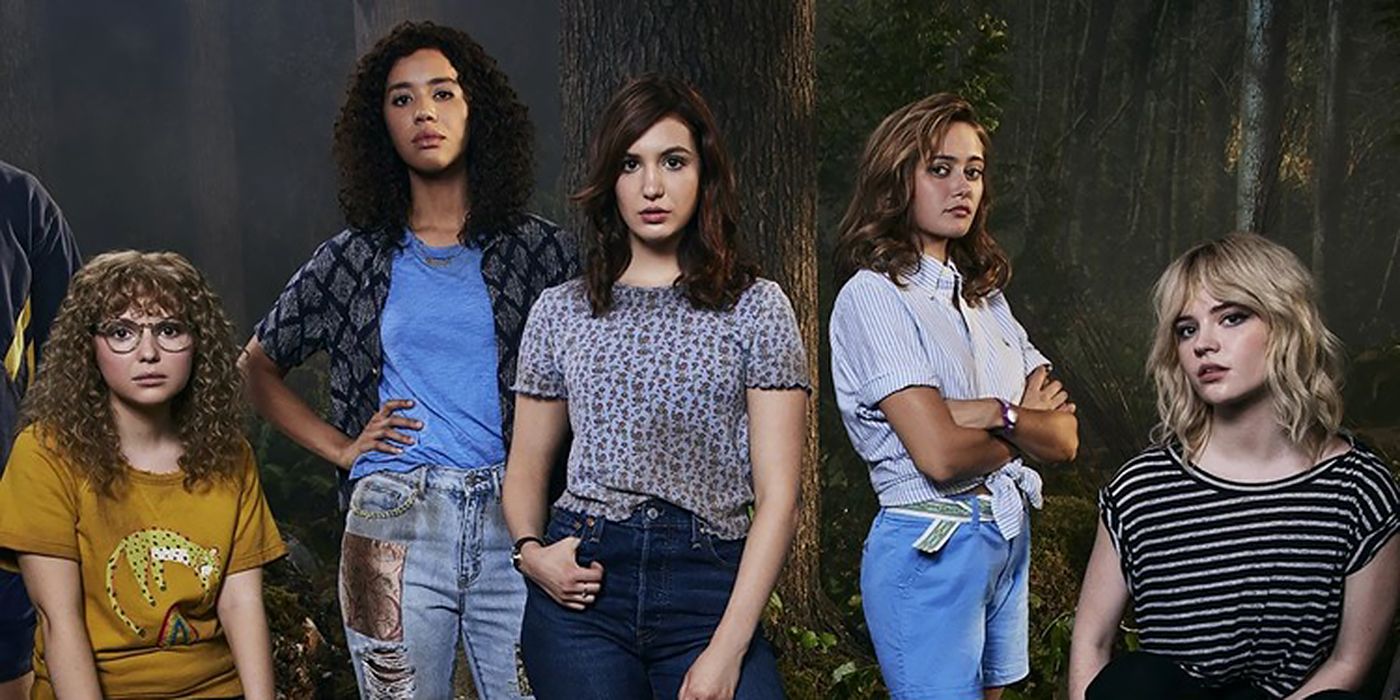
Honestly, survival stories are usually pretty predictable. A plane goes down, people get hungry, someone tries to lead, and eventually, the survivors get rescued and look back with a thousand-yard stare. But Yellowjackets isn't that show. It’s much messier. It’s the kind of series that makes you look at your best friend and wonder, "If things got really bad, would you actually eat me?"
It’s dark. It's visceral.
When the pilot episode of Yellowjackets first dropped on Showtime, the hook was immediate: a high school girls' soccer team crashes in the Canadian wilderness in 1996. They’re stuck there for 19 months. We see them as teenagers, and we see them 25 years later as deeply traumatized adults. The brilliance of the writing lies in that split timeline. You aren't just watching a survival horror; you're watching a slow-motion car crash of the human psyche. You know they survived, but the "how" is what keeps everyone up at night.
The Reality of the Yellowjackets Survival Timeline
People keep asking if this is based on a true story. The short answer is: sort of, but not really. The creators, Ashley Lyle and Bart Nickerson, have been open about the fact that they were influenced by real-life tragedies like the 1972 Andes flight disaster (the "Alive" story) and the Donner Party. But they also wanted to flip the script on William Golding’s Lord of the Flies. There was this weird cultural assumption that if a group of girls were stranded, they’d just be organized and collaborative. Yellowjackets rejects that. It suggests that teenage girls are actually more prone to a specific, ritualized kind of psychological warfare.
The 1996 timeline is where the visceral horror lives. You have characters like Shauna, who is navigating a pregnancy in the middle of a famine, and Natalie, who is trying to keep everyone fed with a rifle that’s running out of ammo. Then there’s Lottie. Lottie is the pivot point. Whether she’s actually psychic or just experiencing a mental health crisis exacerbated by the lack of her medication (Loxapine, specifically), she becomes the spiritual lightning rod for the group.
This is where the show gets "weird." It flirts with the supernatural without ever fully committing to it. Is there a "Darkness" in the woods, or is the hunger just making them hallucinate? The show plays with this ambiguity perfectly. One minute you’re looking at a weird symbol carved into a tree, and the next, you’re watching the girls hunt one of their own wearing animal masks. It’s a descent into paganism born of necessity.
What Most People Miss About the Adult Characters
While the teen timeline has the shock value, the 2021 timeline is where the emotional heavy lifting happens. Melanie Lynskey’s portrayal of adult Shauna is a masterclass in repressed rage. She’s a suburban housewife who kills rabbits in her garden and cheats on her husband because she’s bored and haunted. She’s dangerous.
Then you have Christina Ricci as Misty Quigley. Misty is a fan favorite for a reason: she’s a sociopath who just wants to be loved. In the 90s, she’s the equipment manager who finally feels powerful because she knows first aid. In the present, she’s a citizen detective who keeps a kidnapping room in her basement. Ricci plays her with this chirpy, terrifying energy that makes you forget she’s arguably the most manipulative person on the show.
The adult timeline isn't just about the trauma; it’s about the cover-up. Someone is blackmailing them. Someone knows what they did out there. And "what they did" goes way beyond just eating the people who died in the crash. By the time we get to the end of Season 2, we realize that the ritualized hunting we saw in the very first scene of the series wasn't a one-time thing. It was a system.
Breaking Down the "Antler Queen" Theories
The "Antler Queen" is the central mystery of the Yellowjackets fandom. Who is she? For a long time, everyone assumed it was Lottie because of the stag horns behind her head in a specific shot during the "Doomcoming" party. But the show loves a bait-and-switch.
By the end of the second season, the mantle of leadership starts to shift. The wilderness doesn't want a "queen" in the traditional sense; it wants a sacrifice. This is where the show draws heavily on Jungian archetypes and the idea of a collective shadow. The girls aren't just individuals anymore; they are a pack.
- The Symbol: That hook-and-circle carving. Fans have spent hours on Reddit trying to map it out as a trigonometry problem or a map of the mines under the woods.
- The Man with No Eyes: A recurring hallucination (or ghost?) seen by Taissa. He represents the death that follows them.
- The Pit Girl: The girl we see die in the pilot. We still don't officially know who she is, though theories suggest it might be Mari or someone we haven't focused on yet.
The show's music supervisor, Mary Ramos, also deserves a shout-out. The soundtrack is a character in itself. Using songs like "Cornflake Girl" by Tori Amos or "Climbing Up the Walls" by Radiohead isn't just about 90s nostalgia. It sets the tone for a very specific type of female angst that was prevalent in that era—grunge, grit, and a refusal to be "nice."
Why the Cannibalism Isn't the Point
Everyone focuses on the cannibalism. It’s the "water cooler" topic. But Yellowjackets is actually a show about grief. It’s about how you can never truly leave the worst thing that ever happened to you. When adult Natalie (played by the late, great Juliette Lewis) struggles with addiction, it’s not just a character trope. It’s a direct result of being the person who had to hunt for the group while they were descending into madness.
The show explores "Moral Injury." This is a term often used for soldiers who do things in war that go against their deeply held beliefs. The girls didn't just survive; they sacrificed their humanity to do it. That’s why the adult versions are so broken. They aren't just survivors; they are perpetrators.
There's also the complicated dynamic of female friendship. The bond between Shauna and Jackie is the emotional core of the first season. It’s toxic, codependent, and deeply loving. When Jackie dies, it’s not just a loss for the group; it’s the death of the "old world." Jackie was the prom queen, the popular girl, the one who followed the rules. In the woods, those rules don't exist. Her death marks the point of no return.
How to Prepare for Season 3 and Beyond
If you’re looking to get deeper into the lore, there are a few things you should do while waiting for the next chapter. The production was delayed by the strikes in 2023, but filming for Season 3 has been moving forward.
- Watch the background. The creators have admitted that there are clues hidden in the set design of the 1996 cabin. Look at the carvings. Look at the way the trees are positioned.
- Read "The Hunger" by Alma Katsu. It’s a fictionalized, supernatural take on the Donner Party that hits many of the same beats as the show.
- Pay attention to Taissa's "Other Self." The sleepwalking version of Taissa (the one that eats dirt) seems to have a direct connection to the wilderness that her conscious mind refuses to acknowledge.
- Re-watch the "Doomcoming" episode. It’s the turning point where the group stops being a team and starts being a cult.
The show is slated for a five-season arc. That means we are only about 40% of the way through the story. There is a lot more blood to be spilled, and a lot more secrets to be unearthed.
To truly understand the impact of the series, look at how it handles the "Rescue." We know they get saved, but the show is suggesting that they brought something back with them. It wasn't just memories. Whether you believe in the supernatural elements or think it’s all a shared psychotic disorder, the result is the same: the wilderness is still inside them.
Next time you’re watching, pay close attention to the colors. The 1996 timeline is often saturated and warm (despite the cold), while the 2021 timeline is cool, sterile, and blue. It’s a visual representation of how they are "frozen" in that trauma. They are still those girls in the woods, no matter how much expensive furniture they buy or how many elections they win.
Keep an eye on the casting announcements for the "undiscovered" survivors. We know there are others out there who haven't been revealed in the adult timeline yet. That’s the real ticking time bomb. Every time a new survivor pops up, the fragile lie they’ve lived for 25 years moves closer to collapsing.



