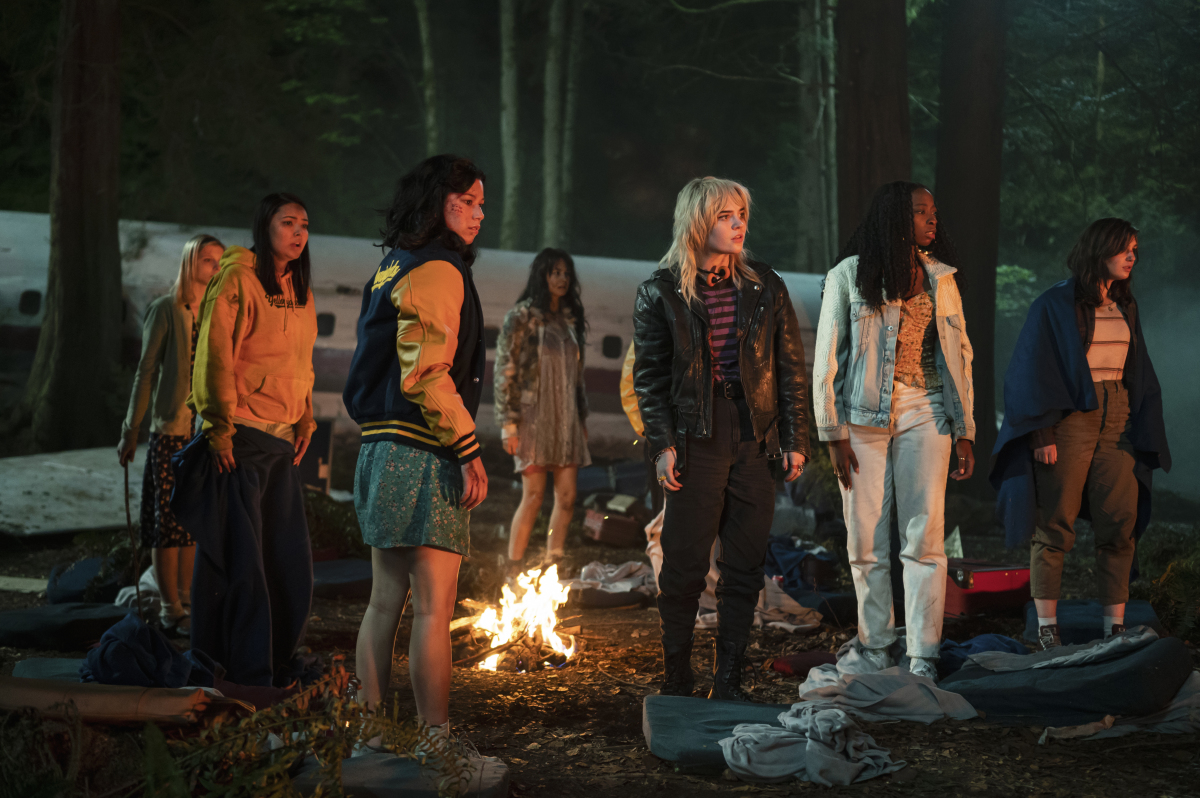
Honestly, the first time you watch the Showtime series Yellowjackets, you think you know what’s coming. A high school soccer team crashes in the wilderness. They get hungry. They eat each other. It’s basically Lord of the Flies with better hair and a killer 90s soundtrack. But that’s not really it. Not even close.
The show is actually a messy, bloody, and surprisingly emotional look at trauma. It’s about how 1996 never really ended for these women. While most of the internet was busy theorizing about who "Pit Girl" is or whether Jackie was actually delicious, the show was busy weaving a story about how the things we do to survive eventually come back to swallow us whole. It's dark. It's weird. And it’s one of the best things on TV right now.
What Actually Happens in the Showtime Series Yellowjackets?
The setup is pretty straightforward. In 1996, the Wiskayok High School girls' soccer team—the Yellowjackets—is heading to nationals. Their plane goes down over the Canadian wilderness. They are stranded for 19 months. Nineteen months is a long time to be in the woods without a grocery store or a therapist.
We see two timelines. In the past, we watch the teenagers slowly lose their grip on civilization. In the present, the survivors are middle-aged women trying to keep their secrets buried. It’s a dual-narrative structure that works because it constantly teases you. You see a character in 2021 and think, "Oh, okay, she made it," but then the 1996 timeline shows her doing something so horrific you start to wonder if she really survived, or if the person she was died out there in the snow.
The Mystery of the Antler Queen
The biggest hook of the Showtime series Yellowjackets is the ritual. In the very first episode, we see a group of people draped in animal furs and masks. One person, wearing a crown of antlers, oversees a literal human feast. Fans spent years arguing over who the Antler Queen is. Is it Lottie? Is it Natalie? Is it Shauna?
The showrunners, Ashley Lyle and Bart Nickerson, have been very careful about how they dole out these answers. They don't just give you a name; they give you a descent. It’s not about one person being "evil." It’s about a group of girls creating a new religion out of thin air because they’re starving and terrified. They start seeing signs in the trees. They start believing the wilderness "wants" something from them. It’s folk horror at its finest.
Why the Characters Matter More Than the Gore
If this were just a show about cannibalism, it would get boring fast. The reason people stay tuned in is the cast. Melanie Lynskey plays the adult Shauna, and she is terrifyingly good. She plays a suburban housewife who is clearly one bad day away from killing someone, which she eventually does.
Then you have Christina Ricci as Misty Quigley. Misty is a whole mood. She’s the person you want in an emergency because she knows first aid and how to hide a body, but she’s also the person who caused the emergency in the first place by destroying the plane’s black box. Ricci plays her with this chirpy, terrifying intensity that makes you want to hug her and run away at the same time.
Tawny Cypress (Taissa) and Juliette Lewis (Natalie) round out the main adult cast. Natalie is the heart of the show, really. While the others are trying to pretend they’re normal, Natalie is the only one honest enough to admit they’re all broken. When Natalie died at the end of Season 2, it felt like a gut punch to the entire fandom. It changed the stakes. It proved that no one—not even the "main" survivors—is truly safe from the consequences of what happened in 1996.
Breaking Down the Supernatural Element
One of the biggest debates among fans of the Showtime series Yellowjackets is whether the show is actually supernatural.
- The Rationalist View: The girls are suffering from mass hysteria, starvation-induced psychosis, and lead poisoning from the nearby mines. There is no "It" in the woods; there is only trauma.
- The Believer View: The symbol carved into the trees has power. Lottie actually has visions. The bear that surrendered itself to be killed was an offering from a dark entity.
The show lives in the "maybe." It refuses to confirm if the darkness is real or just a projection of their guilt. This ambiguity is what makes the show so rewatchable. You can look at a scene like the "Doomcoming" party and see a group of drugged teenagers, or you can see a ritualistic sacrifice. Both are true at the same time.
The Cultural Impact and the 90s Nostalgia
You can't talk about this show without mentioning the music. It uses 90s alt-rock like a weapon. From PJ Harvey to Mazzy Star to Alanis Morissette, the soundtrack anchors the 1996 timeline in a very specific feeling of teenage angst and rebellion. It’s not just "cool music"; it’s the internal monologue of these girls.
The show also captures the specific brand of 90s girlhood that wasn't about being a "girl boss." It was messy. It was competitive. It was about the weird, intense, and sometimes violent bonds between female friends. That’s why the Showtime series Yellowjackets resonates so much. It takes the metaphorical "meanness" of high school and makes it literal.
Addressing the Critics: Does the Show Move Too Slowly?
Look, Season 2 had some pacing issues. People complained about the adult timeline dragging, especially the stuff with Walter (Elijah Wood) and the cult compound. Some felt the "present day" was getting bogged down in police investigations that didn't matter as much as the survival story.
But even at its slowest, the show is better than 90% of what's on TV. The writing is sharp. The acting is top-tier. Even the secondary characters, like Jeff (Shauna’s husband, played by Warren Kole), bring a weirdly necessary levity. Jeff’s "There’s no book club?" realization is one of the funniest moments in a show that is otherwise about eating people.
What to Expect Next
As we look toward the future of the series, the stakes have shifted. The cabin is gone—burned down by Coach Ben (probably). The survivors are now out in the elements with no shelter. This is where things get really grim. In the present day, they’re dealing with the fallout of Natalie’s death and the fact that their past is no longer a secret.
The show is planned for five seasons. We aren't even halfway through the total story yet. There is still so much we don't know about how they were eventually rescued and what they did to each other in those final months before the helicopters arrived.
How to Get the Most Out of Your Rewatch
If you’re planning to dive back into the Showtime series Yellowjackets before the next season drops, keep an eye on the background. The creators love "Easter eggs."
- Watch the opening credits carefully. They change slightly and often contain flashes of events that haven't happened yet.
- Pay attention to the colors. Yellow and blue show up in significant ways throughout both timelines.
- Listen to the dialogue in the 1996 scenes. Often, the girls will say things that mirror exactly what their adult versions are struggling with decades later.
- Track the cards. The deck of cards they use in the wilderness is missing the queens. When a queen finally shows up, everything changes.
The show isn't just a mystery to be solved; it's a character study to be absorbed. It asks uncomfortable questions about what makes us human and what we are willing to sacrifice to stay that way. It's gross, it's heartbreaking, and it's absolutely essential viewing.
To really understand the lore, you should check out the official companion podcasts or the deep-dive threads on Reddit. The community is incredibly active and has spotted things that most casual viewers miss, like the "hidden" survivors who appear in the background of 1996 scenes but haven't been given names yet. Keeping a list of who is still alive in the past versus who we've seen in the present is the only way to keep the theories straight. Digging into the history of the "Andes flight disaster," which inspired much of the survival aspects, also provides a chilling context for just how grounded in reality some of these horrors actually are.



