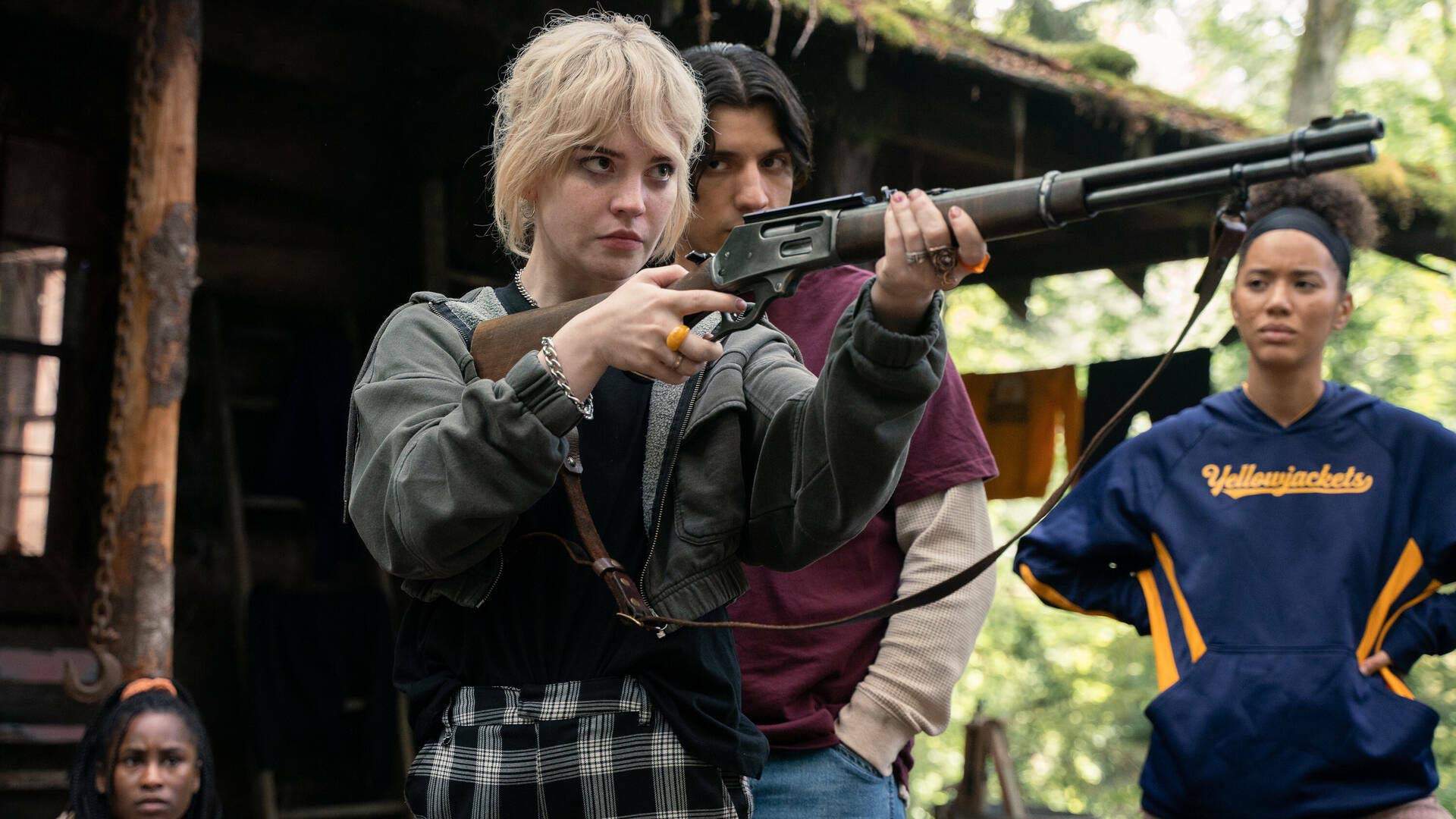
If you thought the first season was dark, you weren't ready. Honestly, Yellowjackets season two felt like a collective fever dream we all shared, then spent weeks trying to scrub from our brains. It wasn't just about survival. It was about how fast the human psyche shreds when you're hungry enough to see your dead best friend as a buffet. Showrunners Ashley Lyle and Bart Nickerson didn't just lean into the gore; they leaned into the ritual. That’s where the real horror lives.
People usually focus on the "snackie" of it all. Yeah, we need to talk about Jackie. But the sophomore season of this Showtime hit did something much more complex. It bridged the gap between the feral teenagers in the 1996 Ontario wilderness and the traumatized, borderline-functional adults in the present day. We finally saw the cost. Not just the physical cost of missing limbs or frostbite, but the way the "Wilderness"—whatever that entity actually is—never really let them leave. It followed them home. It sat in their living rooms. It drank their martinis. For an alternative view, read: this related article.
The Hunger and the Meat of the Matter
Let’s be real. We all knew it was coming. The pilot episode of the series literally showed a girl being chased into a pit and eaten. Yet, when the girls finally turned on Jackie’s remains in the episode "Edible Complex," it felt like a visceral betrayal of everything we hope about humanity. It was beautifully shot, which made it ten times worse. The transition between the gruesome reality of the feast and the hazy, Romanesque banquet hallucination was a masterclass in psychological cushioning. They weren't just eating. They were surviving through a shared delusion.
That’s the nuance people miss. They aren't villains. They're kids. Similar analysis on this matter has been provided by E! News.
The 1996 timeline in Yellowjackets season two is a claustrophobic pressure cooker. The cabin, which felt like a sanctuary in season one, became a tomb. With the arrival of a brutal winter, the stakes shifted from "how do we get home?" to "who dies next so the rest of us can live?" It’s grim. It’s also incredibly grounded in the reality of starvation. If you look at the real-life 1972 Andes flight disaster—which the show draws heavy inspiration from—the survivors faced the exact same moral vacuum. You do what you have to do. Then you spend thirty years trying to forget you enjoyed it.
Adult Lottie and the Cult of "It"
The introduction of adult Lottie Matthews, played by the phenomenal Simone Kessell, changed the entire energy of the present-day storyline. In season one, Lottie was a mystery, a shadow. In season two, she’s a wellness guru running a purple-clad "intentional community" that definitely isn't a cult (except it totally is).
The contrast is wild.
While the teens are worshipping a bloody stump in the woods, the adults are gathered at a high-end retreat trying to process their "shadow selves." It’s almost funny if it weren't so tragic. We see Misty (Christina Ricci) being her usual chaotic self, Walter (Elijah Wood) providing a weirdly perfect foil for her brand of crazy, and Shauna (Melanie Lynskey) just trying to hide a body while her daughter discovers she’s a murderer. It’s a lot.
Some critics argued the present-day plot moved slower than the 90s stuff. I get that. But without the adult drama, the wilderness scenes lose their weight. We need to see that Natalie (Juliette Lewis) is still broken to understand why her teenage self (Sophie Thatcher) was so desperate to be the group's moral compass. The tragedy of the season finale—which I won't spoil the specifics of yet if you're behind—only works because of that 25-year buildup of guilt.
What We Learned About the Symbol
The "Symbol" is the show's biggest MacGuffin. Is it a map? A hex? A warning? Yellowjackets season two gave us more clues but fewer answers, which is classic prestige TV.
- We saw the symbol carved into trees near the "mercury" sites.
- Ben discovered the underground cave system where the symbols seem to mark heat vents.
- Lottie believes it’s a conduit for the Wilderness’s will.
There's a prevailing theory among fans that the "It" the girls refer to is actually just a localized environmental psychosis caused by heavy metal poisoning in the soil. There’s some evidence for this! The red moss, the strange behavior of the birds, the hallucinations. But then you have moments that feel purely supernatural. Like Javi surviving for months in a hole in the ground. Or the bear that basically offered itself up as a sacrifice. The show lives in that gray area between "science is weird" and "demons are real."
The Performance of a Lifetime
Can we talk about Sophie Nélisse? As teenage Shauna, she carried the heaviest emotional lifting of the season. The episode where she loses her baby is one of the most devastating hours of television ever produced. It wasn't just about the loss; it was about the isolation. She had to grieve in a room full of people who were looking at her child as a potential source of protein. That is a level of psychological horror that most shows wouldn't dare touch.
And then there's the music. The soundtrack for Yellowjackets season two is basically a 90s kid’s dream. Garbage, Nirvana, Tori Amos, Alanis Morissette. It’s not just background noise. The lyrics often provide the internal monologue the characters are too traumatized to speak out loud. When "Lightning Crashes" plays during that scene, it’s not just a needle drop. It’s a funeral rite.
Misconceptions and Why Fans Are Divided
A lot of people hated the ending of season two. Specifically, the fate of a major character in the present day. People felt it was rushed. I think it was inevitable.
The Wilderness doesn't give anything for free. That’s the core philosophy of the show. If it saves you in 1996, it’s coming to collect the debt in 2021. The survivors thought they had escaped, but the ritual they started in the snow never actually ended. They just paused it. When they all gathered at Lottie’s compound, they accidentally (or intentionally) restarted the clock.
The division in the fanbase usually comes down to:
- Team Supernatural: They want the monsters to be real.
- Team Psychological: They think the "Antler Queen" is just a manifestation of PTSD.
The truth is probably both. The show is at its best when it doesn't choose. It’s much scarier if the "darkness" is just something that lives inside us, waiting for the food to run out.
What’s Next: The Long Wait for Season Three
Production for the next chapter was delayed, as we all know, but the writers are back in the room. What do we actually know? We know the cabin is gone. That’s a massive shift. Without a roof over their heads, the 1996 survivors are going to become even more nomadic and, presumably, even more violent. The "Antler Queen" isn't just a costume anymore; it’s a necessity for order.
In the present day, the fallout from the finale is going to be massive. We have a missing person, a dead body (or two), and a group of women who are finally realizing they can't run from their past. They are their past.
Actionable Insights for the Yellowjackets Obsessed
If you’re looking to get the most out of your rewatch or prep for the next season, here’s how to do it right:
- Watch the background. The showrunners hide "uncredited" figures in the woods. There are several scenes in season two where a figure is standing behind a tree, barely visible, watching the girls. It’s terrifying once you spot them.
- Track the ear. Pay attention to the physical items that travel between 1996 and the present. It’s not just the journals. Objects like the heart necklace and certain pieces of clothing signify who is currently "in favor" with the Wilderness.
- Listen to the "Yellowjackets" Podcast. Not just any fan pod, but the ones that break down the actual Greek mythology references. There’s a lot of Dionysian imagery happening here—the ritual madness, the tearing apart of animals (sparagmos), the masks.
- Read "The Last Place on Earth". If you want to understand the psychological toll of isolation that the writers are tapping into, look into real-world survival accounts. It makes the show's "crazy" moments feel a lot more like "inevitable" moments.
The biggest mistake you can make with Yellowjackets season two is expecting it to be a standard survival show. It’s a Greek tragedy dressed in a soccer jersey. It’s about the fact that we are all just three missed meals away from being monsters. And honestly? That’s why we can't stop watching. We want to see if we’d survive the hunt, or if we’d be the ones holding the knife.
The fire burned down the cabin, but the smoke hasn't cleared yet. We’re all still lost in those woods. Just keep an eye on your friends—and maybe don't go into any attics alone.



