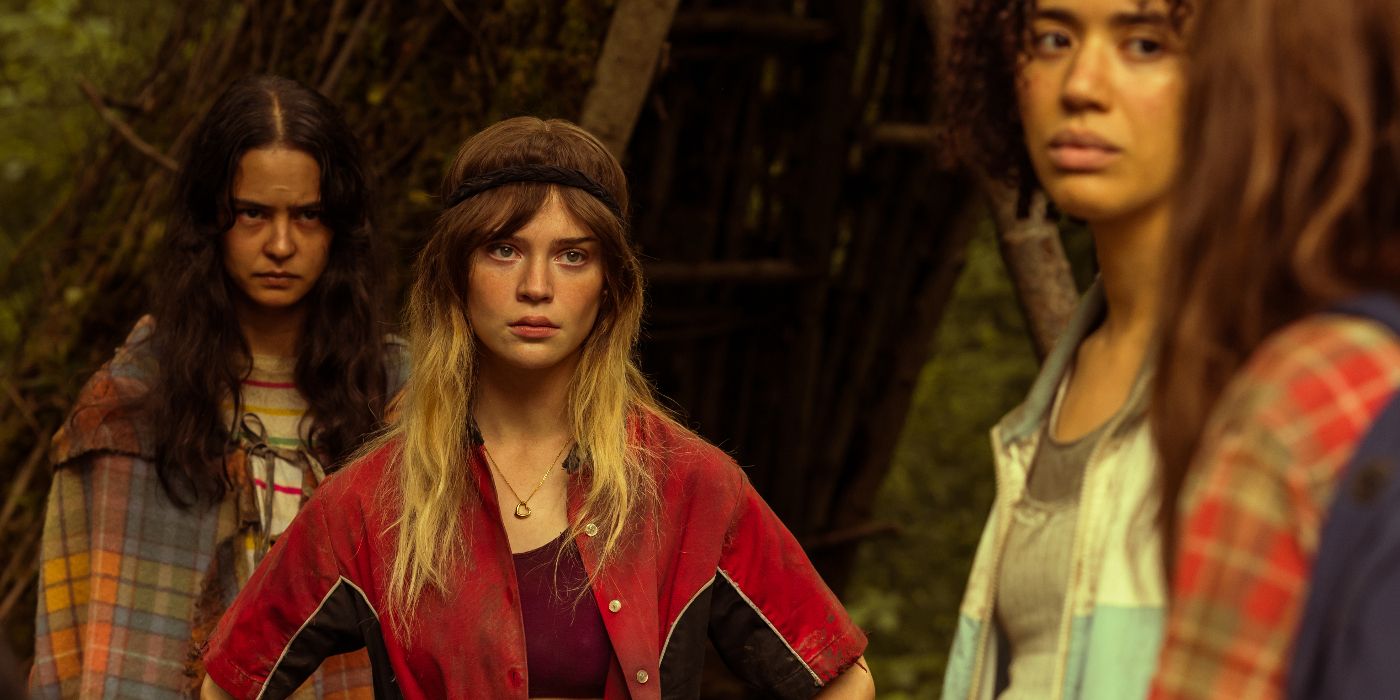
The hunger. It’s always been about the hunger, hasn't it? But in Yellowjackets Season 3 Episode 3, the show shifts from the visceral "what are they eating" to the psychological "who are they becoming." If you’ve been following the descent of the Wiskayok High School girls' soccer team, you know the cabin is gone. The safety net—if you could even call a rotting wooden structure in the middle of the Canadian wilderness a safety net—has turned to ash.
Honestly, the stakes feel different now.
The Aftermath of the Fire and the Reality of Exposure
We start right where the desperation peaks. Winter isn't just a setting anymore; it’s the primary antagonist. In the previous season, the fire set by Coach Ben (let's be real, we all know it was him, even if the girls are still piecing it together) forced the survivors into the elements. By Yellowjackets Season 3 Episode 3, the group is grappling with the immediate reality of homelessness in a sub-zero environment.
The pacing here is frantic. It’s messy.
Van is trying to maintain some semblance of order, but Taissa is sleepwalking into literal death traps. The showrunners, Ashley Lyle and Bart Nickerson, have always played with the idea of the "Wilderness" as a sentient entity. In this episode, that entity feels louder. There’s a specific scene involving a makeshift lean-to that perfectly illustrates how far their engineering skills have degraded under the weight of starvation. You’ve got Misty, played with terrifying precision by Christina Ricci in the 1998 timeline (wait, let's keep our timelines straight—Samantha Hanratty in the 90s), acting as the "useful" one while everyone else is vibrating with trauma.
Natalie’s Burden as the New Antler Queen
Everyone expected the transition of power to be smoother. It isn't. Natalie is the leader now, but she’s leading a cult of starving teenagers who have already tasted human flesh.
The "Antler Queen" mantle isn't a crown; it's a target.
In Yellowjackets Season 3 Episode 3, we see the first real cracks in the group's loyalty to Nat. Lottie is physically present but spiritually... somewhere else. The tension between the "rational" survivalists and the "believers" is the engine driving this season. If you look at the way the camera lingers on Natalie’s face during the morning rations, you see the exhaustion of a girl who knows she can’t hunt enough game to keep twenty people alive in a tundra.
The irony is thick. Natalie was always the outsider, the "burnout," the one they looked down on. Now, she's the only thing standing between them and total anarchy. But how long can you lead people who are looking at you like you’re the next course on the menu?
The Adult Timeline: Shadows of the 1990s
Switching to the present day—or rather, the "adult" timeline—the fallout from the ritual at Lottie’s compound is still simmering.
Shauna is spiraling. Melanie Lynskey plays "barely contained rage" better than anyone in Hollywood. In this episode, her interaction with Callie shows that the apple doesn't just fall near the tree; it gets buried in the same soil. They are cleaning up a mess that started decades ago. The police investigation into Adam Martin’s disappearance feels like a distant memory compared to the internal rot Shauna is dealing with.
She’s seeing things. Or maybe she’s finally seeing clearly.
The show treats the adult survivors not as "fixed" people, but as walking ghosts. When Misty and Walter (Elijah Wood) interact in Yellowjackets Season 3 Episode 3, it provides a brief, almost jarring bit of dark comedy against the backdrop of Taissa’s crumbling political career and Lottie’s institutionalization.
The Mythology of the Symbol
We have to talk about the symbol. You know the one—the hook, the circle, the lines that fans have been tattooing on themselves since 2021.
In this episode, we get a hint that the symbol might not be a map or a warning. It might be a seal. There’s a sequence where a younger Lottie finds a mark on a tree that wasn't there during the previous winter. This suggests the geography of their prison is changing. Or, more likely, their perception of it is warping.
Some fans theorize that the symbol relates to mining operations in the area (the "red river" from season 1), but episode 3 leans harder into the supernatural. Whether it’s group psychosis brought on by ergot poisoning, starvation, or actual ancient spirits, the effect is the same: total loss of self.
What This Episode Tells Us About the Finale
The structure of Yellowjackets Season 3 Episode 3 serves as a bridge. It’s moving the pieces into place for the "Pit Girl" origin story—the mystery that started the entire series. We are seeing the specific interpersonal grudges that lead to the ritualistic hunting of their own.
It’s not just about hunger anymore. It’s about spite.
Shauna’s jealousy of Jackie’s ghost (yes, she’s still there, in a way) and her evolving relationship with Jeff in the future provide a stark contrast. The show keeps asking: can you ever really leave the woods? The answer in this episode is a resounding "no." You just bring the woods home with you.
Key Takeaways for the Fandom
- Coach Ben’s Survival: His absence from the main group is the biggest "will they, won't they" of the season. Will they find his cave? Will they eat him?
- The Soundtrack: As always, the 90s grunge and alt-rock selections are impeccable, used here to underscore the loss of innocence.
- The Cannibalism Taboo: The show is no longer dancing around it. They’ve done it once; the second time is always easier.
Actionable Steps for Viewers and Theorists
If you’re trying to piece together the rest of the season after watching Yellowjackets Season 3 Episode 3, focus on these specific details during your rewatch:
- Watch the eyes: The cinematography in the 90s timeline deliberately uses reflections. Notice who looks at their reflection and who avoids it. It signals who is losing their "human" identity first.
- Track the rations: Keep a literal count of what they have. The show is very specific about the scarcity. When the food runs out, the "draw" (the lottery for who dies) happens. We are closer to the next draw than you think.
- Analyze the background of Lottie’s scenes: In the adult timeline, the "wellness center" has several recurring motifs—specifically the color purple and the presence of bees. These are direct callbacks to the hierarchy of the hive in the wilderness.
The most important thing to remember is that this show isn't a puzzle to be "solved" like a math equation. It’s a character study of trauma. Don’t get so caught up in the "Man in the Cabin" mystery that you miss the tragedy of these girls losing their souls in real-time.
Pay close attention to the final shot of this episode. The way the snow covers the tracks isn't just a pretty visual. It’s a metaphor for how the world forgot them while they were busy turning into monsters. Keep an eye on the shifting alliances between Shauna and Tai; that’s where the real power lies for the rest of the season.



