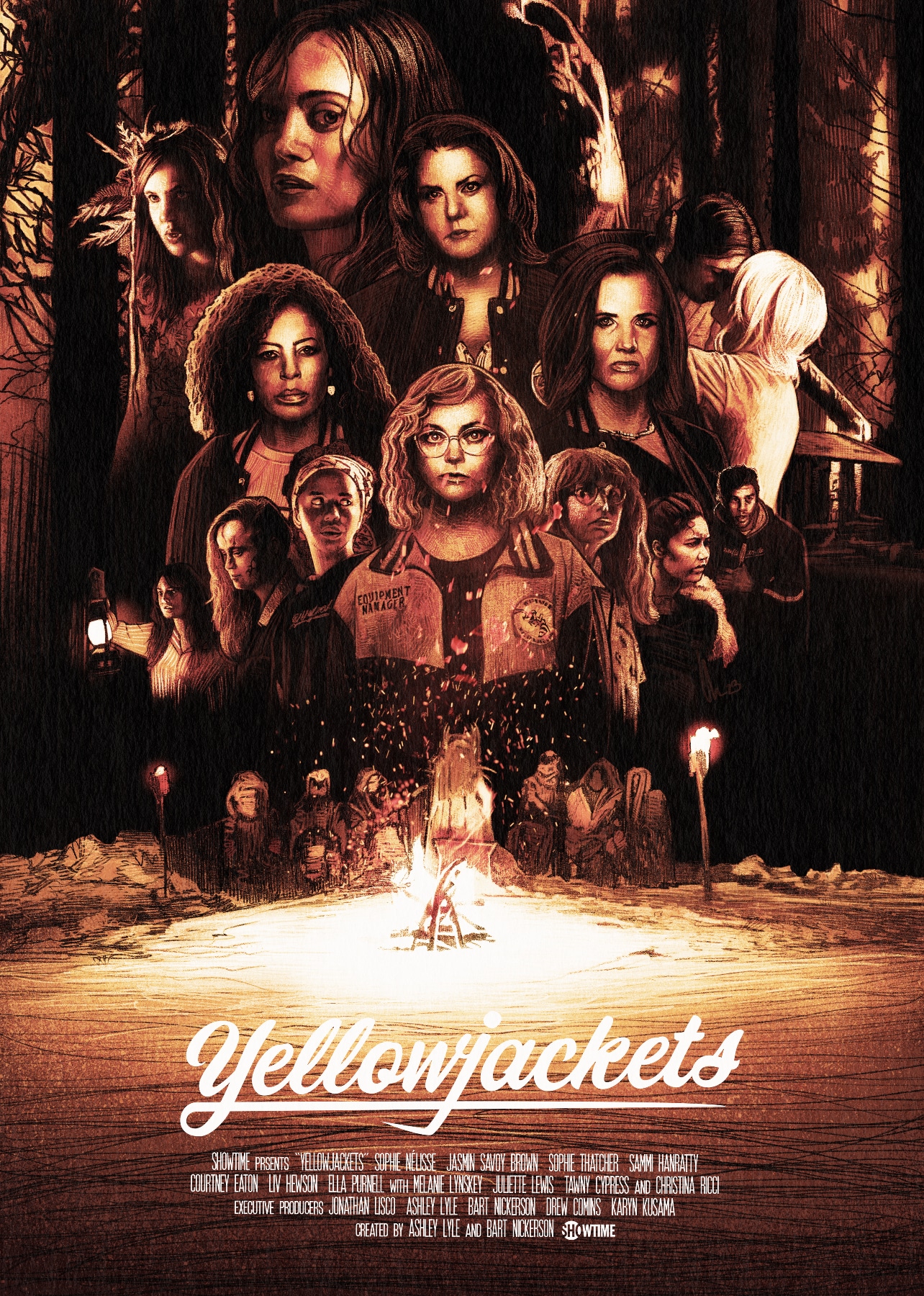
Trauma is a weird thing. It sticks. In the world of the Yellowjackets show, trauma isn’t just a psychological byproduct of a plane crash; it’s a living, breathing character that eats people alive. Literally. If you haven't seen it yet, you're missing out on the most stressful soccer trip in history. It’s been a minute since the Season 2 finale left us staring at a smoldering cabin, and honestly, the wait for Season 3 feels longer than nineteen months in the Ontario wilderness.
People keep asking what makes this show different from Lost or Lord of the Flies. It’s the hunger. Not just for food, though the "snack" jokes on Reddit have basically become their own subculture at this point. It’s a hunger for belonging, for power, and for some kind of absolution for things that probably can’t be forgiven.
Showrunners Ashley Lyle and Bart Nickerson didn't just give us a survival story. They gave us a dual-timeline nightmare that jumps between 1996 and the present day, proving that you can leave the woods, but the woods never really leave your head. Or your basement.
What Actually Happened to the WHS Yellowjackets?
Let’s get the timeline straight because it gets messy.
The flight crashed in 1996. The team was headed to nationals. They were elite athletes—high-performance teenagers—which is exactly why they survived as long as they did. They had the discipline. They had the drive. But they didn't have a plan for the "It" that lives out there. By the time they were rescued nearly two years later, they weren't the same girls who boarded that plane.
The show is brilliant because it refuses to answer the "supernatural vs. psychological" question. Is there a dark deity demanding blood in the snow? Or are these girls just starving, dehydrated, and suffering from massive collective psychosis? Director Karyn Kusama, who helmed the pilot, set a tone that leans into the visceral. You smell the pine needle tea and the rotting deer. You feel the cold.
When Jackie died at the end of Season 1, the shift was permanent. She was the link to the civilized world. She was the prom queen, the "normal" one. When she froze to death, the last bit of social order died with her. What followed—the "Ear" incident and the eventual feast on "Snackie"—was the point of no return. You can't come back from that. You just can't.
The Adult Survivors and the Weight of 25 Years
The casting of the adult versions of these characters is arguably the best in television history. Juliette Lewis (Natalie), Melanie Lynskey (Shauna), Christina Ricci (Misty), and Tawny Cypress (Taissa) don't just look like their younger counterparts; they mirror their ticks, their trauma, and their desperate need to keep the past buried.
Shauna is the heart of the show's darkness. She’s a suburban housewife who kills rabbits in her garden and cheats on her husband because she’s bored and haunted. Melanie Lynskey plays her with this soft, terrifying edge. You almost forget she’s a murderer until she’s staring down a chop-shop owner with a look that says she’s seen much worse than a gun.
Then there’s Misty Quigley. Honestly, Misty is the MVP of chaos. Christina Ricci plays her as a woman who just wants to be loved but will absolutely kidnap you and keep you in a basement to ensure you stay friends. The fan theories about Misty are endless. Is she a serial killer? Probably. Is she the only one capable of getting things done? Also yes. The dynamic between her and Elijah Wood’s Walter in Season 2 added a weird, quirky "citizen detective" layer that balanced out the heavy cannibalism vibes.
Why Season 2 Split the Fanbase
It wasn't all smooth sailing. Season 2 was divisive. Some fans felt the adult timeline dragged, especially the stuff at Lottie’s "wellness retreat" (let’s be real, it was a cult). Lottie, played by Simone Kessell as an adult and Courtney Eaton as a teen, is a complicated figure. Is she a prophet or a schizophrenic girl whose medication ran out in the woods?
The "Antler Queen" mystery continues to drive the Yellowjackets show discourse. We saw the ritual in the pilot—the furs, the pit, the feast. But Season 2 showed us the origin of the "hunt." It wasn't just about food; it was about the Wilderness choosing who stays and who goes. Drawing the cards. The Queen of Hearts. It’s a horrifying lottery.
- The 1996 timeline is about descent.
- The present timeline is about the bill coming due.
- The music is always 90s perfection (PJ Harvey, Garbage, Nirvana).
- Nobody is truly a "good" person here.
The death of Natalie at the end of Season 2 was a gut-punch. It felt like the show lost its moral compass, or at least the person we were all rooting for to find some semblance of peace. Natalie was the one who "saved" them in the woods by hunting, and in the end, she sacrificed herself. It was poetic, but man, it hurt.
Separating Fact From Fiction: The Real-Life Inspirations
The writers have been open about their influences. The 1972 Andes flight disaster (the Uruguayan Air Force Flight 571) is the most obvious touchstone. In that case, survivors also had to resort to cannibalism to stay alive. Nando Parrado and Roberto Canessa, two of the survivors, famously hiked across the mountains to find help.
But there’s also a heavy dose of the Donner Party and even the lost colony of Roanoke. The show mixes these historical horrors with a very specific type of 90s female rage. It’s about the intensity of teenage friendships—that "I would literally die for you" or "I might actually kill you" energy that feels so unique to that age.
What’s Actually Happening with Season 3?
Production was pushed back because of the strikes in 2023, but things are finally moving again. Here is what we know for sure:
- The Cabin is Gone: The girls are homeless in the middle of a Canadian winter. This is a massive problem. Without that shelter, the "descent" is going to accelerate. Expect things to get much grimmer and much more "feral."
- New Cast Members: Joel McHale is joining the cast. We don't know who he's playing yet, but the internet is convinced he might be part of a rescue team or a vision.
- The Mystery of the Man with No Eyes: We still don't have a concrete explanation for the figure Taissa sees. Is it a family haunting or a manifestation of the Wilderness?
- The Aftermath of Natalie’s Death: How does the group function without their "Antelope"?
The showrunners have hinted that Season 3 will explore the "immediate" aftermath of the rescue more deeply as well. We’ve seen them get rescued in glimpses, but we haven't seen the transition from "wild animal" back to "high school student." That’s where the real psychological horror lies. Imagine being rescued after eating your friends and then having to go to a press conference.
Why the "Yellowjackets Show" Matters Right Now
We are in an era of "prestige horror." It’s not just about jump scares; it’s about the dread of being human. The Yellowjackets show taps into a very specific fear that our pasts are never really behind us. For the survivors, the Wilderness is a place, but it's also a state of mind.
The fan community is massive. Whether it's on Reddit or TikTok, the "citizen detectives" are dissecting every frame. They're looking at the background of Shauna's kitchen, the symbols carved into the trees, and the lyrics of the songs. It’s one of the few shows left that rewards deep, obsessive watching.
It’s also a rare show that centers women over 40 in roles that aren't just "the mother" or "the wife." These women are messy, violent, sexual, and deeply flawed. They are survivors, but they are also villains in their own ways. That complexity is why we keep coming back.
How to Get the Most Out of Your Rewatch
If you’re waiting for the new episodes, go back and watch the pilot again. Now that you know what happens in Season 2, the foreshadowing in the first episode is insane. Look at the way they eat. Look at the way they look at each other during the bonfire.
Pay attention to these specific things:
- The Symbols: They aren't just random. They appear in the present day for a reason.
- Taissa’s Sleepwalking: It’s getting worse. Watch her eyes.
- The Attic: There was a dead guy up there for a reason. We still don't know his full story.
- The Background: The show loves putting things in the periphery. A shadow, a movement, a person who shouldn't be there.
The wait for Season 3 is a test of patience, but if the show has taught us anything, it’s that hunger only makes the eventual feast more satisfying. Whether the show leans further into the supernatural or stays grounded in the horror of human nature, it remains the most provocative thing on television.
Actionable Insights for Fans
If you're looking to dive deeper into the lore and the "vibe" of the show while waiting for new episodes, here's what you should actually do.
First, read Society of the Snow by Pablo Vierci. It’s the definitive account of the Andes flight disaster and provides a sobering, factual counterpoint to the fictionalized drama of the show. It helps you understand the actual logistics of survival in those conditions.
Second, check out the official Showtime "Yellowjackets" playlists on Spotify. The music is a curated map of the characters' internal states.
Third, if you're into the "Citizen Detective" aspect, stop looking at the big theories and start looking at the small stuff—the specific books on the shelves in the adult survivors' homes. The set designers are notorious for leaving "Easter eggs" that hint at the characters' true motivations.
Finally, prepare for Season 3 by bracing for a shift in tone. The "cabin" era is over. The "feral" era is beginning. The girls are out in the elements now, and that changes everything about the power dynamics. Watch for how the hierarchy shifts now that Lottie’s "vision" of the cabin has literally burned to the ground. That’s where the next phase of the story lives.