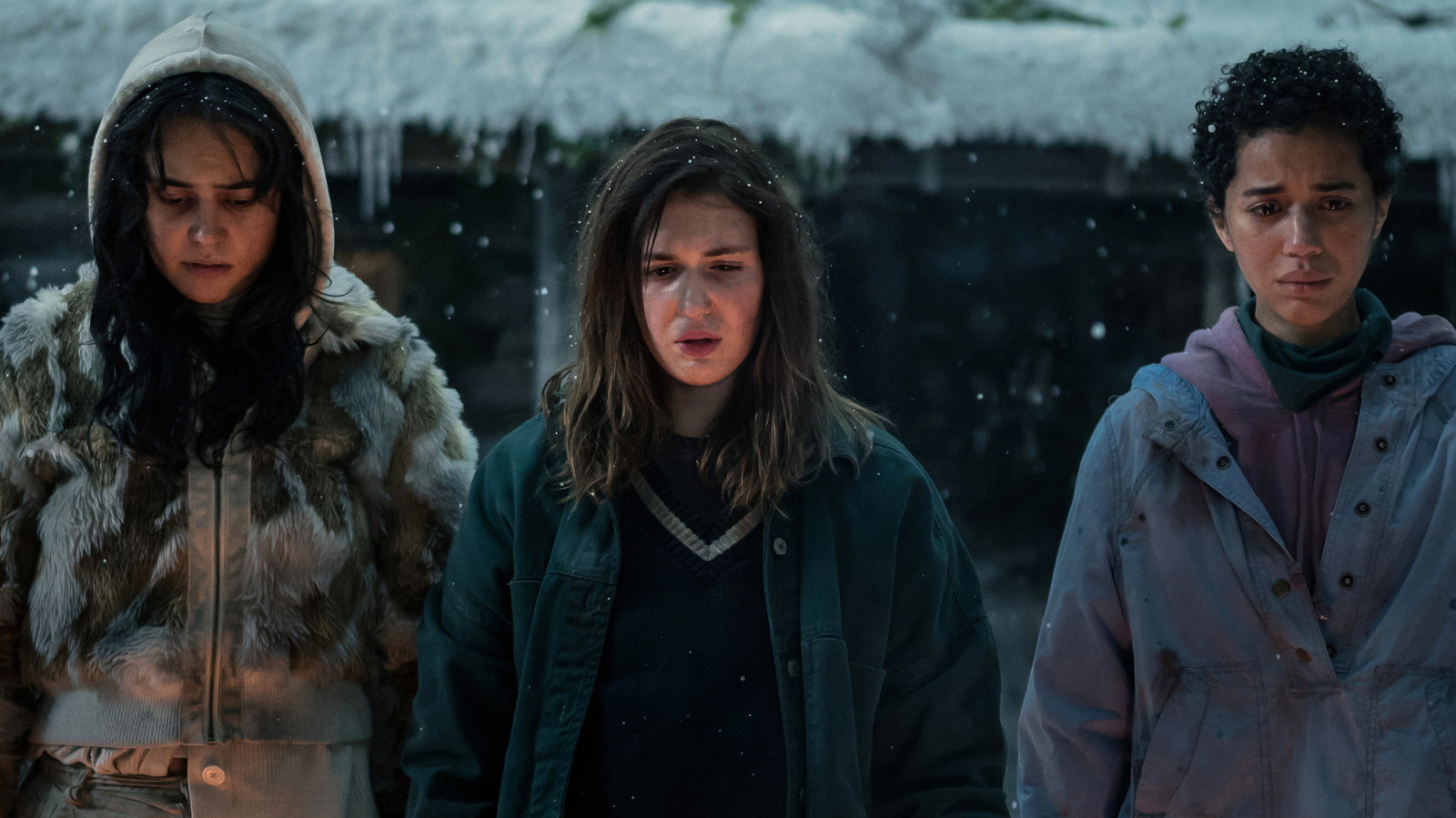
Winter is here. Not the "Game of Thrones" kind of winter where things look cool and blue-tinted, but the messy, starving, desperate kind of winter that makes you question if humanity is just a thin coat of paint on a very hungry animal. When Yellowjackets season 2 episode 1 premiered, titled "Friends, Romans, Countrymen," it didn't just pick up the pieces of the first season; it ground them into a fine powder and inhaled them.
Honestly, the hype was terrifying. After the cultural explosion of the first season, there was this massive pressure to see if Ashley Lyle and Bart Nickerson could actually pull off the "cannibalism" promise without it feeling like cheap shock value. They didn't just pull it off. They made it sad. They made it inevitable. Two months have passed since Jackie froze to death in the 1996 timeline, and the desperation in that cabin is thick enough to choke on.
The Jackie Problem Nobody Wants to Solve
Shauna is not okay. That’s the understatement of the decade. While the rest of the survivors are trying to figure out how not to starve to death, Shauna is spending her time in the meat shed having full-on conversations with Jackie’s corpse. It’s macabre, sure, but it’s also deeply human. When you lose the person who defined your entire social orbit—even if you kind of hated her by the end—where does that energy go? It curdles.
Sophie Nélisse delivers a performance here that is genuinely unsettling. She’s putting makeup on a dead girl. She’s braiding hair that’s literally falling out. It’s a coping mechanism that has tipped over the edge into a psychotic break, and the show doesn't blink. We see the logic. If Jackie is "alive" in the shed, Shauna doesn't have to carry the guilt of being the reason she died.
Then comes the "ear" moment.
It’s the beat everyone talked about for weeks. Jackie’s ear breaks off. It’s brittle. It’s frozen. And Shauna, in a moment of pure, instinctual hunger and grief-driven madness, eats it. It’s the first real step toward the ritualistic cannibalism we saw in the series pilot. It wasn't a grand feast. It was a snack born of psychosis. That's the brilliance of Yellowjackets season 2 episode 1—it treats the unthinkable as a series of small, logical lapses in judgment.
Lottie’s Cult and the Modern Day Mess
Switching to the 2021 timeline, we finally get some answers about what happened to Natalie. Remember that cliffhanger? The guys in the purple sweatpants? Yeah, they’re Lottie’s followers. Seeing Simone Kessell as adult Lottie Matthews is a masterstroke in casting. She has this serene, "I’m definitely not a cult leader" energy that makes you want to hand her your bank account details and your soul.
But things are messy in the present day.
- Misty is busy being a "citizen detective" on the internet, which is basically Reddit on steroids.
- Taissa is hallucinating "The Man with No Eyes" and biting her own hand.
- Shauna and Jeff are trying to cover up a murder with the most awkward "we're in this together" energy ever put on screen.
The contrast between the starving teenagers and the traumatized adults is where the show finds its teeth. In the wilderness, they were fighting to stay alive. In the suburbs, they’re fighting to keep the wilderness from leaking out. Taissa’s storyline is particularly grim. She’s a state senator now, but she’s also waking up in her basement with an altar to her dead dog. It’s a lot.
The Mystery of Crystal and the New Faces
We got some new blood this season, which was necessary because, let’s be real, the body count in the 90s is going to get high. Crystal (played by Nuha Jes Izman) shows up as Misty’s "best friend." It’s a fascinating dynamic because it shows us that even in the middle of a survival horror scenario, theater kids will still be theater kids. They're singing show tunes while emptying the "poop bucket."
It’s gross. It’s funny. It’s exactly what Yellowjackets does best.
Travis and Natalie are out there trying to find Javi, who disappeared in the season 1 finale. Everyone else thinks he’s dead. Natalie knows he’s probably dead. But she fakes a sign to give Travis hope because, honestly, what else do they have? The desperation is a character itself in this episode. The cinematography is claustrophobic. You can almost feel the frostbite through the screen.
Why the Rituals Started
People often ask why they didn't just keep hunting. The episode explains it through the silence of the woods. There is nothing out there. No deer, no rabbits, nothing. When nature stops providing, humans start looking for someone to blame—or someone to thank. Lottie’s "blessings" and the weird blood rituals aren't just for show. They are a way to organize the chaos.
The Sound of 1996
We have to talk about the music. The use of "Seether" by Veruca Salt and later "Cornflake Girl" by Tori Amos isn't just nostalgia bait. It’s atmospheric storytelling. The 90s weren't just about grunge; they were about a specific kind of female rage and eccentricity that fits this show like a glove. When that Tori Amos track hits, it underscores the shift from "survival" to "something much darker."
What This Episode Changed for the Series
Before Yellowjackets season 2 episode 1, the show was a "survival mystery." After this episode, it became a "psychological horror." The line was crossed the second Shauna took that bite. There’s no going back from that. It set a tone for the rest of the season that was much bleaker than the first.
The adult timeline also stepped up. Juliette Lewis (Natalie) and Christina Ricci (Misty) have this chemistry that is just... bizarre. It’s like watching a cat and a very dangerous bird try to share a cage. Misty is genuinely trying to help, but her version of "help" usually involves kidnapping or poisoning.
Key Takeaways for Fans and New Viewers
If you’re rewatching or diving in for the first time, keep your eyes on the background. The showrunners love hiding symbols. The "No Eyes" figure, the patterns in the trees, the way the girls are seated during their meager meals—it’s all intentional.
- Watch the meat shed. It’s not just a storage unit; it’s a confessional for Shauna.
- Lottie isn't the villain. Or at least, she doesn't think she is. She’s a vessel for the group's collective trauma.
- The "Antler Queen" isn't a single person. It’s a role, and roles can change.
- Jeff is the MVP. Seriously, the man is just trying to be a supportive husband while his wife hides human remains.
The brilliance of this premiere is how it handles the "supernatural vs. psychological" debate. Is there a demon in the woods? Or are they just starving teenagers with crumbling mental health? The show refuses to give a straight answer, and that’s why it works. It forces you to sit in the discomfort.
Where to Go From Here
If you want to really understand the layers of this episode, your next step should be a deep dive into the real-life inspirations behind the show. Specifically, look into the 1972 Andes flight disaster (the "Society of the Snow" story). While Yellowjackets adds a supernatural twist, the psychological breakdown of the survivors in the Andes mirrors a lot of what we see in the 1996 timeline.
Another great move is to re-watch the first ten minutes of the Season 1 pilot. Now that you've seen the start of Season 2, the "Pit Girl" scene and the ritualistic feast take on a whole new meaning. You can see the seeds being planted. The way they dress, the way they move—it all starts with the grief and hunger established in this premiere.
Pay attention to the color purple in the 2021 timeline. It’s everywhere around Lottie. It’s not just a cult uniform; it’s a signal of her perceived "royalty" and spiritual connection. The attention to detail in the costume design is one of the many reasons this show maintains such a high level of quality.
Stay skeptical of everyone’s memory. As the show likes to remind us: "There's no such thing as the truth, only what we remember."



