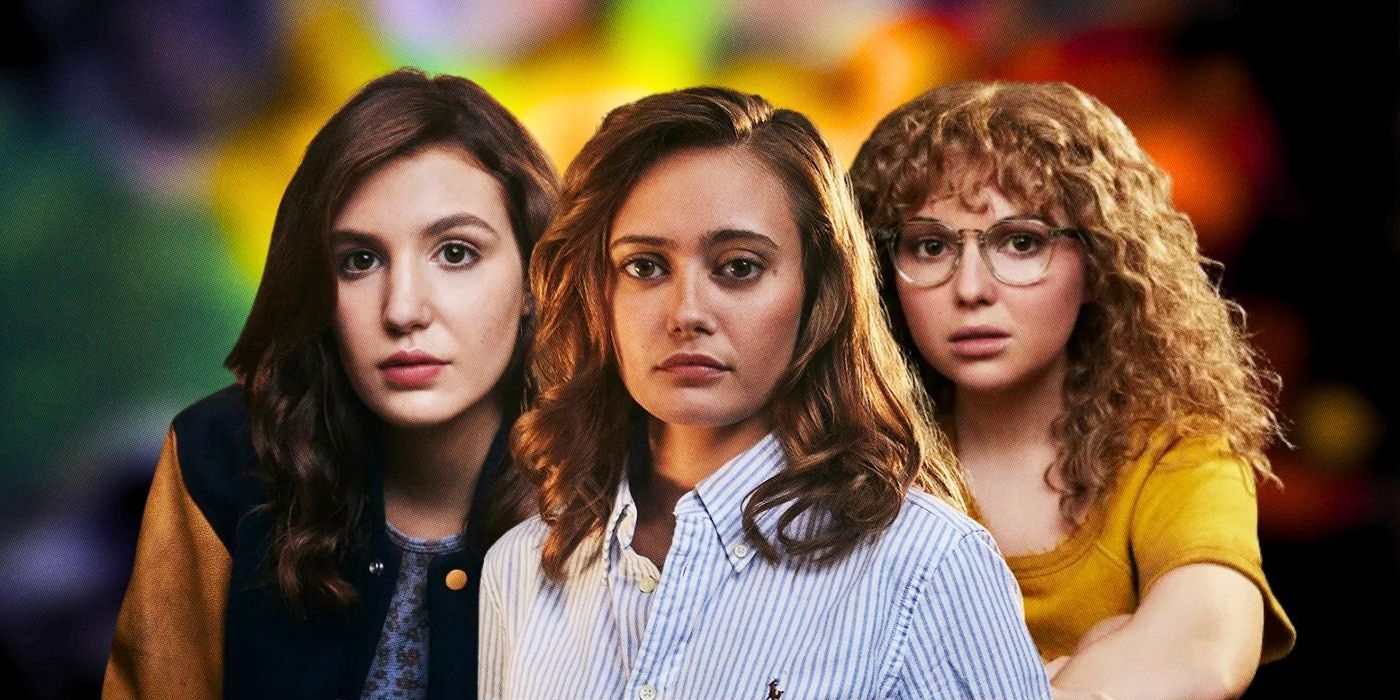
Honestly, the first time I sat down to watch Yellowjackets Season 1, I figured it was just going to be Lord of the Flies with hairspray and soccer cleats. I was wrong. It’s way messier than that. The show doesn't just ask what happens when teenage girls get stranded in the wilderness; it asks what happens to the adults they become when they actually manage to survive it.
It's 1996. A high school girls' soccer team—the Wiskayok High Yellowjackets—is headed to nationals. Then their plane falls out of the sky over the Canadian Rockies. They aren't found for nineteen months.
Nineteen months is a long time to get hungry.
The Dual Timeline Is Why Yellowjackets Season 1 Works
The show splits its soul between two eras. We get the 1996 crash survivors and their 2021 counterparts. This isn't just a gimmick. It’s a brutal examination of trauma. We see Shauna as a pregnant teenager (played by Sophie Nélisse) trying to survive the woods, and then we see adult Shauna (Melanie Lynskey) killing a rabbit in her suburban garden because she's bored and broken.
It's jarring. It's meant to be.
The 2021 storyline kicks off when the survivors start getting mysterious postcards with a creepy symbol they recognize from the woods. Someone knows what they did out there. And in the world of Yellowjackets Season 1, "what they did" is the million-dollar question that keeps everyone clicking "Next Episode" at 2:00 AM.
While the 1996 plot focuses on the slow descent from organized sports to pagan-adjacent survivalism, the modern-day plot is a dark comedy-thriller. You have Juliette Lewis playing Natalie, a woman fresh out of rehab with a shotgun in her trunk, and Christina Ricci as Misty, who is... well, Misty is a lot. She’s the equipment manager who finally feels needed when everyone else is dying. That kind of validation is dangerous.
The Misty Quagmire
Let’s talk about Misty Quigley for a second. In the pilot, she's the one who smashes the plane's emergency flight recorder. She does it because she hears the other girls praising her medical skills. For the first time in her life, she isn't the invisible nerd; she's the hero.
To keep being the hero, she has to keep them stranded.
It’s a chilling character beat. It sets the tone for the entire season. Most survival shows focus on the external threats—wolves, cold, starvation—but Yellowjackets Season 1 is much more interested in the internal rot. The girls aren't just afraid of the wilderness; they are afraid of what the wilderness is giving them permission to be.
What Really Happened in the Woods?
The show opens with a "Pit Girl" sequence. A girl runs through the snow, falls into a trap, and is eventually eaten by a group of people wearing animal skins and furs. This is the "Antelope Queen" or "Antler Queen" mystery that fueled a thousand Reddit threads.
But here’s the thing: Season 1 is surprisingly restrained about the cannibalism.
We don't actually see them eat anyone in the 1996 timeline until much later in the series run. Season 1 is about the descent. It’s about Lottie Matthews (Courtney Eaton) starting to have visions because she ran out of her Loxapine medication. Or maybe she's actually psychic? The show dances on that line between psychological breakdown and supernatural horror.
Is there a "Darkness" in the woods, or is it just lead poisoning and starvation?
Showrunners Ashley Lyle and Bart Nickerson have mentioned in various interviews, including those with The Hollywood Reporter, that they envisioned a five-season arc. This means Season 1 is just the foundation. It establishes the power dynamics. We see Jackie (Ella Purnell), the team captain and "it girl," slowly lose her grip on the group because her skills—popularity, social etiquette, being pretty—don't mean anything when you're trying to gut a deer.
The Doomcoming and the Shift
The penultimate episode, "Doomcoming," is where everything tilts. The girls accidentally ingest magic mushrooms (thanks, Misty) and the night turns into a Dionysian nightmare. The thin veneer of civilization snaps. They hunt Travis, the coach's son, like an animal.
It’s uncomfortable to watch.
The shift from athletes to predators is gradual, then sudden. By the time the finale rolls around, the social hierarchy has flipped. Lottie is the spiritual leader. Taissa is the pragmatist who will do anything to win. And Jackie? Jackie is a relic of a world that no longer exists.
The Cast That Saved the Genre
We have to talk about the acting. Melanie Lynskey is a powerhouse. She plays adult Shauna with this simmering, polite rage that feels incredibly real. She’s a housewife who is also a high-functioning sociopath because she had to be one to survive her teens.
Then you have Christina Ricci.
Ricci plays adult Misty with a chipper, terrifying intensity. She’s the person who will kidnap you and then offer you a cookie because she wants to make sure you're comfortable while she ruins your life. The chemistry between the adult cast—Lynskey, Ricci, Lewis, and Tawny Cypress (as Taissa)—is what grounds the wilder elements of the plot.
Without them, the show might have felt like a generic teen soap. With them, it feels like a prestige drama about the persistence of memory and the way we carry our worst mistakes in our marrow.
Key Takeaways for New Viewers
If you're just starting Yellowjackets Season 1, pay attention to the background. This show loves "Easter eggs." The symbol carved into the trees isn't just random graffiti; it has mathematical and occult implications that fans are still debating.
Also, watch the clothing.
The way the girls swap shirts and jackets in the 1996 timeline shows the breakdown of individual identity. They are becoming a pack. By the time they are wearing furs, they aren't the Yellowjackets anymore. They are something else entirely.
- Don't ignore the soundtrack. The 90s alt-rock needle drops (Portishead, PJ Harvey, Liz Phair) aren't just for nostalgia; they often comment directly on the psychological state of the characters.
- Watch the eyes. Especially Lottie’s. Her transition from a quiet girl to a cult leader is all in the stillness of her performance.
- Check the political subplot. Taissa’s run for State Senate in 2021 seems disconnected at first, but it highlights her obsession with control—a direct response to the total lack of control she had in the wilderness.
Real-World Context and Influences
The show draws heavily from the 1972 Andes flight disaster (the "Alive" story) but twists it by making the survivors teenage girls. There’s a specific brand of social cruelty that exists in high school locker rooms that makes the survival stakes feel more personal.
Experts in wilderness survival often point out that the biggest threat in these situations isn't the cold; it's the group's inability to cooperate. Yellowjackets Season 1 illustrates this perfectly through the rift between Jackie’s "old world" leadership and the "new world" survivalism led by Lottie and Natalie.
The show also taps into the "90s Girlhood" trend that has been massive in pop culture lately. It deconstructs the idea of the "strong female lead" by showing women who are genuinely flawed, terrifying, and sometimes irredeemable.
Actionable Steps for the Yellowjackets Fan
If you've finished the season and your brain is buzzing, here is how to dive deeper into the lore:
- Re-watch the Pilot: Now that you know who survives, watch the opening scene again. Look at the eyes of the people in the masks. You can actually identify some of them based on their height and the way they move.
- Research the "Spillbee" Theory: There are intense fan theories regarding the symbol involving trigonometry and navigation. Looking into the "Book of Symbols" might give you a hint about the ritualistic elements of the show.
- Read "Lord of the Flies" and "The Magus": These are foundational texts for the show's themes of social collapse and blurred reality.
- Listen to the "Yellowjackets" Official Soundtrack: It provides a chronological map of the emotional beats of the season, specifically the use of "Glory Box" in the pilot.
The brilliance of the first season is that it doesn't give you all the answers. It leaves you starving for more, much like the characters themselves. It reminds us that survival isn't a one-time event; it’s something you have to do every single morning when you wake up and remember who you really are.



