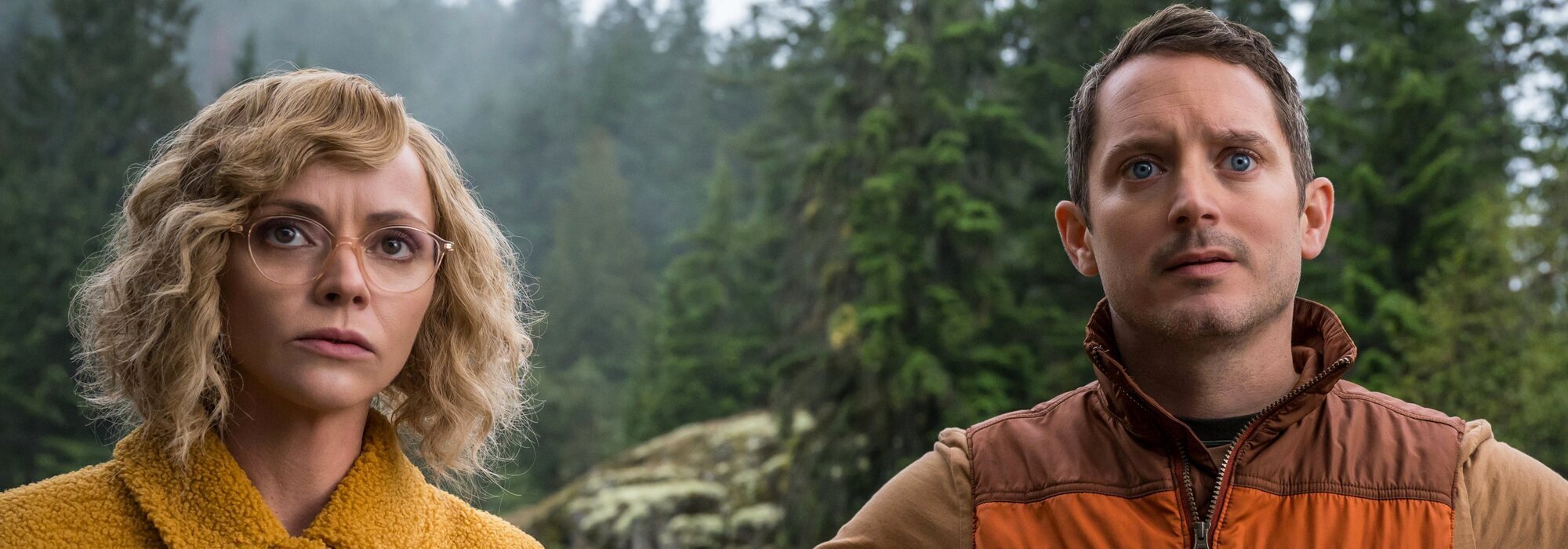
If you’ve spent any time on the internet lately, you've probably seen people obsessing over antler crowns, 1990s grunge soundtracks, and the terrifying question of what actually happened in the woods. You’re wondering what is the series Yellowjackets about, and honestly, the simple answer—a high school girls' soccer team gets stranded in the wilderness—doesn't even scratch the surface. It’s a messy, violent, and deeply emotional look at trauma. It’s a "Lord of the Flies" riff, sure, but with teenage girls who are much more calculating than any of the boys in William Golding’s book.
The show, which premiered on Showtime in late 2021 and exploded in popularity via streaming, splits its time between two main eras. In 1996, the Yellowjackets soccer team from Wiskayok, New Jersey, is headed to nationals when their private plane goes down over the Canadian wilderness. They’re stuck there for 19 months. Nineteen months of starvation, shifting alliances, and, eventually, something much darker. Then, the show jumps to 2021, following the adult survivors who are still haunted by what they did to stay alive. They made a pact to never tell the truth. But someone knows.
The Two Timelines of Chaos
The structure is basically the engine of the show. You aren't just watching a survival story; you're watching a psychological mystery. In the '90s timeline, we see the girls—played by a stellar young cast including Sophie Nélisse and Sophie Thatcher—go from athletes to scavengers. It starts with the shock of the crash, but it quickly devolves into a desperate search for food and meaning. They find a creepy, abandoned cabin. They find a symbol carved into the floorboards. And they find that the social hierarchies of high school don't just disappear in the woods; they get weaponized.
In the present day, we see the adult versions of these characters. This is where the heavy hitters like Melanie Lynskey, Juliette Lewis, Christina Ricci, and Tawny Cypress come in. They are all "fine" on the surface, or at least trying to be. Shauna is a bored housewife with some very dark secrets in her kitchen. Natalie is fresh out of rehab. Taissa is running for State Senate while dealing with a sleepwalking habit that involves eating dirt. And Misty? Misty is a nurse who is probably a sociopath but also the only person you'd want in an emergency. They are brought back together by a blackmail plot that threatens to expose the "official" story of their survival.
It’s Not Just About Cannibalism (But It Is About Cannibalism)
Let's address the elephant in the room. From the very first scene of the pilot, the show hints heavily at ritualistic cannibalism. We see a girl running through the snow, falling into a pit of stakes, and then being butchered and eaten by a group of people wearing animal masks and furs. It’s brutal. It’s hard to watch. But if you think the show is just about "who ate who," you’re missing the point.
The showrunners, Ashley Lyle and Bart Nickerson, have talked extensively about how the series is more interested in the why and the how. How does a group of civilized young women reach a point where ritualized violence feels like a logical choice? Is there a supernatural force in the woods—the "It" that Lottie keeps talking about—or is it just a shared psychosis brought on by extreme hunger and PTSD? The show dances on that line constantly. One minute you think it’s a ghost story, the next it’s a clinical look at the effects of starvation on the human brain.
Why Yellowjackets Hits Different
The '90s nostalgia is a huge part of the draw. The soundtrack is incredible, featuring everything from Portishead to Liz Phair and Alanis Morissette. It captures that specific era of "girlhood" that was both empowered and deeply repressed. These girls were told they could be anything, but they were still trapped in the rigid social structures of a suburban high school. When they crash, those structures break, and something much more primal takes over.
There’s also the Misty Quigley factor. Christina Ricci’s performance as the adult Misty is one of the most unsettling things on television. She is the team's equipment manager in the '90s—the girl everyone ignored or made fun of. In the woods, her knowledge of first aid and her willingness to do the "dirty work" makes her essential. She finds power in the catastrophe. That dynamic, where the "loser" becomes the leader because they are the only ones comfortable with the horror, is a recurring theme.
The Mystery of the Symbol
One of the biggest drivers of fan theories is the symbol found in the woods. It’s a hook-like shape with a line through it and a circle. You see it everywhere: carved into trees, drawn in the dirt, and eventually appearing in the mailboxes of the survivors twenty-five years later. Fans on Reddit have spent thousands of hours trying to map it to trigonometry or occult sigils. The truth is likely more psychological. It represents the "wilderness" as an entity. Whether that entity is real or a manifestation of their collective trauma is the central question of the series.
Breaking Down the Core Characters
To understand the show, you have to understand the core four survivors. Each represents a different way of processing (or failing to process) what happened in the woods.
- Shauna: She was the "sidekick" to the team captain, Jackie. In the woods, she comes out of Jackie's shadow in the most violent way possible. As an adult, she's repressed, dangerous, and strangely domestic.
- Taissa: The overachiever. She’s driven, successful, and terrifyingly ambitious. But her trauma manifests as a split personality that emerges when she sleeps. She tries to control everything, but she can't control her own mind.
- Natalie: The "burnout" with a heart of gold. She’s the hunter in the woods, the one who actually keeps them alive with a rifle. As an adult, she's the most honest about how broken they all are.
- Misty: As mentioned, she's the wildcard. She destroyed the plane's flight recorder because she liked being needed. She's the villain and the hero of her own story, depending on the day.
The Supernatural vs. The Rational
This is the big debate among the fandom. Is there a "Darkness" in the woods? Lottie Matthews, the team’s resident psychic/schizophrenic (depending on who you ask), starts having visions early on. She stops taking her medication after the crash and begins to perceive the wilderness as a demanding deity that requires blood.
Some characters, like Natalie and Coach Ben, try to remain rational. They look for logical explanations. But as the starvation sets in, the line blurs. By the time they are performing rituals in the second season, even the skeptics are participating. The show suggests that it doesn't really matter if the supernatural is "real." If the girls believe it is, and they kill because of that belief, the consequences are the same.
Real-Life Inspirations
The show draws heavily from the 1972 Andes flight disaster, where a Uruguayan rugby team was forced to resort to cannibalism to survive. It also nods to the Donner Party. But while those are the historical anchors, Yellowjackets is more of a spiritual successor to things like Twin Peaks and Lost. It cares less about the "how to start a fire" mechanics and more about the "how do I live with myself" mechanics.
The writers also heavily researched the psychology of cults and groupthink. You see the girls slowly adopting a common language and a common set of beliefs. It’s a terrifyingly accurate depiction of how quickly human beings can abandon their morals when the environment changes.
What to Watch Out For
If you're jumping in now, pay attention to the background. This is a show that rewards rewatching. There are "Easter eggs" hidden in the set design of the 1996 cabin that don't pay off until the 2021 timeline. The costume design is also intentional; pay attention to who is wearing what animal skin in the "Antler Queen" sequences. Those masks aren't random.
Also, don't expect easy answers. The show is built on ambiguity. If you want a neat resolution where everything is explained by a simple plot twist, you might be frustrated. But if you want a show that explores the darkest corners of the human psyche with a killer soundtrack and some of the best acting on TV, this is it.
Getting Started with the Series
If you're ready to dive in, here is how you should approach it:
- Watch the Pilot Carefully: The first episode sets up almost every major mystery that the show is still unraveling three seasons later.
- Don't Google Spoilers: The "who dies" list is long and often surprising. The show isn't afraid to kill off characters you thought were safe.
- Listen to the Lyrics: The music isn't just background noise; the songs often comment directly on the internal state of the characters.
- Watch the Transitions: The way the show cuts between the past and the present is often a clue. A movement in the 1990s will be mirrored by a character in 2021, showing how they are still stuck in that moment.
Yellowjackets is ultimately a story about the stories we tell ourselves to survive. It’s about the fact that we never really leave high school, especially if we spent that time eating our friends in the woods. It’s dark, it’s funny in a twisted way, and it’s unlike anything else on television right now. Just maybe don't watch it while you're eating dinner.



