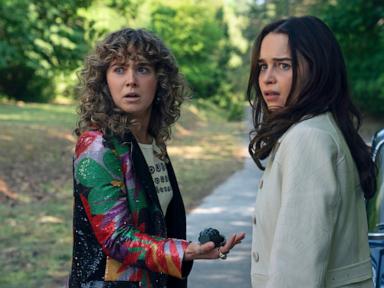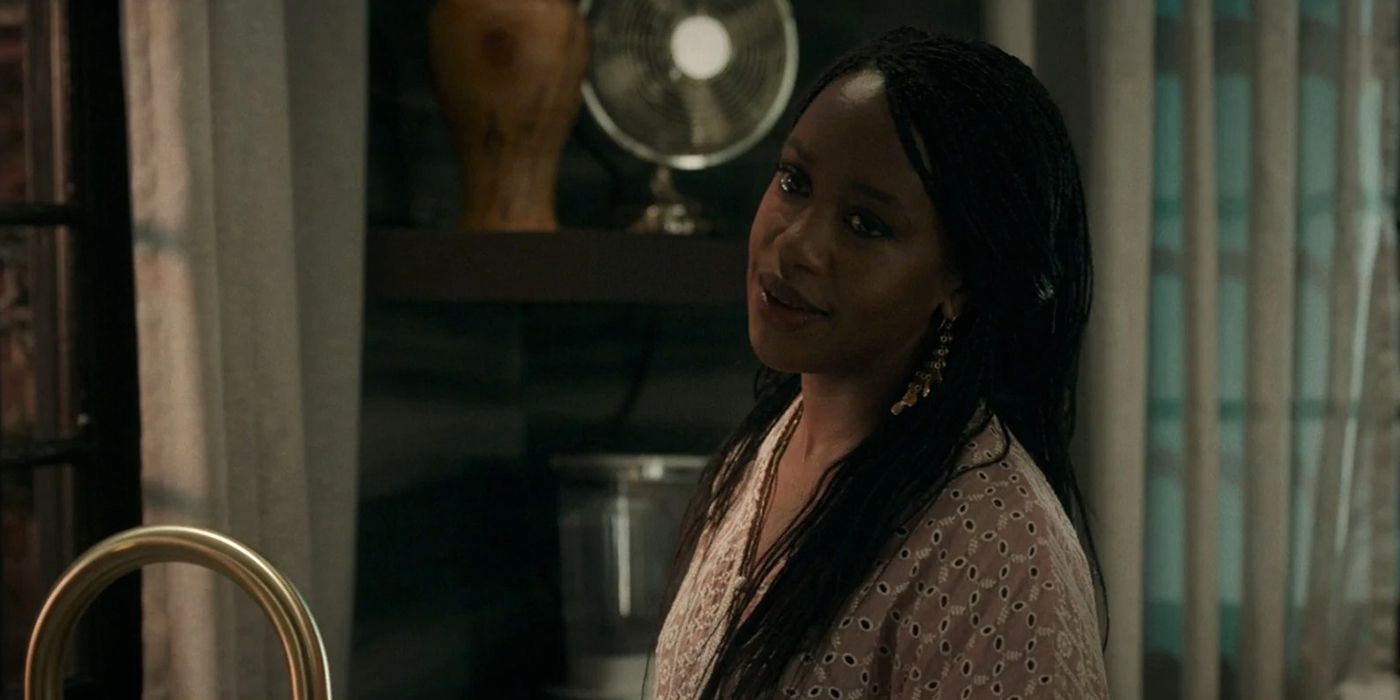
It’s rare to see a show where two different people play the same person and you actually, fully believe it. Most of the time, you’re just doing the mental gymnastics of pretending the nose shape matches or the height is close enough. But with the Showtime hit, seeing Yellowjackets characters side by side feels less like a casting choice and more like some weird, glitch-in-the-matrix sorcery.
The 1996 survivors and their 2021 counterparts don’t just look like each other; they mirror the specific, jagged edges of trauma that wouldn’t have healed in twenty-five years. You've got these teenage girls, essentially feral in the Ontario wilderness, and then you see the middle-aged women they became, still wearing those 19 months like a second skin. It’s haunting, honestly.
The Shauna Paradox: Sophie Nélisse and Melanie Lynskey
Shauna is basically the emotional anchor of the show, but she’s also a total nightmare if you look too closely. Sophie Nélisse plays the younger version with this quiet, simmering resentment that eventually boils over into literal butchery. When you put her next to Melanie Lynskey’s adult Shauna, the transition is seamless.
Lynskey has this way of doing "suburban housewife" that feels like a threat. It’s in the eyes. Nélisse actually went brunette for the role to match Lynskey’s look from her Heavenly Creatures days, but the real connection is the essence. They both have that "I could kill you or bake you a muffin" energy. In Season 2, we saw adult Shauna handle a carjacker with the same cold, calculated detachment that teen Shauna used while processing a deer (or, well, other things). It’s not just physical; it’s the shared internal logic of a person who learned way too early that survival is a bloody business.
Misty Quigley: The Chaos Factor
Let’s talk about Misty. Samantha Hanratty and Christina Ricci are doing something truly special here. Most people think Misty is the villain, but she’s really just the girl who wants to be included so badly she’ll destroy a flight recorder to stay relevant.
- Teen Misty (Hanratty): Eager, terrifyingly capable, and completely devoid of traditional social boundaries.
- Adult Misty (Ricci): Still has the same frizzy hair, still has the bird (Caligula), and still has that chirpy, "I’m helping!" voice that makes your blood run cold.
When you see them side by side, it’s the mannerisms that get you. The way they both tilt their heads when they're observing someone like a specimen in a jar. Hanratty admitted she studied Ricci’s old films to get the "Ricci vibe," and it paid off. Adult Misty hasn’t changed; she’s just gotten better at hiding the bodies.
Taissa Turner: The Dual Identity
Tawny Cypress and Jasmin Savoy Brown play Taissa, and this might be the most complex "side by side" comparison because Tai is literally two people. You have "State Senator Tai" and then you have "The One Who Eats Dirt."
Jasmin Savoy Brown brings this intense, Type-A drive to the 1996 timeline. She’s the one who tries to keep order when everything is falling apart. Tawny Cypress carries that same weight into the present day, but you can see the cracks. The sleepwalking scenes are the bridge between the two. When adult Tai stares into a mirror and sees her younger self (or the "Other" Tai), it isn't just a horror trope—it’s a visual representation of how the wilderness never actually let her go. They even coordinated on things like how Taissa pronounces specific words to make sure the continuity held up.
The Natalie Connection: Sophie Thatcher and Juliette Lewis
This one is a heartbreaker. Natalie was the moral compass of the group, even if she was the "burnout." Sophie Thatcher plays the teen version with a raw, punk-rock vulnerability. She’s the hunter. She’s the one who actually knows how to provide.
Then you have the late Juliette Lewis (in terms of the character's arc, anyway) as the adult Natalie. It’s a masterclass in showing how addiction is often just a way to numb a memory that won't stop screaming. Thatcher’s low, raspy voice and loose movements match Lewis’s iconic style so well that you forget they aren't the same person. They both carry a rifle the same way. They both look at the world with the same "I’ve seen too much" exhaustion.
Lottie and Van: The Believers
Season 2 brought us the adult versions of Lottie and Van, played by Simone Kessell and Lauren Ambrose.
- Lottie (Courtney Eaton / Simone Kessell): Teen Lottie was a reluctant prophet. Adult Lottie is a cult leader in a purple kaftan. The transition from "girl having visions" to "spiritual guru" makes total sense when you see them together. They both have this ethereal, slightly detached presence that makes you want to follow them—or run away.
- Van (Liv Hewson / Lauren Ambrose): Fans were dying to see adult Van, and Ambrose nailed it. She kept the sarcasm and the "tough it out" attitude that Liv Hewson established so well in the 1996 timeline. The way they both smile—a bit lopsided, a bit weary—is the dead giveaway.
Why This Matters for Your Next Rewatch
If you’re planning to dive back into the show, keep an eye on the shared trauma markers. Notice how adult Shauna grips a knife exactly like her younger self did in the shed. Look at how Taissa's posture shifts when she’s under pressure, reverting back to the defensive stance she had in the woods.
The casting directors, Junie Lowry-Johnson and Libby Goldstein, didn't just look for lookalikes. They looked for actors who could inhabit the same "soul" of the character. That's why the show works. It’s not a gimmick; it’s a study of how we carry our younger selves with us, whether we want to or not.
Actionable Insights for Fans:
- Watch the eyes: The showrunners often use close-ups on the eyes to transition between timelines. You’ll notice the "thousand-yard stare" is consistent across both generations.
- Listen for the voice: The adult actors often drop their pitch or use specific inflections (like Misty’s "hmmm?") that the younger actors pioneered.
- Follow the scars: Pay attention to the physical marks, like Van’s facial scars, which serve as literal bridges between the two versions of the character.
The next time you see the Yellowjackets characters side by side on screen, remember that the horror isn't just what happened in the woods—it's that they never really left.
To get the most out of the upcoming Season 3, keep a character map handy. The parallels are getting deeper, and the line between 1996 and the present is only getting thinner. Focus on the recurring motifs, especially the "Man with No Eyes" and the symbol, as these are the connective tissues that bind the teen and adult versions together in their shared delusion—or reality.