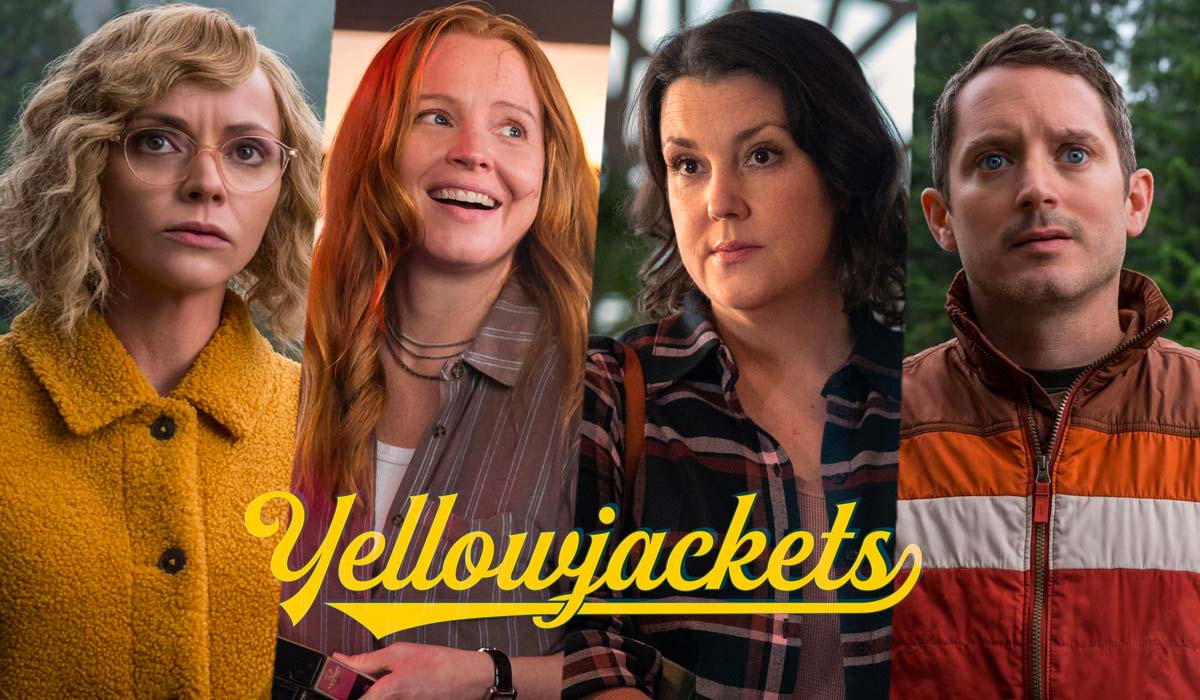
Seeing the Yellowjackets cast side by side for the first time is a total trip. It’s not just about finding actors who look alike. That’s the easy part. Casting directors Libby Goldstein and Junie Lowry-Johnson had a much harder job: they had to find pairs of performers who shared the same "soul," for lack of a better word. When you look at the 1996 version of Natalie next to the adult Natalie, you aren't just looking at two people with blonde hair and eyeliner. You’re looking at a shared trauma that spans twenty-five years of fictional history.
The show lives or dies on this. If the audience doesn't buy that Sophie Nélisse grows up to be Melanie Lynskey, the entire emotional weight of the series evaporates. Fortunately, the casting is arguably some of the best in the history of prestige television.
Why the Yellowjackets cast side by side comparison is so haunting
Usually, when a show does a time jump, you get a "close enough" vibe. Not here. The creators, Ashley Lyle and Bart Nickerson, clearly prioritized physicality and mannerisms. It’s in the way they walk. The way they hold their shoulders.
Take Shauna. Sophie Nélisse plays the teen version with this simmering, repressed internal life. She looks like she’s constantly swallowing a secret. Then you see her side by side with Melanie Lynskey. It’s the same stillness. Lynskey takes that 1996 survival instinct and turns it into a domestic weapon. It’s honestly chilling how they mirror each other’s micro-expressions. You’ve probably noticed they both have this specific way of tilting their heads when they’re about to lie.
Then there’s Misty.
Sammi Hanratty and Christina Ricci are a match made in some very dark, twisted heaven. Ricci has always been the queen of the "unsettling stare," but Hanratty matches her beat for beat in the 1996 timeline. When you put these two side by side, you see the evolution of a sociopath. The glasses, the curly hair, the desperate need to be liked—it’s all there. But the real magic is in the hand gestures. Both actresses use these precise, almost clinical movements that make you feel like they’re dissecting the person they’re talking to.
The Taissa Factor: Tawny Cypress and Jasmine Savoy Brown
If you want to talk about technical acting prowess, look at the Taissas. Jasmine Savoy Brown plays the teen version of the high-achieving, hyper-competitive athlete. She’s all sharp angles and intense focus. When you see her side by side with Tawny Cypress, you see what happens when that intensity has nowhere to go but inward.
Cypress carries the weight of "The Bad One" in her eyes. It’s a haunted look. Brown lays the groundwork for that in the wilderness scenes, especially during those night-time transitions. They worked together to ensure their voices had a similar cadence. They don't sound like they're doing impressions of each other; they sound like the same person at different stages of a nervous breakdown.
Breaking down the physical similarities and departures
Let's get real for a second. Sometimes the "side by side" isn't perfectly identical, and that’s actually why it works.
- Natalie (Sophie Thatcher and Juliette Lewis): While Thatcher and Lewis don't have identical facial structures, they share an "aura." It’s that rock-n-roll, burnt-out, "I’ve seen too much" energy. Thatcher mimics Lewis's husky vocal fry perfectly. In Season 3, this connection becomes even more poignant as we see how the teenage rebellion of the wilderness hardened into the weary survivalism of adult Nat.
- Lottie (Courtney Eaton and Simone Kessell): This was a tough one for fans to wait for. We didn't get adult Lottie until Season 2. Putting them side by side reveals a fascinating shift. Eaton’s Lottie is terrified of her visions. Kessell’s Lottie has turned them into a lifestyle brand. The shared ethereal, wide-eyed look makes the transition from "prophet in the woods" to "cult leader at a wellness retreat" feel inevitable.
- Van (Liv Hewson and Lauren Ambrose): This was the casting win of the century. Fans were screaming for Lauren Ambrose to play adult Van for months before it was actually announced. The resemblance is uncanny. It’s not just the red hair. It’s the smirk. Van was always the heart of the 1996 group, the one with the dry jokes even while bleeding out from a wolf attack. Ambrose keeps that sarcasm alive, but she layers it with a thick coat of cynicism.
The "Others" and the mystery of who survives
The fascination with the Yellowjackets cast side by side comparisons often stems from the show's central mystery: who else made it out?
Every time a new actor is cast for the 1996 timeline, fans immediately start looking for an adult counterpart. When we met Javi or Travis, the search was on. The show plays with this. It uses our desire for symmetry against us. Sometimes a character doesn't have an adult counterpart because they didn't make it to the rescue. That’s the brutal reality of the show. The empty side of the side-by-side photo is the most terrifying part of the fandom.
The acting chemistry that bridges the 25-year gap
It isn't just about solo performances. The "sets" of actors have to have chemistry with each other. The bond between teen Shauna and teen Jackie (Ella Purnell) has to feel like the foundation for adult Shauna’s entire personality.
Even though Jackie doesn't have an adult "side by side" (RIP), her presence is felt in every scene Melanie Lynskey films. The casting department had to find actors who could play off each other in the 90s in a way that mirrored the complicated, messy friendships of the adults in 2021 and beyond. It's a massive puzzle.
Think about the "book club" scenes. When the adult survivors get together, you can almost see the ghosts of their teenage selves sitting in the chairs behind them. That’s a testament to the actors’ commitment to a unified vision. They reportedly shared notes on character tics. They watched each other's dailies. They made sure the "Yellowjackets cast side by side" wasn't just a marketing gimmick, but a functional part of the storytelling.
Practical takeaways for fans and theorists
If you’re obsessed with the dual timelines, there are a few things to keep an eye on that go beyond hair and makeup. The show uses these parallels to drop hints about the plot.
- Watch the scars. The makeup team is incredibly consistent. If teen Van has a specific scar from the wolf attack, adult Van will have the faded version in the exact same spot. These physical markers are the "connective tissue" of the cast.
- Listen to the breathing. It sounds weird, but several of the actors—notably the Shaunas and the Taissas—developed specific breathing patterns for high-stress scenes. It’s a subtle way to link the performances.
- Check the wardrobe colors. The costume designers often use "color echoing." If teen Nat is wearing a specific shade of faded purple, adult Nat might be seen in a similar hue during a moment of regression or memory.
The brilliance of the Yellowjackets cast side by side comparison is that it rewards the viewer for paying attention. It’s not just a show you watch; it’s a show you study. Whether it’s the way Kevin Alves and Andres Soto handled the tragic arc of Travis, or the way the show continues to introduce new "adult" versions of the survivors, the casting remains the gold standard for dual-timeline narratives.
To truly appreciate the nuance, re-watch the pilot and the Season 2 finale back-to-back. Focus specifically on the eyes. You’ll see that despite the twenty-five years of fictional time and the different actors, the "wild" never really left them. The transition is seamless because the actors built a bridge out of shared trauma and meticulously mirrored movements.
Next Steps for the Ultimate Binge:
- Track the jewelry: Notice how certain items, like the heart necklace, move between characters and timelines.
- Focus on the gait: Watch how the teen actors walk through the brush and compare it to how the adults move through "normal" society; the muscle memory of the wilderness is always there.
- Analyze the "masking": Pay attention to when an adult character's "civilized" facade drops and the teenage survivor's raw instinct takes over—these are the moments where the casting symmetry shines brightest.



