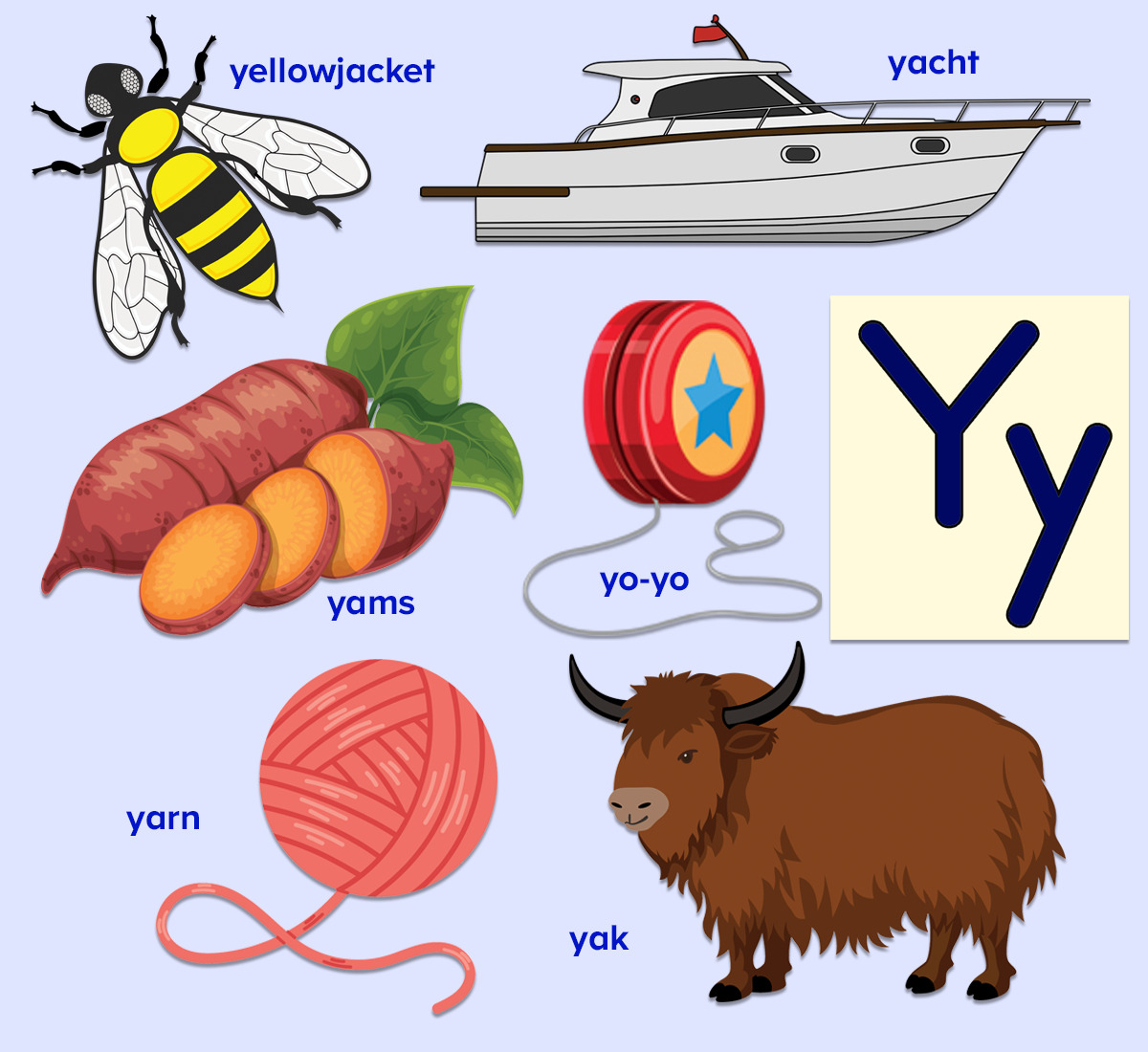
You’re probably here because of a trivia night or a bored kid’s homework. Or maybe you're just genuinely curious why the back of the alphabet gets such a raw deal in the animal kingdom. Honestly, when most people think of animals that start with Y, they stop at "Yak" and call it a day. That’s a mistake.
The "Y" section of the biological catalog is actually pretty wild if you look past the shaggy cattle of the Himalayas. You’ve got neon-bright birds, tiny deep-sea crustaceans that look like they belong in a sci-fi flick, and primates that basically run on caffeine and chaos. It’s a diverse group.
But let’s get the obvious one out of the way first because you can’t talk about this list without mentioning the heavy hitter.
The Yak is Way More Than Just a Shaggy Cow
If you’ve ever trekked through the high altitudes of Tibet or Nepal, you’ve seen them. The Domestic Yak (Bos grunniens) is the backbone of Himalayan life. They are built for the kind of cold that would turn a regular cow into a popsicle. Their lung capacity is massive, and their blood has a specialized ability to carry more oxygen than other mammals. That’s why they don’t get winded at 18,000 feet while you’re gasping for air just standing next to them.
There’s a massive difference between the domestic ones and the Wild Yak (Bos mutus). Wild Yaks are absolute units. A bull can weigh over 2,000 pounds. They’re darker, meaner, and increasingly rare. Climate change is shrinking their frozen playground, pushing them higher and higher into the mountains.
People use yaks for everything. Milk? Yes. Butter tea? It’s an acquired taste, kinda salty. Fuel? Their dung is basically the only thing people have to burn for heat in treeless regions. It’s a closed-loop ecosystem of survival. Without the yak, human civilization in the "Roof of the World" probably wouldn't exist.
The Yellowhammer: A Bird with a Very Specific Song
Ever heard a bird sing about bread and cheese?
In the UK and across much of Europe, the Yellowhammer is a staple of the countryside. It’s a stunning little bunting with a bright yellow head that makes it look like it fell face-first into a bowl of turmeric. But what really makes them famous among birders is their call. It’s famously described as sounding like the phrase "a little bit of bread and no cheese."
Listen for it next time you’re walking a hedgerow.
These birds are actually quite controversial in some parts of the world. They were introduced to New Zealand in the 1860s. At the time, people thought they’d be great for controlling insects. Instead, they did what invasive species often do: they multiplied like crazy and started eating the crops they were supposed to protect. Now, they're common across both islands of NZ, a bright yellow reminder that moving animals around the globe usually has side effects we didn't plan for.
Yellow Mongoose: The "Silver-Tail" of the Savannah
In Southern Africa, if you see a reddish-yellow blur darting across the road, it’s probably a Yellow Mongoose. Locals often call them the "silver-tail" because of the distinct white tip on their tails.
Unlike some of their more solitary cousins, these guys are social. But here’s the weird part: they often share their burrows with ground squirrels and suricates (meerkats). It’s like a weird, multi-species apartment complex. They don’t necessarily "hang out," but they tolerate each other because more eyes on the ground mean a better chance of spotting a jackal or an eagle before it’s too late.
They are primarily insectivores. They love termites. They’ll dig through mounds with those sharp claws like they’re at an all-you-can-eat buffet. It’s fascinating to watch them work; they’re incredibly twitchy, always scanning the horizon. Life on the savannah is stressful, and the yellow mongoose looks like it’s had about four espressos before breakfast.
The Yeti Crab: Life at the Bottom of the World
In 2005, researchers found something near Easter Island that looked like a joke. The Yeti Crab (Kiwa hirsuta).
It lives 7,000 feet down near hydrothermal vents. It’s almost entirely blind because, honestly, why would you need eyes in pitch-black water? What makes it "Yeti-like" is the thick coating of silky, blonde setae (hair-like structures) covering its legs and claws.
It isn't just for fashion.
The crab actually grows its own food on its arms. These hairs act as a garden for filamentous bacteria. The crab waves its arms over the mineral-rich water coming out of the vents to "fertilize" the bacteria, then uses specialized mouthparts to scrape off the "crops" and eat them. It’s deep-sea farming. It’s also one of the most extreme examples of how life finds a way to thrive in toxic, high-pressure environments that would crush a human in seconds.
Yellow-Winged Bat: Nature’s Colorful Nightmare
Most bats are brown, grey, or black. Boring, right?
Not the Yellow-winged Bat. Found in the moist lowlands of East Africa, these bats have stunning, translucent yellow-orange wings. When they fly during the twilight hours, they look more like giant moths than mammals.
They’re "false vampires," but don't let the name scare you—they don’t drink blood. They are actually formidable predators of large insects and even small vertebrates. They have incredible ears. Seriously, their ears are almost as long as their bodies. They use them to pick up the faint rustle of a beetle crawling on a leaf from yards away.
Why We Get These Animals Wrong
We tend to categorize "Y" animals as "exotic" or "rare."
Take the Yabby. If you’re Australian, a yabby isn't exotic. It’s what you caught in a dam with a piece of string and some raw meat when you were seven. It’s a freshwater crayfish. But if you’re in New York or London, a yabby sounds like something out of a fantasy novel.
Context matters.
The Yellow-bellied Sapsucker is another one. It’s a woodpecker. People use the name as a punchline in cartoons (looking at you, Looney Tunes), but it’s a real bird that creates "sap wells" in trees. It licks up the sap with a brush-like tongue. Other animals, like hummingbirds and even some squirrels, actually rely on the sapsucker’s work to get their own sugar fix. It’s a "keystone" behavior that supports an entire micro-ecosystem.
The Yoranian: A Modern Twist
If we’re being honest about animals that start with Y, we have to talk about the ones we made. The Yoranian is a cross between a Yorkshire Terrier and a Pomeranian.
Is it a "species"? No. It’s a designer hybrid.
But in terms of what people are actually searching for when they look for "Y animals," these tiny, fluffy dogs are at the top of the list. They represent the "lifestyle" side of the animal kingdom. They’re high-energy, incredibly vocal, and have enough personality to fill a room. Just because they weren't forged in the fires of evolution like the Yeti Crab doesn't mean they aren't a significant part of our modern animal landscape.
Managing Coexistence: What You Can Do
Whether it’s protecting the habitat of the Wild Yak or making your backyard friendly for a Yellowhammer, animal conservation starts with understanding.
- For the Birders: If you have Yellowhammers or other buntings nearby, stop pruning your hedges so aggressively in the spring. They need that dense cover for nesting.
- For the Travelers: If you’re visiting the Himalayas, support ethical yak trekking. Ensure the animals are well-treated and not overloaded.
- For the Curious: Support deep-sea research. Organizations like NOAA or the Schmidt Ocean Institute are the only reason we even know the Yeti Crab exists. The deep ocean is the least explored place on Earth, and it’s likely full of more "Y" animals we haven't even named yet.
The animal kingdom doesn't care about our alphabet. The fact that these creatures all start with the same letter is a human quirk, but it’s a great excuse to look closer at the fringes of nature. From the frozen peaks of the Qinghai-Tibetan Plateau to the hydrothermal vents of the Pacific, the "Y" animals are out there, doing their thing, whether we’re paying attention or not.
If you want to help these species, start by supporting localized conservation groups. For the Yak, look into the Wildlife Conservation Society (WCS) and their work in the Changtang region. For the birds, the RSPB in the UK does massive work for the Yellowhammer. Knowledge is fine, but action is what keeps these weird and wonderful creatures from disappearing into the history books.