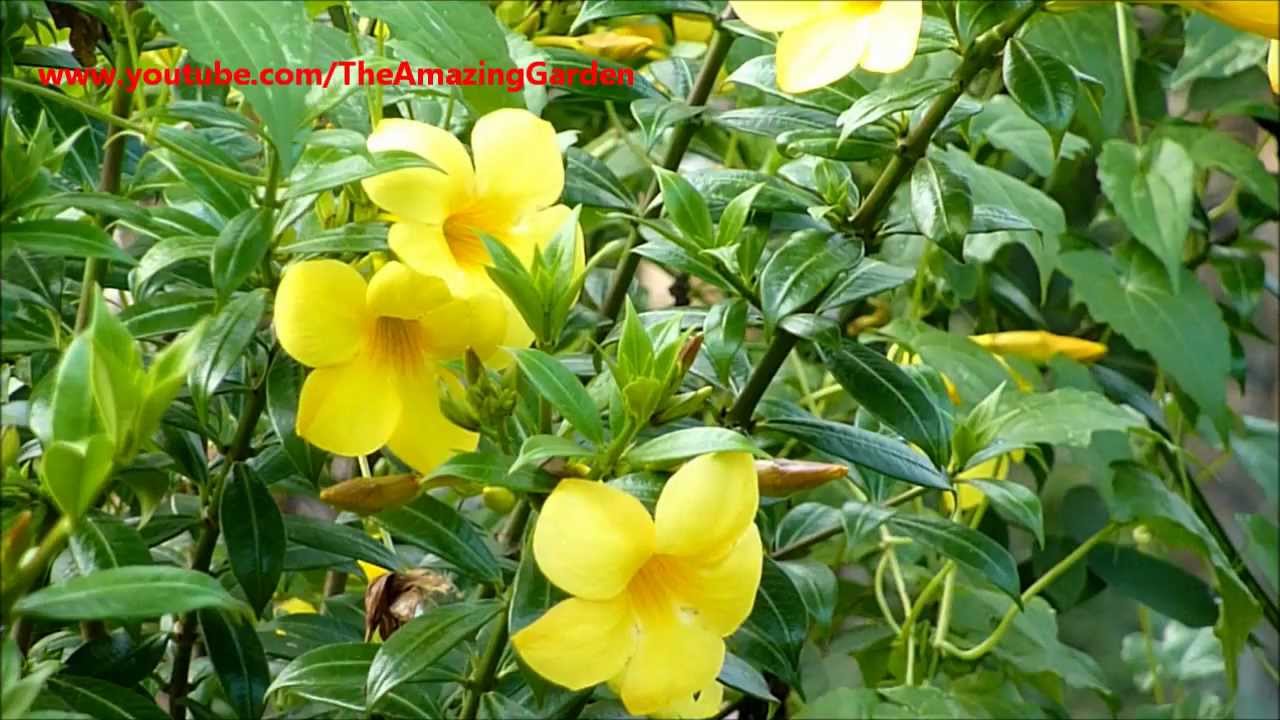
You’ve seen them. It’s hard to miss that sudden, violent explosion of yellow that takes over a street corner or a park practically overnight. For a few weeks out of the year, the yellow trumpet tree—specifically those belonging to the Handroanthus or Tabebuia genera—decides to stop being a "normal" green tree and becomes a literal beacon of light. It's jarring. It’s beautiful. It’s also kinda messy if you’re the one who has to sweep the driveway.
If you are looking at one of these gold-standard beauties and thinking about putting one in your yard, there is a lot more to it than just "dig hole, add water." These trees are surprisingly picky about where they live, even though they look tough as nails once they get established. Honestly, most people confuse the different species, calling everything with a yellow flower a "Yellow Elder" or a "Gold Tree," but if you want that specific, architectural look of a blooming canopy without the leaves getting in the way, you’re likely looking for Handroanthus chrysotrichus.
The Identity Crisis: Tabebuia vs. Handroanthus
Botanists love to move things around. For decades, if you went to a nursery, you’d ask for a Tabebuia chrysotricha. It was simple. Then, around 2007, researchers decided to split the genus based on genetic work. Now, the species with the most intense, fuzzy yellow flowers are mostly classified under Handroanthus.
Why does this matter to you? Because if you buy a tree labeled simply as a "yellow trumpet flower tree," you might end up with the Tecoma stans (Yellow Elder), which is more of a shrubby, chaotic mess than a regal specimen tree. The true Handroanthus species are the ones that provide that iconic "Golden Trumpet" look where the leaves drop completely before the flowers arrive. That’s the magic trick. By shedding its foliage, the tree ensures that nothing competes with the blossoms. It’s a pure, unadulterated visual of gold against a blue sky.
The most common one you’ll find in Florida, Southern California, or Texas is the Golden Trumpet Tree (Handroanthus chrysotrichus). It stays relatively small, maybe 25 to 35 feet. That's perfect for a suburban lot. If you go for its bigger cousin, the Silver Trumpet Tree (Tabebuia aurea), you get a more "corky" bark and a much wider spread. It’s a vibe, for sure, but you need the space for it.
Growing the Yellow Trumpet Tree Without Killing It
Don't overthink the soil. These trees aren't particularly fussy about whether your dirt is "premium" or just "okay." They do, however, demand drainage. If you plant a yellow trumpet tree in a swampy spot where water sits for three days after a rainstorm, the roots will turn to mush faster than you can say "horticulture."
Sunlight is Non-Negotiable
You need full sun. Period. If you try to tuck this tree under the shadow of a massive Oak or on the north side of a two-story house, it will grow leggy and sad. It might even refuse to bloom. To get that massive floral display, the tree needs to bake in the sun all summer long to store up energy.
The Drought Paradox
Here is the weird part: to get the best flowers, you actually have to be a bit mean to the tree. Once the tree is established—usually after two or three years—it thrives on a cycle of wet and dry. In many tropical climates, the blooming is triggered by the start of the dry season. If you keep your irrigation system running on high all winter, the tree might stay green and "happy," but it won't give you that spectacular gold show. It needs that stress signal to tell it, "Hey, time to drop the leaves and make some seeds."
Cold Hardiness Realities
Let’s be real—these are tropical beings. Most yellow trumpet trees are rated for USDA Zones 9 to 11. If you live in Zone 9a (looking at you, Gainesville or Houston), a hard freeze can and will kill a young tree to the ground. Older trees are tougher and can handle a quick dip into the 20s, but you’ll see some branch dieback. If you’re in a borderline climate, plant it near a south-facing wall to trap some heat.
Maintenance: The "Mess" Nobody Mentions
I love these trees, but I have to be the bearer of bad news for the neat freaks. The bloom cycle is glorious for about two weeks. Then, the flowers fall. All of them. At once.
Your lawn will look like someone exploded a giant yellow highlighter over it. It’s stunning for a day, then they start to turn brown and mushy if it rains. If the tree is over a pool? Forget it. You’ll be cleaning your filters every hour. You also have to deal with the seed pods. They look like long, fuzzy green beans and they stick around for a while. Eventually, they pop open and release papery seeds that blow everywhere. It’s not "invasive" in most places, but it is a bit of a cleanup project.
Pruning is also a bit of an art form here. The wood can be somewhat brittle. During a high-wind event or a tropical storm, those long, heavy branches can snap if they haven't been thinned out. Most arborists suggest a "structural prune" every couple of years to make sure the tree has a strong central leader and doesn't get too top-heavy.
Why This Tree is More Than Just a Pretty Face
In Brazil, the yellow trumpet tree (known as Ipê Amarelo) is the national flower. It’s a big deal. They use the wood—especially from the related Handroanthus heptaphyllus—for high-end decking and outdoor furniture. It’s called Ipe wood, and it’s so dense it literally sinks in water. It’s naturally resistant to rot and bugs.
While you shouldn't go cutting down your backyard ornamental to build a coffee table, it’s cool to know that the tree in your yard is part of a family known for being some of the hardest, toughest wood on the planet.
Getting the Most Out of Your Yellow Trumpet Tree
If you’re ready to commit, here is the "insider" way to do it. Don't buy the cheapest one at the big-box store. Those are often seed-grown and can take seven to ten years to bloom. Instead, look for a "grafted" tree or one grown from cuttings of a known heavy-bloomer. You’ll pay twenty bucks more, but you’ll see flowers much sooner.
When you plant, don't bury the "flare" of the tree (where the trunk meets the roots). If you bury it too deep, you’re inviting trunk rot. Mulch it, but keep the mulch a few inches away from the bark.
- Pick the spot: 15 feet away from any structure or power line.
- The Dig: Twice as wide as the root ball, but no deeper.
- Watering: Every other day for the first month, then once a week, then... almost never once it's 10 feet tall.
- Fertilizer: Use a balanced slow-release in the spring, but don't overdo the Nitrogen. Too much Nitrogen gives you leaves but no flowers. You want Phosphorus to boost those buds.
There is something deeply satisfying about having a tree that marks the seasons so clearly. In a world of evergreen shrubs that look the same in July as they do in January, the yellow trumpet tree gives you a performance. It's a reminder that nature has a schedule, and for two weeks every spring, your yard gets to be the main stage.
Take a soil sample before you plant. Most local university extension offices will test your soil for about $10-$20. If your pH is way off (too alkaline), the tree might struggle to take up iron, leading to yellowing leaves (chlorosis) that aren't the "good" kind of yellow. Fix the soil before the tree goes in the ground, and you’ll save yourself a decade of headache.
Once the tree is in, just wait. The first time you wake up and see that canopy glowing against a crisp morning sky, you’ll realize why people obsess over these things. It’s not just a plant; it’s an event.



