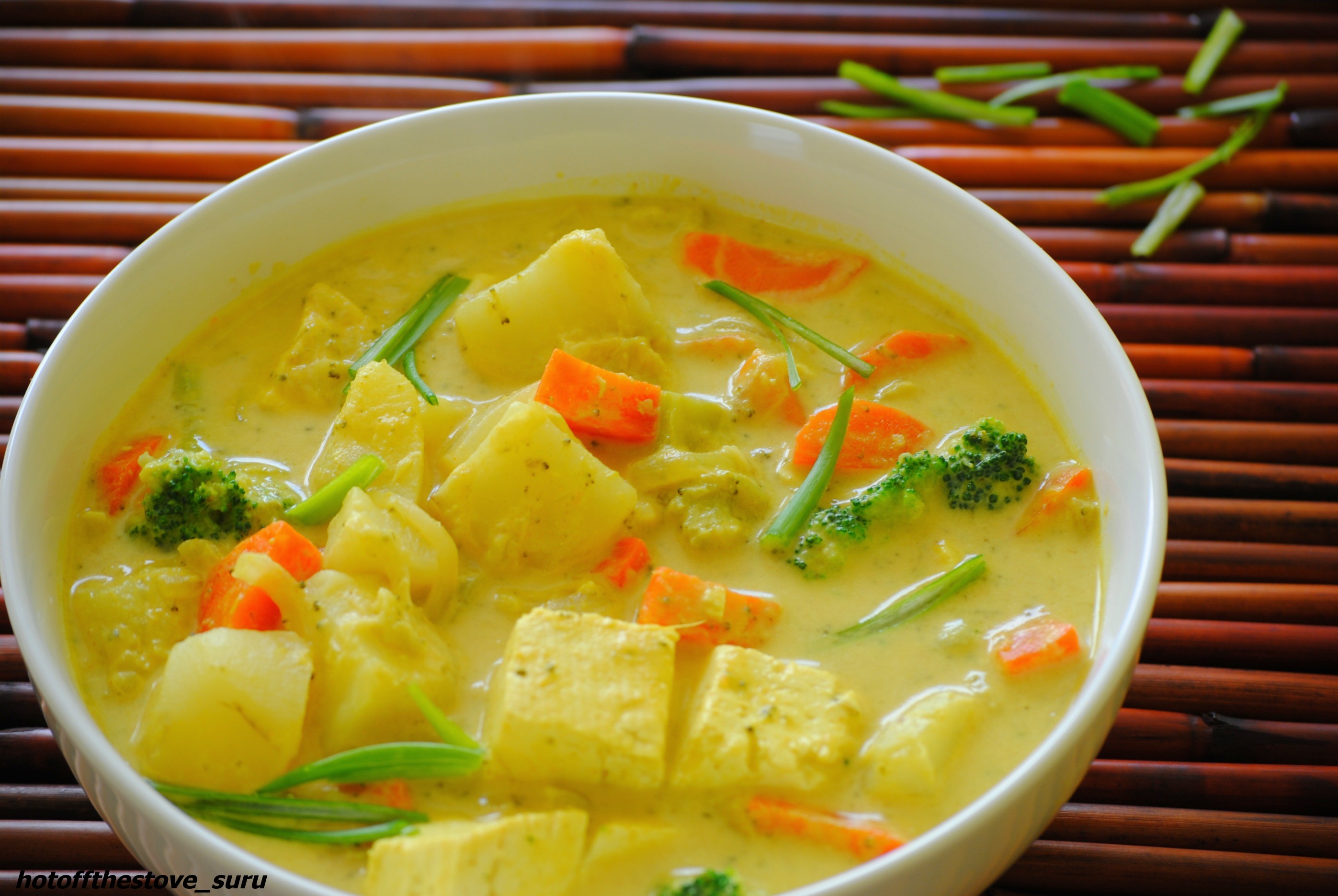
Most people approach a yellow tofu curry recipe like they’re making a bowl of cereal. They toss some powder in a pan, splash in a can of coconut milk, and wonder why the result tastes like watery sadness. Honestly, it’s frustrating. You see these vibrant, golden bowls on Instagram that look like they’d cure a cold and change your life, but your kitchen version is just... beige.
The truth is that Thai yellow curry (Kaeng Kari) is supposed to be the mellow, comforting cousin of the spicy green and bold red varieties. It’s got those warm, earthy notes of cumin and coriander, heavily influenced by Indian trade routes that passed through Thailand centuries ago. But "mellow" doesn't mean "boring." If you aren't searing your tofu or blooming your spices, you're just eating flavored soup.
Let’s get into the weeds of why your homemade curry isn't hitting the mark and how to make a version that actually tastes like it came from a Chiang Mai night market.
The Tofu Problem: Texture is Everything
You can’t just dump a block of wet tofu into a simmering pot and expect magic. It’ll be mushy. It’ll have the structural integrity of a damp sponge. When you're following a yellow tofu curry recipe, the preparation of the protein is about 40% of the battle.
First, buy extra-firm tofu. Don't even look at the "silken" or "firm" stuff for this specific dish. You need something that can stand up to a rolling boil without disintegrating into white flecks. Press it. Get the water out. I usually wrap mine in a clean kitchen towel and put a heavy cast-iron skillet on top for at least 20 minutes. If you skip this, the tofu won't absorb the curry sauce because it's already full of plain water.
Once it’s dry, sear it. You want golden-brown edges. You want a crust. That Maillard reaction—the chemical dance between amino acids and reducing sugars—creates savory depth that plain tofu simply lacks.
The Secret is in the "Crack"
Stop shaking the coconut milk can. Seriously. If you’re using high-quality, full-fat coconut milk (look for brands like Aroy-D or Savoy), the fat will often separate from the liquid. This is gold.
Traditional Thai chefs don't use oil to fry their curry paste. They use "cracked" coconut cream. You scoop that thick, white layer off the top of the can and heat it in your wok until it starts to sizzle and release its oils. That’s when you drop in your yellow curry paste.
If you just boil the paste in the milk, the flavors stay "raw" and one-dimensional. By frying the paste in coconut fat, you're unlocking fat-soluble flavor compounds in the turmeric, galangal, and lemongrass. You’ll know it’s working when the oil starts to separate and turn a brilliant, shimmering orange-gold.
What goes into a real yellow curry paste?
If you're making it from scratch—which, let's be real, most of us don't have time for on a Tuesday—it’s a labor of love. But even if you use a store-bought tub like Mae Ploy (which is excellent), it helps to know what’s inside so you can "doctor" it up.
- Turmeric: This gives the curry its iconic yellow hue. It’s anti-inflammatory, sure, but it also adds a bitter, earthy base.
- Galangal: No, you can't just use ginger. Galangal is piney and sharp.
- Lemongrass: Only the white inner stalks.
- Dried Red Chilies: Soaked until soft. Yellow curry is usually the mildest, so go easy here.
- Roasted Spices: Cumin and coriander seeds, toasted until they smell like heaven.
Building the Flavor Profile
A great yellow tofu curry recipe is a balancing act. It’s the Thai philosophy of taste: salty, sweet, sour, and spicy.
Most people forget the "salty" part because they're afraid of sodium. In a vegan or vegetarian version, you can't use fish sauce. That's a huge blow to the umami profile. To compensate, use a high-quality light soy sauce or even a dash of liquid aminos. Some chefs, like the legendary David Thompson, suggest a pinch of salt early on to help break down the aromatics.
For sweetness, don't reach for white table sugar. Use palm sugar. It has a caramel-like, smoky sweetness that balances the heat. If you can't find it, coconut sugar or even a bit of brown sugar will do in a pinch.
Then there’s the acidity. A squeeze of lime at the very end—never while it’s boiling—wakes up the whole dish. It cuts through the heavy fat of the coconut milk and makes the spices pop.
The "Standard" Ingredients vs. Reality
Usually, yellow curry features potatoes and onions. Why? Because they soak up the sauce. But the type of potato matters. Use a waxy potato like Yukon Gold or red potatoes. They hold their shape. A Russet will just turn into mashed potatoes in your curry, thickening the sauce in a way that feels heavy and muddy.
- Onions: Use shallots if you can find them. They’re sweeter and more refined.
- Carrots: Cut them into "rolling" pieces (diagonal chunks) so they have more surface area to grab the sauce.
- The "Wildcards": Try adding bamboo shoots or even cherry tomatoes. The tomatoes add a burst of acidity that is surprisingly traditional in some Thai regions.
Step-by-Step: The No-Nonsense Method
- Prep the Tofu: Press, cube, and pan-fry 14 oz of extra-firm tofu in a neutral oil until crispy. Set it aside. If you leave it in the pan, it’ll get soggy.
- Crack the Cream: Put half a cup of thick coconut cream in a large pot over medium heat. Wait for the oil to separate.
- Fry the Paste: Add 2–3 tablespoons of yellow curry paste. Stir constantly. It should smell so strong your neighbors wonder what's for dinner.
- Liquid Base: Pour in the rest of the coconut milk and about a cup of vegetable broth. Don't use water; you want flavor.
- Simmer the Veg: Add your cubed potatoes and carrots. Let them simmer until a fork goes through them easily. This usually takes about 15–20 minutes.
- The Finish: Toss the tofu back in just to warm it through. Stir in 1 tablespoon of palm sugar and 2 tablespoons of soy sauce.
- The Garnish: Fresh cilantro and a squeeze of lime. Maybe some pickled chilies if you're feeling brave.
Common Mistakes to Avoid
One big mistake? Overcooking the coconut milk. If you boil it too hard for too long, the milk can "break," and the texture becomes grainy. Keep it at a gentle simmer.
Another error is under-seasoning. Tofu is notoriously bland. If your curry tastes "flat," it almost always needs more salt (soy sauce) or more sugar. Adjust in small increments. Taste, wait, taste again.
Also, don't crowd the pan when searing the tofu. If the cubes are touching, they'll steam instead of fry. You want that crunch. It provides a necessary contrast to the soft potatoes and creamy sauce.
The Cultural Context of Kaeng Kari
Yellow curry is often called "Indian-style" curry in Thailand. It’s one of the few Thai curries that uses a significant amount of dried spices like cumin and cinnamon. It’s a testament to the Silk Road and the historical movement of people and flavors across Southeast Asia. When you eat it, you’re tasting centuries of trade.
In Southern Thailand, curries tend to be much spicier and use more fresh turmeric. The version most of us know in the West is more aligned with Central Thai cooking—richer, sweeter, and more accessible.
Why Tofu?
While traditional recipes often use chicken or beef, tofu is an incredible vehicle for yellow curry. Because tofu is porous, it acts like a sponge for the turmeric and coconut. By the time you’re halfway through your bowl, the tofu has absorbed the aromatics, making it arguably more flavorful than meat, which often stays plain on the inside.
Is it Healthy?
Well, "healthy" is a relative term. Coconut milk is high in saturated fat, but it's also rich in medium-chain triglycerides (MCTs). Turmeric is a powerhouse of curcumin, which has been studied extensively for its antioxidant properties. According to a study published in the journal Foods, the bioavailability of curcumin is significantly increased when consumed with fats—like the ones in coconut milk. So, your yellow tofu curry recipe isn't just delicious; it’s scientifically optimized for nutrient absorption.
To keep it lighter, you can use a mix of coconut milk and vegetable broth, but don't go too heavy on the broth or you'll lose that signature velvety mouthfeel.
Practical Next Steps for Your Kitchen
Now that you know the theory, it's time to execute. Don't go out and buy a 20-piece spice set just yet.
- Check your pantry: If your curry powder or paste is more than six months old, toss it. Spices lose their volatile oils over time, leaving you with sawdust.
- Find a real Asian grocer: If you’re buying "Thai" products in the international aisle of a standard supermarket, you’re likely getting a watered-down version. Look for brands like Mae Ploy, Maesri, or Aroy-D.
- Master the rice: A curry is only as good as the rice it sits on. Use jasmine rice. Rinse it until the water runs clear to remove excess starch. This ensures the grains stay separate and fluffy, perfect for soaking up that golden sauce.
- Experiment with toppings: Fried shallots (the kind you buy in the plastic jars) add a salty crunch that takes this dish from "home cooking" to "restaurant quality" instantly.
Start by pressing your tofu right now. Even if you aren't cooking for another hour, getting that moisture out is the single most important thing you can do for the texture of your dish. Once you master the "crack" of the coconut cream and the sear of the tofu, you'll never go back to the watery, bland versions again.



