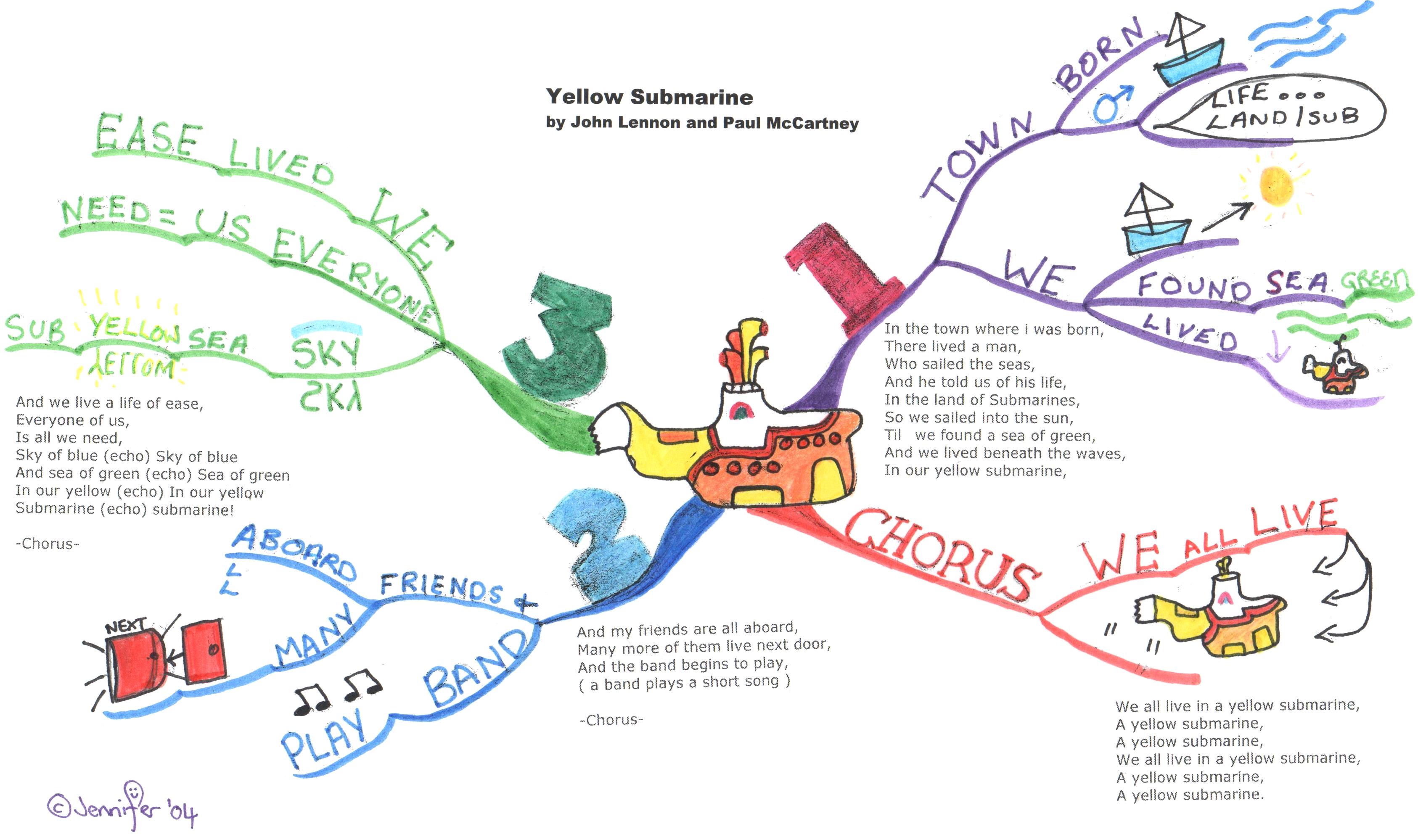
Let's be honest about the Yellow Submarine. If you mention it to a casual music fan, they usually think of the Ringo Starr-led singalong from Revolver. But for those of us who grew up obsessed with the intersection of art and sound, it represents something much weirder and more significant. It’s not just a song; it’s a film that basically saved the Beatles’ contractual obligations while accidentally inventing modern animation.
The year was 1968. The Beatles were, frankly, exhausted. They had a three-movie deal with United Artists, and after A Hard Day’s Night and Help!, they weren't exactly jumping at the chance to spend months on a film set. They kind of hated the idea of an animated movie at first. They thought it would be "Disney-fied" or sugary. Instead, they got a surrealist, pop-art explosion that looked like nothing else on the planet.
The Weird Genius of Heinz Edelmann
Most people think the Beatles drew the Yellow Submarine characters. They didn't. In fact, they weren't even the ones doing the voices. The visual heavy lifting came from Heinz Edelmann, a German illustrator whose style was a massive departure from the clean lines of 1960s American animation.
Edelmann didn't want the movie to look "nice." He wanted it to look like a trip.
He pioneered this flowery, psychedelic aesthetic that utilized vibrant primary colors against high-contrast backgrounds. It wasn't just "cartoonish." It was revolutionary. Think about the Blue Meanies—those weird, furry, boot-wearing villains. They weren't just bad guys; they were symbols of anti-music, anti-fun, and the "grayness" of the establishment. This wasn't some Saturday morning cartoon. It was a sophisticated piece of visual commentary.
The production was a mess, though. Honestly, it's a miracle it even got finished. The crew at TVC London had to churn out thousands of hand-painted cells on a deadline that would make a modern Pixar executive faint. They were working in a cramped studio, literally inventing techniques as they went along. One of the coolest parts is the "Eleanor Rigby" sequence. It uses rotoscoping and still photography in a way that feels incredibly melancholy and grounded, contrasting sharply with the neon insanity of the Sea of Monsters.
That Soundtrack Though
You can't talk about the Yellow Submarine without the music, but there's a catch. The "soundtrack" album released in 1969 is actually kind of a weird beast. Side A has six Beatles songs, only four of which were actually new at the time: "Only a Northern Song," "All Together Now," "Hey Bulldog," and "It's All Too Much."
"Hey Bulldog" is arguably one of the best rockers the band ever recorded, featuring a gritty Lennon vocal and a bass line from McCartney that absolutely thumps. It was recorded during the filming of the "Lady Madonna" promotional clip, and you can hear the band actually having fun—something that was becoming rarer during that period of their career.
Side B? That's all George Martin.
Martin composed an original orchestral score for the film, and it’s genuinely beautiful. It’s lush, whimsical, and fits the undersea journey perfectly. However, back in the day, some fans felt ripped off because they wanted a full album of Beatles songs. If you're looking for the "true" experience today, you’re better off grabbing the Yellow Submarine Songtrack released in 1999, which ditches the orchestral bits for remixed versions of every Beatles song actually featured in the movie.
Breaking Down the Sea of Monsters
The middle of the film is essentially a series of vignettes as the submarine travels through different "seas." This is where the animation gets truly experimental.
- The Sea of Time: This sequence features the famous "When I'm Sixty-Four" and shows the characters aging and de-aging. It’s a rhythmic, ticking-clock nightmare that somehow feels playful.
- The Sea of Science: A lot of geometric shapes and mathematical abstractions.
- The Sea of Holes: This is where we meet Jeremy Hillary Boob, Ph.D. (the "Nowhere Man"). This character is basically a jab at the overly intellectual, "meaningless" academic.
Why the Beatles Hated It (Until They Saw It)
As mentioned, John, Paul, George, and Ringo were skeptical. They stayed away from the production for the most part. They didn't even provide their own voices; professional actors like Geoffrey Hughes (who played Paul) and Peter Batten (who voiced George) stepped in. Batten was actually a deserter from the British Army and was arrested toward the end of production, leaving someone else to finish his lines.
When the Beatles finally saw the finished cut, they were floored. They loved it so much that they agreed to film a live-action cameo for the very end of the movie. You see them standing there, looking very 1968—moustaches, velvet jackets, and a general aura of "we're ready to go to India."
It’s a brief moment, but it’s the only time they actually appear as themselves. It gave the film the official "Beatle Seal of Approval" and turned what could have been a forgotten relic into a cornerstone of their legacy.
The Technical Legacy
Without the Yellow Submarine, you don't get Monty Python’s Flying Circus animations by Terry Gilliam. You probably don't get the visual style of The Powerpuff Girls or Adventure Time. It broke the "Disney mold" of what a feature-length animated film was supposed to look like. It proved that animation could be surreal, non-linear, and aimed at adults just as much as kids.
The 2012 restoration of the film was a massive undertaking. They didn't use automated software because the art was too complex; they literally hand-cleaned every single frame. When you watch it on 4K today, the colors pop in a way that feels almost aggressive. It’s a sensory overload in the best way possible.
How to Experience it Properly Now
If you want to actually "get" the Yellow Submarine hype, don't just put the song on a playlist. That’s the surface level.
- Watch the 2012 Restoration: The digital cleanup makes the original hand-painted cells look vibrant and helps you appreciate the texture of the ink.
- Listen to "It's All Too Much": This George Harrison track is the peak of Beatles psychedelia. It features feedback, Hammond organs, and a brass section that sounds like it’s melting. It’s the sonic equivalent of the movie's visuals.
- Read the Credits: Look for the name Al Brodax. He was the producer who pushed this through. While the Beatles got the glory, the animators at TVC London were the ones who stayed up all night painting Blue Meanies.
The film is essentially a 90-minute music video made before music videos were even a thing. It’s a weird, flawed, beautiful piece of cinema that captures the exact moment the 1960s turned from "mop-top" pop into something far more complex and colorful. Whether you’re in it for the nostalgia or the art history, it remains a high-water mark for what happens when rock music and visual art collide without any boundaries.
Check out the Yellow Submarine (1999) remix album first if you want the hits, but definitely track down the original George Martin score if you want to understand the cinematic vibe. It’s a trip worth taking, even if you aren't a die-hard Beatlemaniac.



