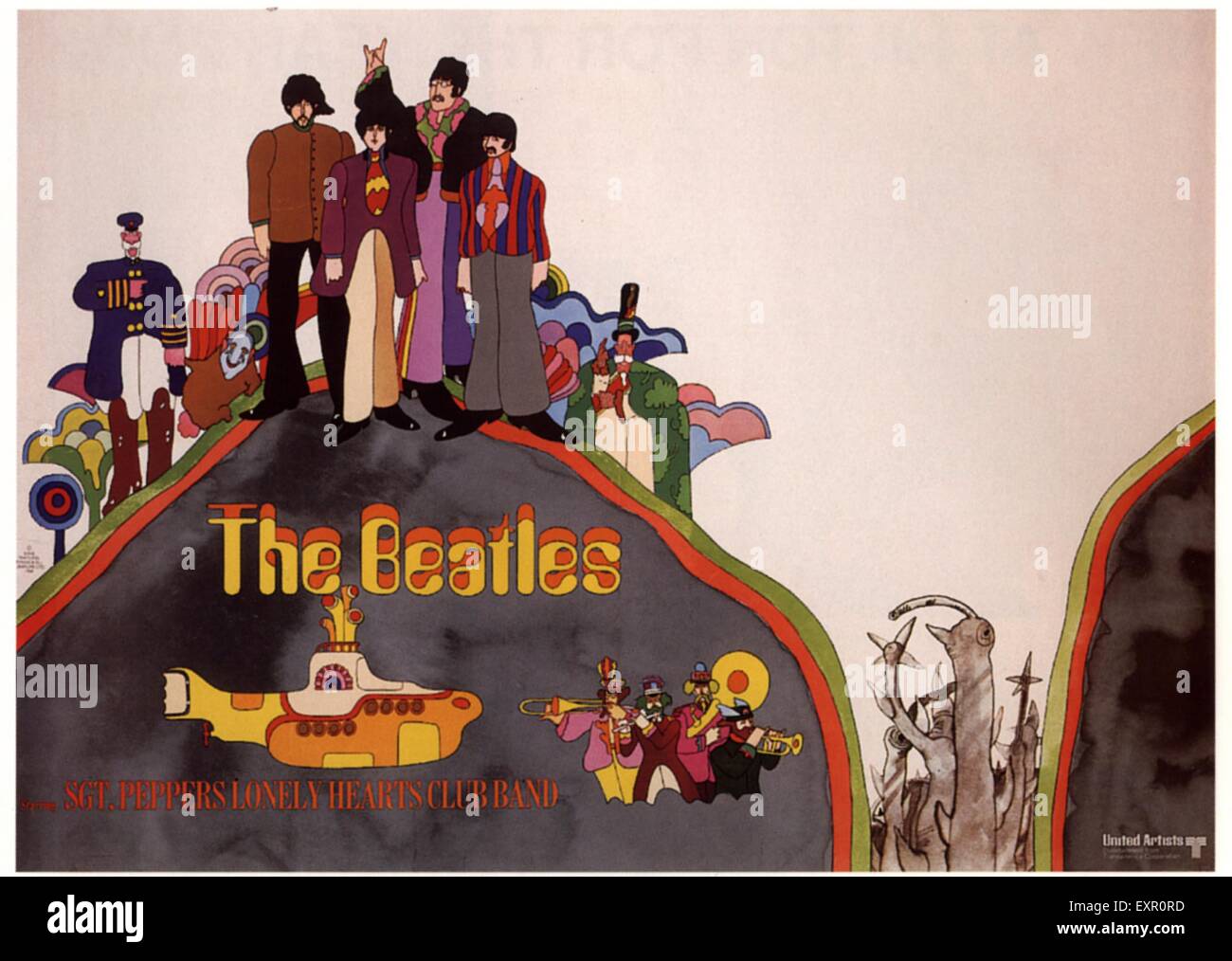
It’s January 1969. The Beatles are falling apart. Paul is trying to hold the reigns, John is checking out with Yoko, and George is tired of having his songs ignored. Amidst this brewing storm, they drop a soundtrack for a cartoon they barely wanted to participate in. Honestly, the Yellow Submarine album is the weirdest entry in their entire discography. People call it a throwaway. Critics at the time were, frankly, a bit annoyed that they were being asked to pay full price for an LP that only contained four new songs. But if you look closer, this record is a fascinating snapshot of a band in transition.
The Yellow Submarine Reality Check
You've probably heard that the Beatles hated the movie. That’s not quite true, though they were definitely skeptical at first. They owed United Artists one more film, and a cartoon seemed like an easy way to fulfill a contract without actually having to spend weeks on a movie set. They didn't even provide their own voices; professional actors took over the roles of John, Paul, George, and Ringo. It wasn't until the band saw the early sketches and realized the animation was actually groundbreaking that they decided to show up for a live-action cameo at the end.
But the album? That’s a different story.
The Yellow Submarine soundtrack is a bit of a Frankenstein’s monster. Side A is the Beatles. Side B is George Martin’s orchestral score. This division is what makes the album so polarizing. If you’re a die-hard fan, you’re basically buying half an album of "real" Beatles content. Yet, those four new tracks—recorded mostly in 1967 and 1968—offer a glimpse into the psychedelic leftover bin that is surprisingly high quality.
George Harrison Steals the Show
Usually, George was lucky to get one or two songs on a record. On Yellow Submarine, he has two of the four new tracks. And they’re weird. Really weird. "Only a Northern Song" is a meta-commentary on his frustration with the Beatles' publishing company, Northern Songs Ltd. He’s basically singing about how it doesn't matter what words he says or what notes he plays because he doesn't own the song anyway. It’s sarcastic. It’s dissonant. It’s George at his most cynical, and it fits the trippy aesthetic of the film perfectly.
Then there's "It's All Too Much." This song is a massive, sprawling piece of feedback-drenched psychedelia. Recorded during the Sgt. Pepper era but held back, it features some of the most aggressive guitar work the band ever put to tape. It’s long. It’s loud. It’s arguably one of the best "hidden gems" in the entire catalog. While John and Paul were busy with their own projects, George was quietly providing the backbone for this soundtrack.
Why the "New" Songs Weren't Really New
If you bought the album in 1969 expecting the next White Album, you were probably disappointed. The title track, "Yellow Submarine," had already been out for two years on Revolver. "All You Need Is Love" was a global anthem by the time the needle hit the wax on this LP.
The "new" stuff was essentially the stuff that wasn't "good enough" for their masterpiece albums.
- "Hey Bulldog" is the standout. Recorded in February 1968 while they were filming a promotional clip for "Lady Madonna," it’s a gritty, piano-driven rocker. John’s vocals are raw. The rapport between John and Paul at the end—barking and laughing—is a rare moment of genuine joy from a period where they were mostly bickering.
- "All Together Now" is a Paul McCartney "granny smith" song. It’s a nursery rhyme. It’s simple. It’s catchy. Kids love it, and that was the point.
The timeline is a mess. "Only a Northern Song" was rejected from Sgt. Pepper. "All Together Now" and "It's All Too Much" were recorded shortly after Sgt. Pepper was finished. "Hey Bulldog" came right before the trip to India. By the time the Yellow Submarine album was actually released, the band had already moved on to the Get Back sessions (which became Let It Be). They were literally standing on the roof of Apple Corps while this psychedelic relic was hitting the shelves.
The George Martin Controversy
Let's talk about Side B. For a lot of rock fans, Side B is a "skip." It’s entirely orchestral, composed and conducted by the band's producer, George Martin. While Martin was a genius, many fans felt cheated. They wanted the Beatles, not a classical score for a movie about Blue Meanies.
However, if you listen to it as a standalone piece of work, Martin’s score is incredible. He uses the orchestra to mimic the surrealism of the animation. It's sophisticated. It’s whimsical. But in the context of a "Beatles album," it feels out of place. This is why many people prefer the 1999 Yellow Submarine Songtrack, which ditched the orchestral bits and replaced them with more actual Beatles songs from the movie.
The Impact of the Animation
The movie changed everything. Before Yellow Submarine, animation was for kids. This movie was for the counterculture. The bright colors, the Pop Art influence of Peter Max (though he didn't actually design it—Heinz Edelmann did), and the surrealist humor paved the way for things like Monty Python.
The album is the sonic companion to that visual revolution. Even though the Beatles didn't write a cohesive "concept" for it, the songs selected—even the old ones—mesh perfectly with the vibe of the Sea of Holes and the Sea of Green.
Is It Actually a Bad Album?
No. It’s just not a "proper" album. Think of it as an EP that got stretched out.
If you take "Hey Bulldog," "Only a Northern Song," "It's All Too Much," and "All Together Now," you have a world-class 15 minutes of music. Add the title track and "All You Need Is Love," and you have a solid B-tier Beatles project. The problem is the packaging. It’s the only time the band seemed to be cynical about their output, or at least, their label was.
Interestingly, the band considered releasing it as a five-track mono EP. They even mastered it. It would have included the four new songs and "Across the Universe" as a bonus. That would have been a collector's dream. Instead, we got the half-and-half LP.
What You Should Do Next
If you want to actually appreciate this era of the band, don't just stream the original 1969 album on repeat. You've got to dig a little deeper into how these songs were made.
- Listen to the "Hey Bulldog" 1999 Remix: The original stereo mix was always a bit lopsided. The 1999 remix (and the later 2023 versions) brings out the ferocity of Ringo’s drums and the growl of the bass. It sounds like it was recorded yesterday.
- Watch the Movie First: This is one of the few cases where the music makes way more sense if you see the visuals it was meant to accompany. The "Eleanor Rigby" sequence in the film is a masterclass in melancholy animation.
- Skip Side B (at first): If you're looking for the Beatles "vibe," stick to the first six tracks. Save the George Martin score for a rainy Sunday when you want something atmospheric.
- Compare the Mono vs. Stereo: The mono mixes of the four new songs are punchier. "Only a Northern Song" in mono is a completely different, more claustrophobic experience.
The Yellow Submarine album remains the "odd man out" in the Beatles' discography. It’s a bridge between the psychedelic heights of 1967 and the stripped-back rock of 1968. It’s messy, it’s disorganized, and it’s half-classical. But it also contains some of the most adventurous music the band ever recorded. Don't let the "soundtrack" label fool you; there’s real gold in the Sea of Science.
To get the full experience, track down the Yellow Submarine Songtrack released in 1999. It includes 15 songs actually featured in the film—like "Nowhere Man" and "Think For Yourself"—all remixed from the original multitrack tapes. It's the version of the album that should have existed in 1969.



