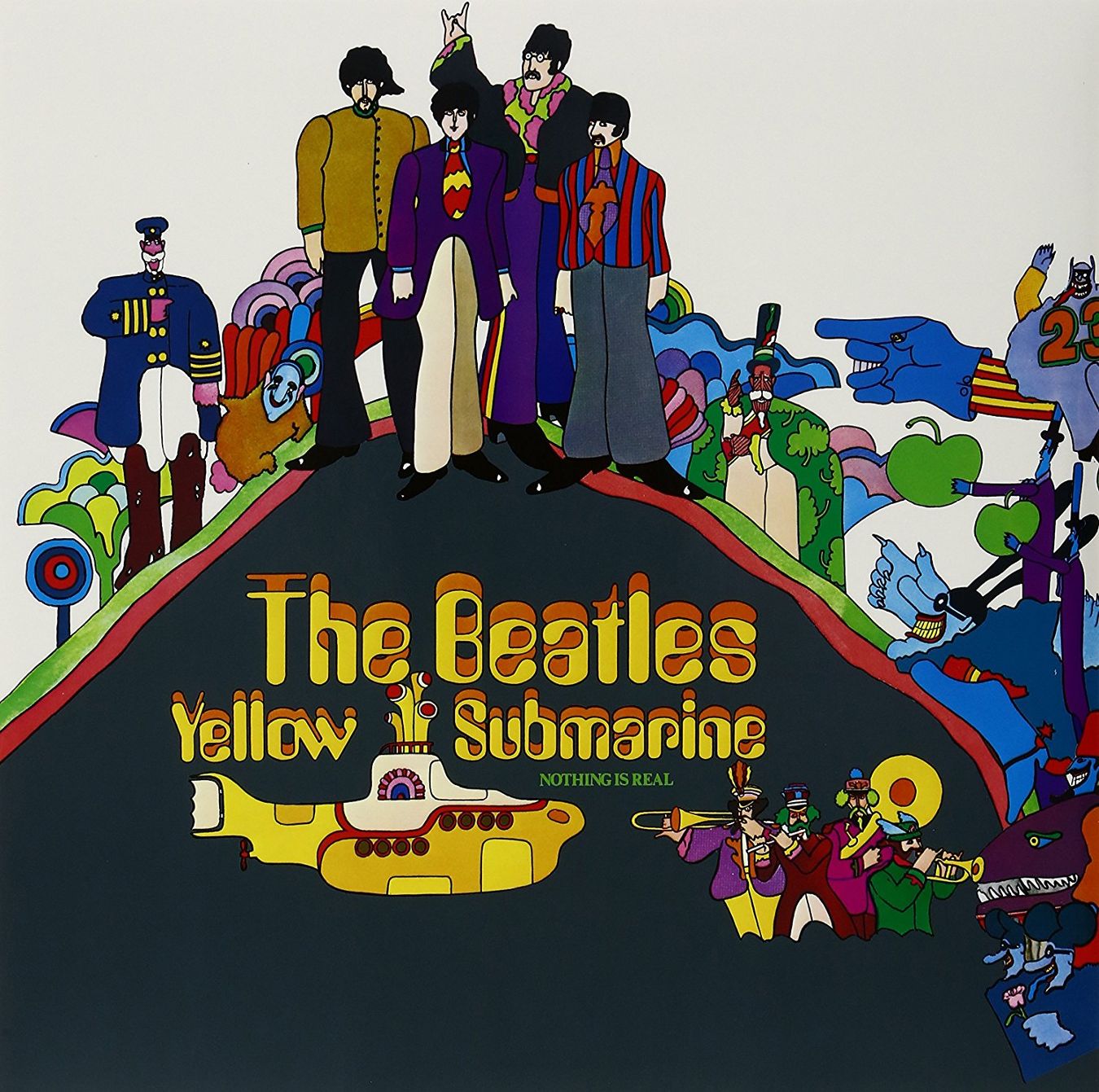
Let’s be honest. For a long time, the Yellow Submarine soundtrack album was basically the "black sheep" of the Beatles' discography. If you grew up collecting their vinyl or scouring CD bins in the 90s, this was likely the last one you bought. Why? Because half of it isn't even the Beatles.
It’s a weird record.
Released in January 1969, it feels like a bit of a placeholder, tucked awkwardly between the sprawling genius of the White Album and the polished swansong of Abbey Road. Most fans view it as a contractual obligation fulfilled with leftover scraps. But if you actually sit down and listen to it—really listen to the strange, psychedelic textures George Martin wove into the orchestral side—you start to realize it's a much more interesting piece of history than the "minor release" label suggests.
The Weird History of the Yellow Submarine Soundtrack Album
The Beatles kind of hated the idea of the movie at first. They were exhausted by Help! and A Hard Day's Night, and the thought of another film felt like a chore. So, they handed over some songs they didn't think were good enough for Sgt. Pepper or the White Album.
That's the irony.
Even the "throwaway" tracks from the Beatles in 1967 and 1968 were better than almost anyone else's hits. The Yellow Submarine soundtrack album ended up being this psychedelic soup of high-concept orchestral work and fuzzy, distorted rock.
Side A contains six songs. Only four were new at the time: "Only a Northern Song," "All Together Now," "Hey Bulldog," and "It's All Too Much." The title track and "All You Need Is Love" were already massive hits. Side B? That’s all George Martin. It’s the score for the film, performed by a 41-piece orchestra.
For years, people felt ripped off. They wanted a Beatles album, not a film score. But looking back, this record captures the band at their most experimental—and perhaps their most relaxed—because they didn't feel the pressure of making a "masterpiece."
Why "Hey Bulldog" is the Real Star of the Show
If you ask any serious Beatles nerd about the Yellow Submarine soundtrack album, they won’t talk about the title track. They’ll talk about "Hey Bulldog."
It’s arguably the best "forgotten" song in their entire catalog.
Recorded during a filming session for the "Lady Madonna" promotional video, it’s got this biting, aggressive piano riff that feels way ahead of its time. John Lennon’s vocals are raw. Paul McCartney’s bass line is wandering and melodic. It’s the sound of a band actually having fun in the studio, which was becoming a rare thing by 1968.
There’s a chaotic energy at the end where John and Paul start barking and howling. It wasn't planned. It was just a moment of genuine levity. In the context of the tension-filled Get Back sessions that followed, "Hey Bulldog" serves as a final glimpse of the Fabs just being a rock band.
George Harrison’s Psychedelic Revenge
The Yellow Submarine soundtrack album is also a massive win for George Harrison.
For a long time, George was relegated to one or two songs per album. On this record, he gets two of the four "new" tracks. And they are heavy.
"Only a Northern Song" is a sarcastic, dissonant jab at the Beatles' publishing company. George basically wrote a song about how the song itself didn't matter because he didn't own the rights to it anyway. It’s filled with weird trumpet blasts and glissandos.
Then there’s "It's All Too Much."
Honestly? It might be the most "Sgt. Pepper" song not on Sgt. Pepper. It’s a six-minute blast of feedback, Hammond organ, and philosophical lyrics about ego and the universe. It’s loud. It’s messy. It’s brilliant. If you’ve only ever heard the shortened version, you’re missing out on the full, droning experience of George Harrison embracing his inner mystic.
The George Martin Side: Is it Actually Good?
Usually, when a rock fan sees "orchestral score" on an album, they skip it.
On the Yellow Submarine soundtrack album, that's a mistake. George Martin wasn't just a producer; he was a brilliant arranger who understood how to translate the "trippy" visuals of the film into sound.
Tracks like "Sea of Monsters" and "Pepperland" are incredible. They don't sound like a standard Hollywood score from 1968. They sound like modern classical music influenced by the avant-garde scene in London. Martin uses strings to create tension, odd percussion to mimic the movement of the "Blue Meanies," and playful melodies that capture the innocence of the movie’s heroes.
It’s the only time we get a full side of vinyl dedicated to the "Fifth Beatle" and his own creative vision. It provides a bridge between the Beatles' pop sensibilities and the high-art world they were increasingly moving toward.
Misconceptions About the 1999 Yellow Submarine Songtrack
This is where things get confusing for casual listeners.
In 1999, Apple released the Yellow Submarine Songtrack. Note the "g."
People often confuse this with the original Yellow Submarine soundtrack album. The 1999 version ditched the George Martin orchestral tracks entirely. Instead, they packed it with every Beatles song that appeared in the movie, including tracks from Sgt. Pepper and Rubber Soul.
They also remixed the audio from the original master tapes.
If you want a "best of" experience that sounds punchy and modern, the Songtrack is great. But if you want the historical artifact—the weird, lopsided, experimental record the world actually received in 1969—you have to stick with the original soundtrack. The 2009 remasters of the original album finally gave George Martin's score the clarity it deserved, making the case for the album as a cohesive piece of art rather than a collection of leftovers.
The Impact on Pop Culture and Discovery
Even decades later, this album keeps popping up in Google searches and fan discussions. Why? Because the movie Yellow Submarine saved the Beatles' brand for younger generations.
It’s a gateway drug.
Kids see the colorful animation, hear the title track, and suddenly they’re exploring the deeper cuts on the Yellow Submarine soundtrack album. It represents the peak of the 60s "flower power" aesthetic, but it also has that dark, cynical edge that the Beatles were starting to develop.
What to Look for When Buying the Vinyl
If you’re a collector looking for an original 1969 pressing, pay attention to the back cover.
Early UK pressings have two "flipback" flaps on the top and bottom of the sleeve. Also, look at the credits. The original release was one of the few Beatles albums where the "orchestra" side was given equal billing on the sleeve design.
In the US, the album was released by Capitol Records (naturally). Interestingly, because of the way royalties worked back then, the Yellow Submarine soundtrack album was one of the few Beatles records that was essentially the same in both the UK and the US, unlike earlier albums like Revolver or Rubber Soul which were hacked apart for the American market.
The Verdict on the Yellow Submarine Soundtrack Album
Is it their best work? No.
But it’s an essential piece of the puzzle. It’s a transition. It marks the end of the "Psychedelic Beatles" and the beginning of the "Get Back to Rock and Roll Beatles." Without the freedom they had on this soundtrack to just "muck about" in the studio, we might not have gotten the raw power of their final two years.
Actionable Insights for Fans and Collectors
If you want to truly appreciate the Yellow Submarine soundtrack album, don't just put it on as background music. Do these things:
- Listen to the mono vs. stereo versions: The mono version of the album (specifically the UK release) is just a fold-down of the stereo, but "Only a Northern Song" features a different, more chaotic mix in the mono version that is worth tracking down.
- Pay attention to the bass: Use a good pair of headphones for "Hey Bulldog." Paul McCartney’s Rickenbacker bass tone on this track is legendary among musicians for its growl and clarity.
- Watch the film first: The George Martin score makes infinitely more sense once you see the "Sea of Holes" or the "March of the Meanies" on screen. The music was literally designed to sync with the surrealist animation.
- Don't skip Side B: Give the George Martin tracks at least one full, focused listen. You’ll hear themes that he subtly reused or referenced in his other production work.
- Check your "Songtrack" vs "Soundtrack": If you’re buying a digital copy or a CD, make sure you know which version you’re getting. If it doesn't have the orchestral tracks, it's the 1999 compilation, not the original 1969 album.
The Yellow Submarine soundtrack album remains a fascinating, slightly broken, yet beautiful snapshot of the world's most famous band at a crossroads. It’s weird, it’s loud, and it’s quintessentially Beatles.
For those looking to expand their collection, the 2012 vinyl reissue is generally considered the best-sounding modern pressing for those who can't afford a mint condition 1969 original. It uses the 2009 digital masters but manages to retain the warmth of the original analog recordings.
Ultimately, this album proves that even when the Beatles weren't trying, they were still light years ahead of the competition.
Next time you're scrolling through a streaming service or flipping through crates at a record store, don't pass this one over. It’s a lot more than just a children’s movie tie-in. It’s a masterclass in how to be creative when you think nobody is watching.
Source References:
- The Complete Beatles Recording Sessions by Mark Lewisohn.
- Revolution in the Head by Ian MacDonald.
- Apple Corps Ltd. official archival data on the 1968-1969 release schedule.
- George Martin's personal accounts from the Anthology series.



