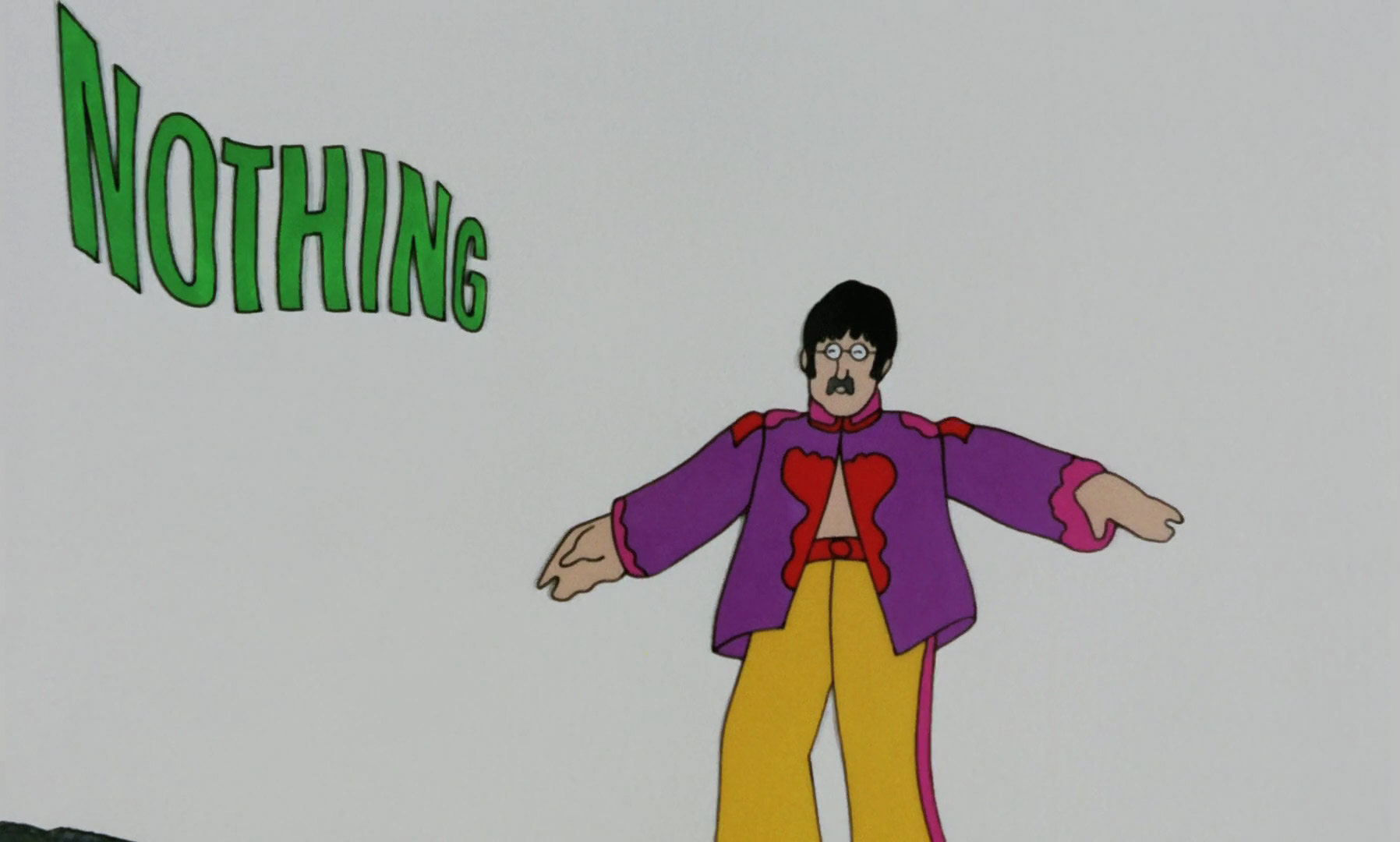
It’s a song everyone knows. You’ve heard it at weddings, in preschool classrooms, and probably whistled it while doing the dishes without even thinking about it. But when people start asking what is the song yellow submarine about, things get weird fast. Depending on who you ask, it’s either a harmless nursery rhyme, a secret manifesto for drug culture, or a coded message about the Vietnam War.
Honestly? It's none of those things. And yet, it's all of them.
Paul McCartney woke up one night in 1966 with a melody in his head. He wasn't trying to change the world. He was just trying to write something for Ringo Starr. Ringo had this specific, limited vocal range—charming, but not exactly operatic. Paul figured a kid-friendly, sing-along vibe would fit Ringo’s "everyman" persona perfectly. That’s the boring, factual start of a song that would eventually launch a psychedelic film and define an entire era of pop culture.
The Myth of the "Yellow Sub" as a Drug Reference
Let's address the elephant in the room. Or rather, the Nembutal in the room. For decades, fans have insisted that "Yellow Submarine" is a blatant reference to barbiturates. In the 1960s, certain depressant pills were yellow and shaped like capsules. People called them "yellow submarines." Naturally, the counterculture assumed The Beatles were wink-winking at their fans.
But here is the thing: Paul McCartney has shot this down a thousand times. He’s been pretty open about his drug use in other tracks—"Got to Get You Into My Life" is famously an ode to pot—but he’s always maintained that "Yellow Submarine" was just a story. He wanted to write about a guy who lived at sea. That’s it.
Does that mean the drug association isn't real? Of course not. Once a song enters the public consciousness, the author loses control of the meaning. If a generation of kids used the song as a soundtrack for their trips, then for them, that's what the song is about. But from a songwriting perspective, the intent was pure whimsy. It’s a children’s song. Sometimes a cigar is just a cigar, and sometimes a submarine is just a submarine.
Recording Magic at Abbey Road
The actual recording session for this track was essentially a massive party. It wasn't just the four Beatles in the studio. They brought in friends, partners, and staff to make as much noise as possible.
You can hear the chaos if you listen closely. Brian Jones from The Rolling Stones is in there clinking glasses. Marianne Faithfull is supposedly in the background. Pattie Boyd is shrieking. They had a metal bathtub brought in and filled it with water so they could blow bubbles through straws. They used chains, whistles, and bells. Mal Evans, their legendary roadie, marched around the room wearing a bass drum on his chest.
John Lennon took it a step further. He grabbed a straw and started blowing bubbles into a bucket of water while Ringo was singing to get that underwater gurgle. He even tried to record his backing vocals from inside a water tank, though that didn't quite work out for technical reasons. This wasn't a serious session about "high art." It was a bunch of guys in their mid-20s acting like kids.
Who actually wrote the lyrics?
While Paul is the primary architect, Donovan (the "Mellow Yellow" singer) actually contributed a key line. Paul was stuck on a verse and Donovan suggested: "Sky of blue and sea of green in our yellow submarine." It fit the color palette perfectly.
What Is The Song Yellow Submarine About Politically?
While the drug rumors get the most traction, the political interpretations are actually more interesting. By 1966, the world was messy. The Vietnam War was escalating. The "Summer of Love" was just around the corner, but the tension was palpable.
Some critics argued the submarine represented a retreat. It’s a "vessel" where everyone has what they need, and "friends are all aboard." It’s an isolationist utopia. In this reading, the song is about escaping a violent, grey world to live in a bright, colorful, communal space where "many more of them live next door."
It’s easy to see why this resonated with the hippie movement. The idea of living in a self-contained community where music is the primary language was the dream of the 1960s commune movement. The Beatles weren't necessarily trying to lead a revolution with this track, but they were definitely tapping into the zeitgeist of wanting to drop out and live simply.
The Animation That Changed Everything
You can't talk about what the song is about without mentioning the 1968 film. Weirdly, The Beatles didn't even want to do the movie. They owed United Artists one more film under their contract and thought an animated feature would be an easy way to satisfy the debt without actually having to act.
They were so uninterested that they didn't even provide their own voices. Actors played them. But then they saw the initial sketches by Czech illustrator Heinz Edelmann.
The art was revolutionary. It moved away from the Disney "cute" aesthetic and into something surreal, pop-art-heavy, and slightly disturbing (hello, Blue Meanies). When the band saw how cool it looked, they did a 180-degree turn. They even showed up for a live-action cameo at the very end. The movie transformed the song from a catchy tune on Revolver into a global symbol of peace and love. The submarine became a literal vehicle for defeating the "Blue Meanies"—who represented anything boring, oppressive, or anti-music.
Why the Simplicity Is Actually Genius
Musicologists often point out that "Yellow Submarine" is structurally quite sophisticated for something so "simple." It’s in the key of G major, and it uses a very standard folk progression. But the way it uses sound effects—the "soundscape"—was years ahead of its time.
Before this, pop songs were mostly just instruments and vocals. The Beatles introduced the idea that a song could be a 3D environment. When you hear the brass band section in the middle, it feels like it's marching past you. When you hear the captain shouting orders, it feels like you're standing on the deck.
It’s a masterclass in "theming."
The Ringo Factor
Ringo's performance is the glue. If John had sung this, it would have sounded sarcastic. If Paul had sung it, it might have been too "show-tune." Ringo has this inherent sincerity. You believe him when he says he's happy in his little yellow boat. That's why the song works for toddlers and grandparents alike. It’s non-threatening.
Common Misconceptions and Weird Facts
- The Dreadnought Theory: Some military historians (usually the very bored ones) have tried to link the song to the 1906 HMS Dreadnought or specific submarine tactics. It’s a stretch. The Beatles weren't naval buffs.
- The "Black Power" Interpretation: In some circles during the late 60s, "Yellow Submarine" was oddly adopted as a metaphor for the struggle of marginalized groups living in their own "contained" communities, though there is zero evidence the band intended this.
- The Missing Intro: There is an unreleased version of the song that features a long, spoken-word intro by Ringo. He talks about walking from Land's End to John o' Groats. It was cut because it made the song too long and honestly, it was a bit of a ramble.
How to Listen to It Today
To really understand the song, you have to listen to the 2022 Revolver Special Edition remix. Giles Martin (son of the original producer George Martin) used "de-mixing" technology to separate the sound effects from the vocals.
When you hear the clarity of the bubbles, the clinking glasses, and the chatter, the song stops feeling like a "hit" and starts feeling like a moment in time. It’s a recording of four friends at the absolute peak of their creative powers, having a laugh.
Actionable Steps for Music Fans
If you want to go deeper into the lore of "Yellow Submarine," don't just stop at the Spotify track.
- Watch the 4K Restoration: The Yellow Submarine film was painstakingly restored a few years ago. The colors are so vivid they almost vibrate. It gives the song a visual context that "Revolver" alone doesn't provide.
- Compare the Mono vs. Stereo Mixes: The original mono mix of Revolver has slightly different timing on the sound effects. For purists, the mono mix is the "real" version because that's what the band spent the most time on.
- Read "Many Years From Now" by Barry Miles: This is Paul McCartney’s authorized biography. He goes into detail about the night he wrote the song and confirms the "nursery rhyme" intent.
- Listen to the "Yellow Submarine" Songtrack: Not the soundtrack, but the "Songtrack" released in 1999. It features far superior mixes of the songs used in the film compared to the original 1969 release.
Ultimately, what is the song yellow submarine about is a question with a simple answer that grew complex because the world changed around it. It's about a submarine. It's about childhood. It's about the joy of making noise with your friends. In a world that often feels like it's being run by Blue Meanies, maybe living in a yellow submarine isn't such a bad idea after all.
Check out the Revolver sessions on official streaming platforms to hear the evolution of the track from a melancholic acoustic demo to the boisterous anthem we know today. It’s a wild ride.



