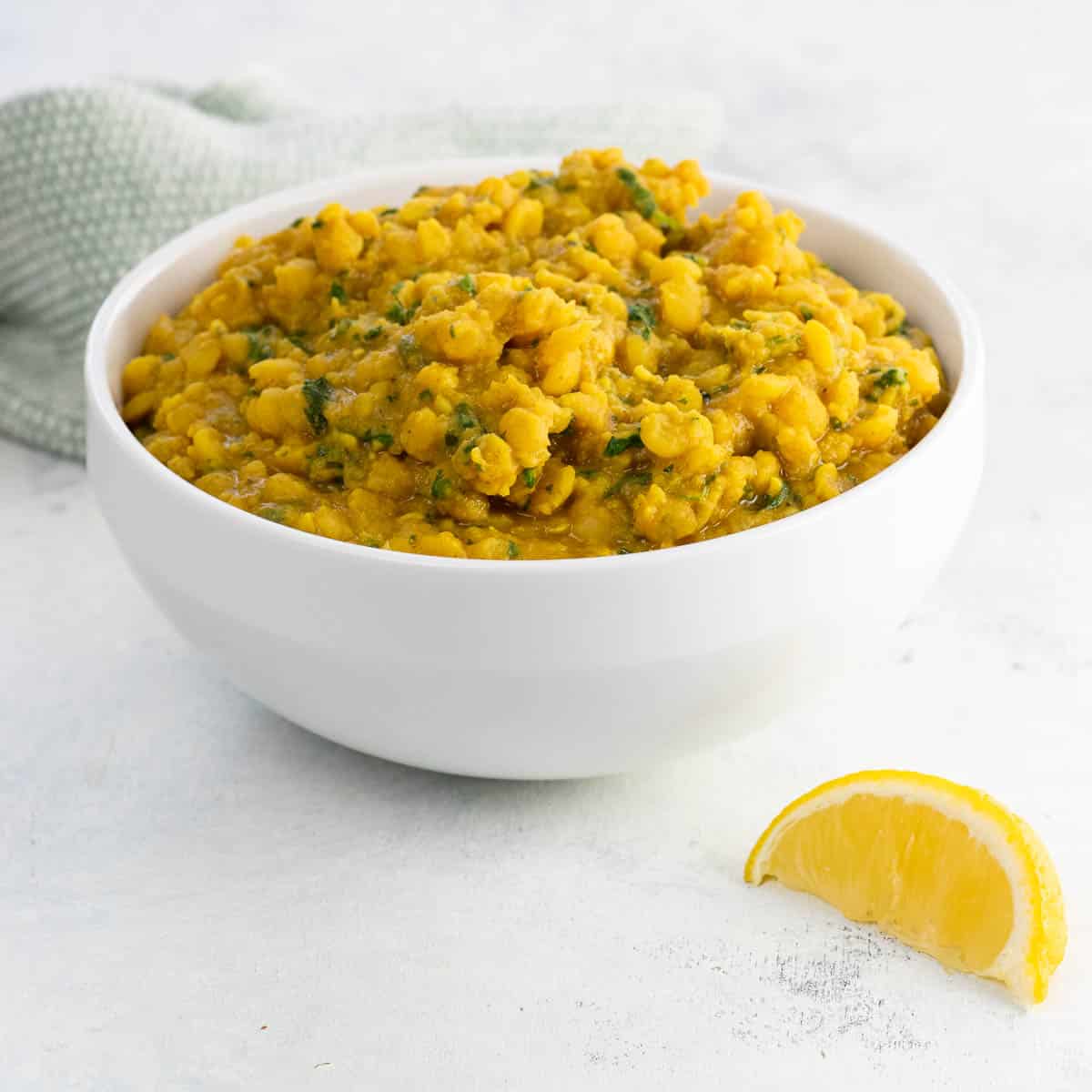
Honestly, most people treat yellow split pea dahl like a backup plan. It’s that bag of pulses sitting in the back of the pantry, right behind the fancy quinoa and the expensive pasta, waiting for a "rainy day" or a week where the grocery budget feels a bit too tight. But if you think of this dish as just a "cheap meal," you're missing the point entirely. It’s a powerhouse.
Yellow split peas are basically the Clark Kent of the legume world. They look unassuming, maybe even a little boring, but they’re packed with enough plant-based protein and fiber to put a steak to shame. The problem isn't the pea. It's the preparation. If your dahl tastes like bland, mushy baby food, it’s because you’re likely skipping the three most important steps in Indian cooking: the soak, the sear, and the tadka.
Why yellow split pea dahl is actually better than red lentil dahl
Most beginner recipes point you toward red lentils (masoor dal). Red lentils are great because they cook in fifteen minutes and dissolve into a smooth puree without much effort. But yellow split peas (chana dal or matar dal) have personality. They hold their shape. When you bite into a well-cooked yellow split pea, there’s a slight resistance, a nutty texture that makes the meal feel substantial rather than just liquid.
From a nutritional standpoint, the data is pretty clear. According to the USDA FoodData Central, a single cup of cooked yellow split peas provides about 16 grams of protein and 16 grams of fiber. That fiber isn't just "good for you"—it’s a prebiotic powerhouse that feeds your gut microbiome. Dr. Will Bulsiewicz, a prominent gastroenterologist and author of Fiber Fueled, frequently highlights legumes like these as the single most important predictor of longevity in various "Blue Zone" populations.
The science of the soak
Don't skip this. I know the bag says you don't have to soak split peas, but the bag is lying to your face if you want the best texture. Soaking for at least four hours (or overnight) does two things. First, it reduces the cooking time by nearly 40%. Second, it helps break down complex sugars like raffinose, which are the primary culprits behind the "musical fruit" reputation of beans.
If you're in a rush, use the "power soak" method. Cover the peas with boiling water and let them sit for 60 minutes. It's not as good as an overnight soak, but it'll save your dinner.
The mistake everyone makes with spices
You can’t just throw curry powder into a pot of water and expect magic. It doesn't work that way. Curry powder is often a stale mix of turmeric, coriander, and cumin that’s been sitting on a shelf since the previous administration. To make yellow split pea dahl pop, you need to understand the concept of "blooming."
Fat is a carrier for flavor. Many of the aromatic compounds in spices are fat-soluble, not water-soluble. This means if you boil them in water, you’re only getting about 20% of the potential flavor. To get the other 80%, you have to toast them in oil or ghee.
Start with your "hard" spices. Mustard seeds, cumin seeds, maybe a cinnamon stick. When the mustard seeds start to pop—and they will literally jump out of the pan if you aren't careful—that’s when you add your aromatics like onions, ginger, and garlic.
Building the flavor foundation
- The Fat: Use ghee for a nutty, buttery depth. If you're vegan, coconut oil is the way to go because it stands up to high heat and adds a subtle sweetness that balances the earthy peas.
- The Alliums: Don't just soften the onions. Brown them. We’re talking deep, golden-brown caramelization. This provides the "umami" base that replaces the need for meat stocks.
- The Acid: A squeeze of lemon or lime at the very end is non-negotiable. Without acid, yellow split pea dahl feels "heavy" on the tongue. The acid brightens the entire dish and makes the spices sing.
The "Tadka" is the secret weapon
If you've ever wondered why restaurant dahl tastes so much more vibrant than yours, it’s because of the tadka (also called a tempering or chaunk). This is a separate step where you fry spices in a small amount of oil at the very end of the cooking process and pour the sizzling mixture directly over the finished peas.
It sounds like extra work. It is. It's also the difference between a 4/10 meal and a 10/10 meal.
In a small skillet, heat two tablespoons of oil. Throw in some dried red chilies, sliced garlic, and maybe some curry leaves if you can find them at an international market. Once the garlic is golden and the chilies are dark, pour it—sizzling oil and all—into your pot of dahl. The sound it makes is incredible. The smell is better.
Common pitfalls to avoid
- Salting too early: There’s a long-standing debate in the culinary world about whether salt toughens the skin of pulses. While the science is a bit mixed, many chefs, including Samin Nosrat (author of Salt Fat Acid Heat), suggest that while salting the soaking water is good, adding high amounts of salt or acidic ingredients like tomatoes too early in the boiling process can significantly increase the cooking time. Wait until the peas are tender before adding your tomatoes.
- Too much water: You're making dahl, not pea soup. Start with a 1:3 ratio of peas to water. You can always add more water later if it's too thick, but it's much harder to cook off excess liquid without overcooking the peas into a mushy mess.
- Ignoring the foam: When the peas first start to boil, a greyish foam will rise to the top. This is just excess protein and starch. Skim it off with a spoon. It makes for a cleaner, brighter-looking dish.
Rethinking the "Yellow" in Yellow Split Pea Dahl
While turmeric is the standard for that golden hue, don't overdo it. Too much turmeric makes the dish taste medicinal and bitter. A half-teaspoon is usually plenty for a standard batch. If you want a deeper color without the bitterness, look for Kashmiri chili powder. It’s mild in heat but incredibly vibrant in red-orange pigment.
For those looking for a modern twist, consider adding a handful of fresh spinach or kale during the last five minutes of cooking. The residual heat wilts the greens perfectly, adding a pop of color and an extra hit of Vitamin K and iron.
Beyond the bowl: How to use leftovers
Leftover dahl is actually better the next day because the flavors have time to marry. But you don't have to just eat it with rice again.
Thick, cold dahl makes an excellent "pate" for toast. It’s also a great base for a "dahl fritter." Just mix in a little chickpea flour (besan) to bind it, shape into patties, and pan-fry until crispy. Serve them with a dollop of yogurt or a spicy chutney.
If you have a lot of liquid left, blend it up. It becomes a creamy, high-protein soup base that works beautifully with some roasted croutons or a swirl of coconut cream.
Your Actionable Checklist for the Perfect Batch
- Source your peas well: Check the "best by" date. Old pulses take forever to soften, no matter how long you soak them.
- The 20-minute soak: If you absolutely can't do four hours, give them 20 minutes in hot water. It still helps.
- Check for "doneness": Squeeze a pea between your thumb and forefinger. It should crush easily but shouldn't feel grainy in the middle.
- Fresh ginger is king: Don't use the dried stuff from a jar. Grate fresh ginger directly into the pot for that sharp, peppery bite.
- Rest it: Let the dahl sit for 10 minutes after cooking before serving. This allows the starches to settle and the texture to thicken naturally.
Yellow split pea dahl isn't just a recipe; it's a technique. Once you master the balance of toasting spices and managing the texture of the pulse, you have a foundational skill that applies to almost every other legume in existence. It is arguably the most efficient way to turn two dollars' worth of ingredients into a meal that feels like luxury.
Stop treating your pantry staples like emergency rations. Treat them like the center of the plate. The humble yellow split pea has earned that much respect.
Next Steps for Your Kitchen:
- Check your spice cabinet: If your cumin and turmeric are more than a year old, toss them. Freshly ground spices will change your life.
- Start a soak tonight: Put two cups of yellow split peas in a bowl of water before you go to bed. Tomorrow's dinner is already half-done.
- Invest in a heavy-bottomed pot: Split peas have a high starch content and love to stick to the bottom of thin pans. A Dutch oven or a heavy stainless steel pot will prevent those bitter, burnt bits.



