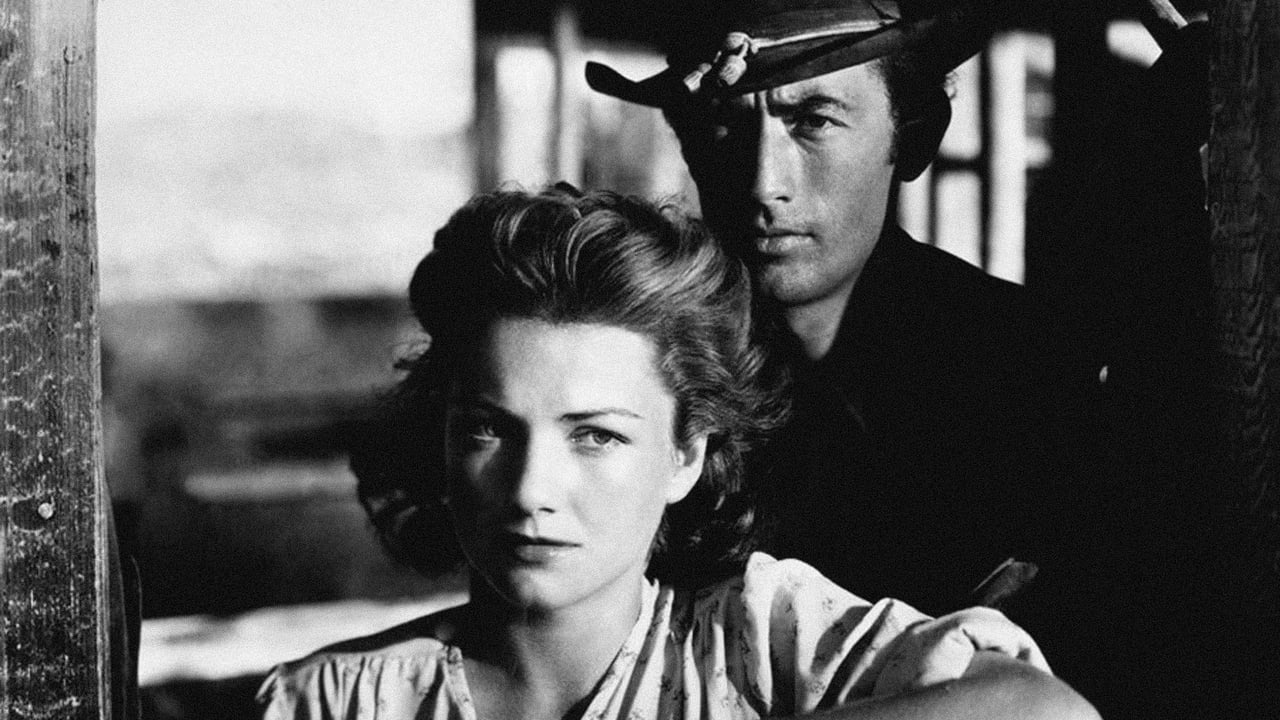
Westerns aren't always about the hero in the white hat. Honestly, if you look at the Yellow Sky movie cast, you aren't seeing a group of polished Hollywood stars playing dress-up. You're looking at a collection of actors who were essentially trying to reinvent what a Western could even be in the post-WWII era. Released in 1948, this movie is basically The Tempest set in a ghost town, and the grit you see on screen wasn't just movie magic. It was the result of a powerhouse ensemble led by Gregory Peck and Richard Widmark, directed by William A. Wellman, a guy who didn't care much for "pretty" shots if they didn't feel real.
Most people today know Gregory Peck as the moral compass of To Kill a Mockingbird. But in Yellow Sky, he plays James "Stretch" Dawson. He’s the leader of a gang of bank robbers. He’s mean. He’s desperate. He’s covered in actual desert dust. It’s a performance that reminds you Peck had a much darker edge than his later "statesman" roles usually allowed. For a different perspective, read: this related article.
The Core Players of the Yellow Sky Movie Cast
When you talk about the Yellow Sky movie cast, you have to start with the tension between the two leads. It’s the engine of the whole film. Gregory Peck was the star, sure, but Richard Widmark was the lightning bolt. Widmark had just come off his terrifying debut in Kiss of Death (1947), where he played the giggling psychopath Tommy Udo. In Yellow Sky, he plays Dude, a man who is exactly as untrustworthy as his name suggests.
While Peck’s Stretch is trying to hold onto some shred of humanity, Widmark’s Dude is leaning into pure greed. It’s a fascinating contrast. You’ve got Peck using his massive physical presence—he was a big guy, nearly 6'3"—to command the screen with silence. Then you’ve got Widmark, who used his eyes and that sharp, cynical voice to make you feel like he was always two seconds away from stabbing someone in the back. Further analysis on the subject has been shared by The Hollywood Reporter.
Then there’s Anne Baxter.
She plays Mike. Just "Mike." She’s the granddaughter of an old prospector living in a literal ghost town. Baxter doesn't play her like a damsel. She’s carrying a rifle, she’s wearing dusty clothes, and she looks like she actually lives in the middle of a salt flat. Most actresses of that era would have insisted on perfect hair and makeup even in a desert, but Baxter leaned into the ruggedness. It paid off. Her chemistry with Peck is weirdly intense because it starts with genuine hostility.
The Supporting Outlaws
The rest of the gang is a "who’s who" of character actors from the late 40s. These guys weren't just background noise; they provided the texture of the film.
- Robert Arthur plays Bull Run, the youngest and most naive of the group.
- John Russell plays Lengthy. You might recognize him from later TV Westerns like Lawman. He was tall, brooding, and looked like he was carved out of granite.
- Harry Morgan (billed as Henry Morgan) plays Half Pint. Decades before he became the beloved Colonel Potter on MASH*, he was a staple in these kinds of gritty dramas.
- James Barton plays Mike’s grandfather. He’s the one who knows where the gold is, and his performance adds a layer of grizzled, paranoid energy to the second half of the movie.
Why This Ensemble Worked Better Than Most
William Wellman didn't want a "studio" look. He took the Yellow Sky movie cast out to Lone Pine, California, and Death Valley. If the actors look exhausted and sweaty, it's because they were. The heat was brutal. The terrain was unforgiving. Wellman was known as "Wild Bill" for a reason—he pushed his actors to match the environment.
The script, written by Lamar Trotti based on a story by W.R. Burnett (the guy who wrote Little Caesar and High Sierra), gave the cast room to breathe. There isn’t a ton of unnecessary dialogue. A lot of the story is told through glances and body language. When the gang reaches the ghost town after crossing the salt flats, they are delirious with thirst. The actors played that desperation perfectly. You can almost feel the grit in your own throat watching them.
Interestingly, this movie came out right as the "Noir Western" was becoming a thing. It’s got the lighting and the moral ambiguity of a crime drama, but it's set in the 1860s. The Yellow Sky movie cast had to bridge that gap. They couldn't be "cowboys" in the traditional sense; they had to be criminals who happened to ride horses.
Surprising Facts About the Production
Some folks think all old Westerns were shot on a backlot. Not this one.
The salt flat sequence is legendary among film historians. The cast actually spent days filming in the blistering sun of Death Valley. There’s a story—kinda famous among Peck biographers—that the conditions were so harsh that the line between acting and actually suffering started to blur. Peck reportedly appreciated the challenge. He wanted to get away from the "pretty boy" image that early roles in The Keys of the Kingdom had created.
Another thing? The ending.
Without giving away too many spoilers for a 70-year-old movie, the tension within the Yellow Sky movie cast culminates in a shootout that is surprisingly modern in its execution. It’s not a grand, romantic duel. It’s messy. It’s dark. It happens in the shadows of a saloon. This was a direct result of Wellman’s direction and the cast's ability to play "ugly" characters.
The Legacy of the Cast
If you look at where these actors went after 1948, it's pretty impressive.
- Gregory Peck became the ultimate moral authority of Hollywood, but he frequently returned to the Western genre in films like The Gunfighter and The Big Country.
- Richard Widmark became one of the most versatile actors of his generation, moving easily between playing villains and tough-as-nails heroes.
- Anne Baxter went on to star in All About Eve and The Ten Commandments, cementing her place as Hollywood royalty.
- Harry Morgan had one of the longest careers in television history.
What People Often Get Wrong About Yellow Sky
A common misconception is that this is just another B-movie Western. It really isn't. Because of the Yellow Sky movie cast and the high-end cinematography by Joe MacDonald, it’s often cited as a precursor to the "psychological Westerns" of the 1950s. It wasn't just about shooting guns; it was about what happens to a man’s soul when he’s stuck in a dead town with a pile of gold and a bunch of people he doesn't trust.
Some critics at the time were actually a bit shocked by how rough Mike (Anne Baxter) was. They weren't used to seeing a leading lady who could out-shoot the men and didn't bother with a dress for 90% of the runtime. But that’s exactly what makes the film hold up so well today. It feels authentic. It feels like these people actually existed.
The film won a Writers Guild of America award, which tells you the performances were backed by a solid foundation. You can’t get a performance like Peck’s out of a weak script. The dialogue is sparse, but every word carries weight.
How to Watch and What to Look For
If you’re planning on watching Yellow Sky for the first time, don't just focus on the plot. Watch the background actors. Watch how the gang interacts when they aren't the focus of the scene. The chemistry among the Yellow Sky movie cast is what makes the "ghost town" feel lived-in.
Keep an eye on the lighting, too. MacDonald used high-contrast black and white to make the desert look like a different planet. It’s beautiful but terrifying. It’s the perfect backdrop for a group of men who are essentially lost in their own greed.
Honestly, if you're a fan of modern grit—think No Country for Old Men or Hell or High Water—you’ll see the DNA of those movies here. It all starts with the cast. They treated the material with a level of seriousness that wasn't always common in the genre back then.
Actionable Insights for Film Buffs
If you want to truly appreciate what the Yellow Sky movie cast accomplished, try these steps:
- Compare Peck's Performance: Watch Yellow Sky back-to-back with The Gunfighter (1950). You’ll see how Peck refined his "weary outlaw" persona over those two years.
- Study the "Noir" Influence: Look for the shadows in the saloon scenes. Notice how they use darkness to hide the characters' faces, a classic film noir technique applied to a Western setting.
- Research the Location: Look up "Alabama Hills" in Lone Pine. This is where a huge chunk of the movie was filmed. You can actually visit the spots where Peck and Baxter had their standoff. Many of the rock formations are still recognizable today.
- Track Richard Widmark's Evolution: Watch his performance here and then watch him in Broken Lance (1954). He had a specific way of playing "the heavy" that changed the way Western villains were written.
The Yellow Sky movie cast didn't just make a movie; they helped shift the entire trajectory of an American genre. They moved it away from the singing cowboys of the 1930s and toward the gritty, morally complex stories that would dominate the 50s and 60s. It’s a masterclass in ensemble acting under pressure. Whether you're a Western fanatic or just a fan of classic cinema, this cast delivers a performance that remains incredibly potent even decades later.



