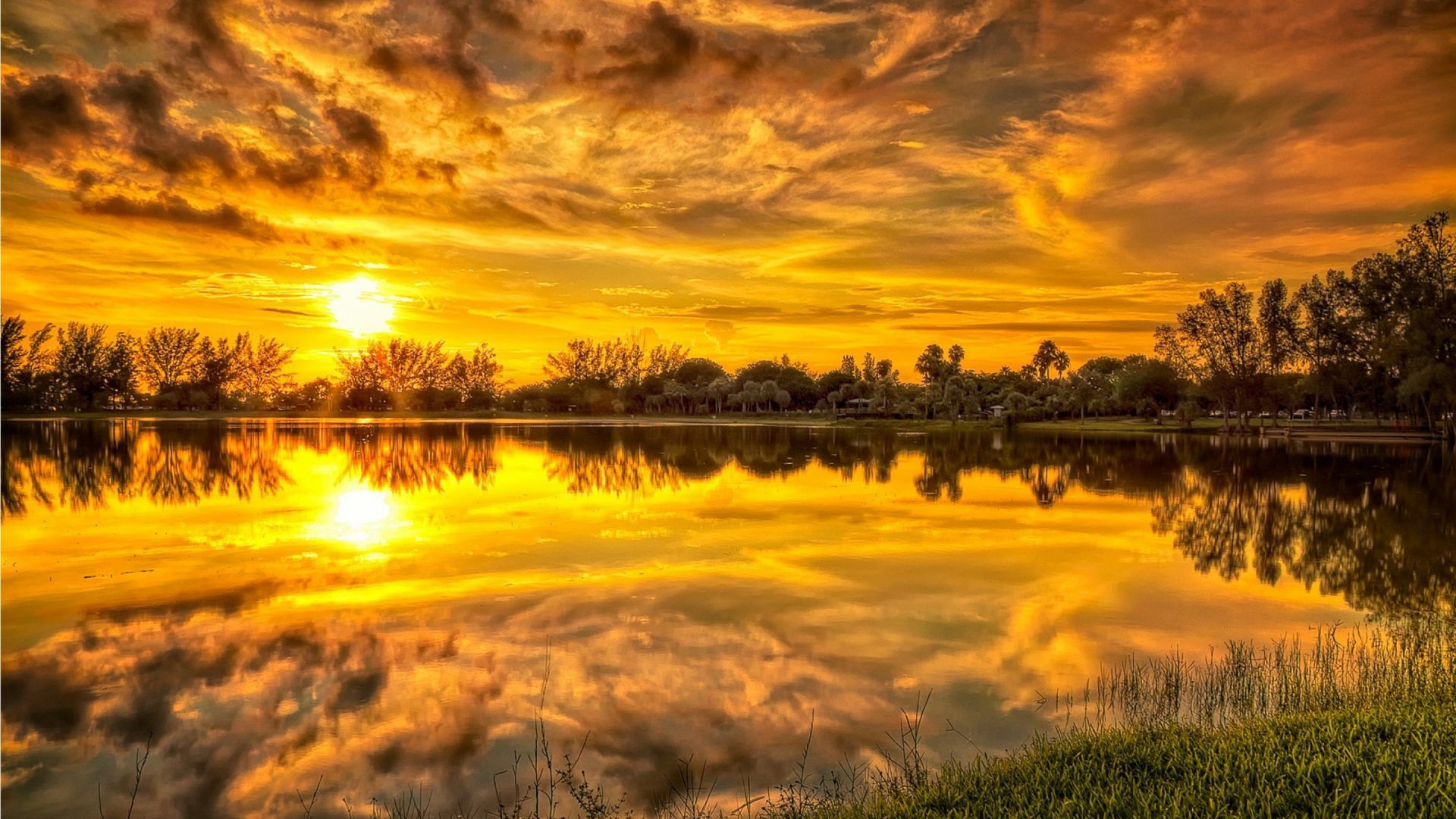
You step outside and everything looks... wrong. It’s like someone slapped a sepia filter over the entire neighborhood. The air feels thick, the light is eerie, and your neighbor’s white car suddenly looks like a ripe lemon. It’s unsettling. Honestly, it’s a bit apocalyptic. Most people immediately think of "The Wizard of Oz" or some looming disaster. But the actual yellow sky meaning isn't usually about a portal to another dimension. It’s mostly just physics doing something weird with the air we breathe.
Usually, it's about particles. Tiny bits of stuff floating around that shouldn't be there in high concentrations.
When you see that golden hue, your brain triggers a "flight or fight" response. We are wired to recognize the standard blue or the predictable orange of a sunset. When the spectrum shifts to a sickly mustard or a bright saffron in the middle of the afternoon, it’s a signal that the atmosphere has changed.
The Science of Scattering: Why the Sky Changes Color
Light is a fickle thing. We see the sky as blue because of Rayleigh scattering. Basically, shorter blue wavelengths hit gas molecules in the atmosphere and scatter everywhere. It’s standard. It’s comforting. But when the sky turns yellow, the "stuff" in the air gets bigger.
We’re talking about Mie scattering. This happens when the particles in the atmosphere are roughly the same size as the wavelength of the light. Instead of just scattering the blue, the air starts messing with the whole spectrum. If there’s enough dust, smoke, or pollen, the shorter blue and violet wavelengths get completely blocked out. What’s left? The yellows, the oranges, and those deep, dusty reds.
Wildfire Smoke and the "Glow"
If you live anywhere near the West Coast or have dealt with the Canadian wildfire plumes that drifted across the U.S. in recent years, you know this look. Smoke particles are significantly larger than nitrogen or oxygen molecules. They act like a giant pair of tinted sunglasses for the entire planet.
In 2023, New York City looked like Mars. It wasn't just a "pretty sunset." It was a health hazard. The yellow sky meaning in this context is literally "breathe at your own risk." The smoke filters the sun so effectively that only the longest wavelengths—the yellows and reds—can punch through the haze. It’s hauntingly beautiful and incredibly dangerous at the same time.
Storms, Tornadoes, and the Infamous "Green-Yellow" Sky
There’s an old-school myth that a yellow or green sky means a tornado is coming. It’s not entirely a myth, but it’s also not a 100% guarantee. Meteorologists at the National Weather Service have looked into this quite a bit.
When you have a massive thunderstorm, the clouds are packed with water. I mean, packed. These clouds can be miles thick. Light has to travel through all that moisture. Water is great at absorbing red light. So, if the sun is low on the horizon (evening or morning) and its light is already yellow-ish, and then that light passes through a massive blue-ish water cloud... you get green or yellow.
- Tall Clouds: The storm needs to be tall enough to hold a massive amount of liquid water or hail.
- Sun Angle: This usually happens late in the afternoon when the sun is hitting the clouds from the side.
- Heavy Precipitation: If you see that yellow-green tint, it usually means there’s a lot of hail or extremely heavy rain coming your way.
It doesn't always mean a funnel cloud is about to drop. It just means the atmosphere is incredibly unstable. It’s nature’s way of telling you to get your patio furniture inside.
Sandstorms and Calima: The Sahara’s Global Reach
Sometimes the yellow sky meaning has nothing to do with local weather. It can be a gift from thousands of miles away. In Spain and parts of the UK, people often experience the "Calima." This is when a massive plume of Saharan dust gets kicked up into the atmosphere and travels across the ocean.
Everything turns a weird, grainy yellow. You’ll wake up and your windows are covered in a fine layer of orange silt.
It’s a global reminder of how connected we are. Dust from Africa can change the color of the sky in London or even the Caribbean. This isn't just a visual quirk; it’s a nutrient delivery system for the ocean, though it’s a nightmare for people with asthma.
Pollen Explosions: The "Pollen-pocalypse"
In the American South, especially during the spring, the sky can take on a hazy yellow tint simply because the trees are having a massive "reproduction party." Pine pollen is heavy. In places like North Carolina or Georgia, you can actually see clouds of yellow dust blowing off the trees.
When the concentration is high enough, it creates a literal yellow haze. If you’re seeing a yellow sky in April and you’re sneezing your head off, it’s not a storm. It’s just cedar and pine dust.
Cultural and Psychological Impacts
Humans react to a yellow sky with a mix of awe and dread. In many cultures, a change in sky color was seen as an omen. Sailors had their "red sky at night" rhymes, but a yellow sky was often seen as a precursor to "sick air" or pestilence.
Today, we have a more "photographic" reaction. We grab our phones. We post to Instagram. But that underlying feeling of "something is wrong" remains. Psychologically, yellow is a high-energy color. It’s the color of caution signs and hazard tape. When the whole world turns that color, it’s hard to feel relaxed.
The Role of Pollution and Smog
We can't talk about a yellow sky without talking about human impact. Nitrogen dioxide ($NO_2$) is a common byproduct of burning fossil fuels. It’s a brownish-yellow gas. In cities with heavy traffic and stagnant air—think Los Angeles in the 70s or Beijing today—the sky often takes on a permanent yellowish-grey tint.
This isn't a natural scattering of light. It’s a chemical soup. If the sky looks yellow every day at 4:00 PM during rush hour, it’s not a meteorological phenomenon. It’s smog.
How to React to a Yellow Sky
If you look up and the world is golden, don't just stand there taking selfies. You need to figure out which "meaning" applies to your current situation.
- Check the Weather App: Look for "Severe Thunderstorm Warnings." If there’s a storm coming and the sky is yellow-green, find a windowless room.
- Smell the Air: If it smells like a campfire, you’re looking at wildfire smoke. Put on an N95 mask if you have to go outside. Seriously. Those fine particles ($PM_{2.5}$) go straight into your bloodstream.
- Look at Your Car: If there’s a layer of dust, it’s likely sand or pollen. Great for the garden, bad for your allergies.
- Check Air Quality (AQI): If the sky is yellow and the air feels "heavy," check the AQI. Anything over 100 means the "yellow sky" is actually a "danger sky" for sensitive groups.
The yellow sky meaning is rarely just one thing. It’s a complex interaction of light, physics, and whatever we (or nature) have pumped into the air. It’s a reminder that the atmosphere isn't just an empty void—it’s a fluid, changing thing that reacts to what’s happening on the ground.
Actionable Steps for the Next Golden Hour
When the sky shifts its hue, your first move should be environmental awareness rather than just aesthetic appreciation.
First, verify the Air Quality Index (AQI) using a reliable source like AirNow.gov or your local weather authority. If the yellow tint is caused by smoke or $NO_2$, the AQI will likely be in the "Unhealthy" or "Very Unhealthy" range. In these cases, you should seal your windows and run an air purifier with a HEPA filter.
Second, if the yellow sky is accompanied by a sudden drop in temperature or a weird "hush" in the wind, seek shelter. This is the classic precursor to a severe weather event. Don't wait for the sirens. If the sky looks like a bruise, the storm is already on top of you.
Finally, if you’re a photographer, adjust your white balance. Cameras often try to "fix" a yellow sky by making it look blue again. To capture what you’re actually seeing, lock your white balance to "Daylight" or "Cloudy" to preserve those eerie, golden tones. Just don't stay outside too long if the cause is smoke or chemicals.



