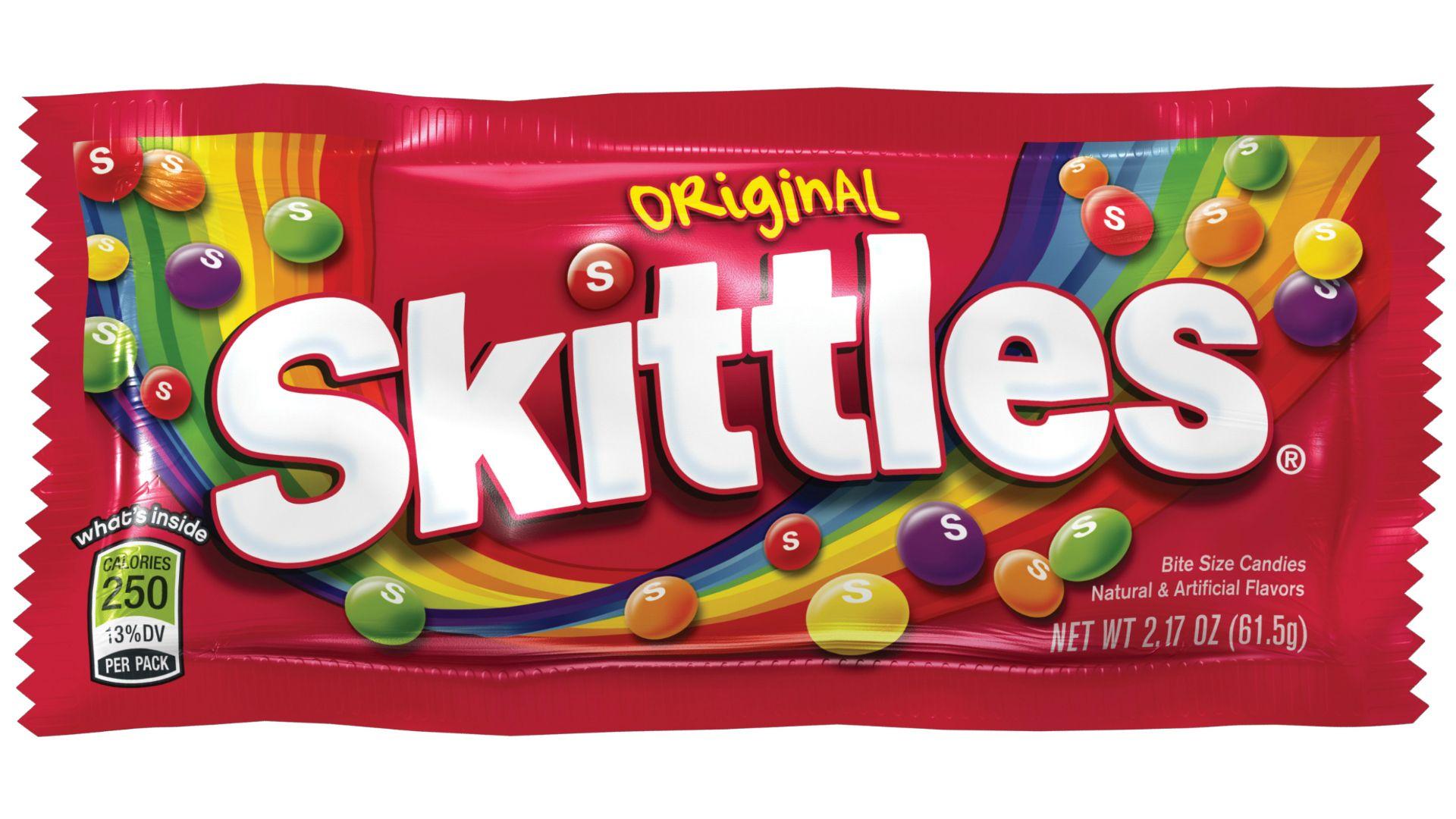
Walk into any gas station or corner store and you'll see them. The bright, sunshine-colored bags. But here’s the thing about the yellow pack of Skittles: it isn’t just one thing. Depending on when you grew up or where you’re standing in the aisle, that yellow wrapper could mean you’re about to have your face pucker from a Sour Skittle or your taste buds transported to a beach via the Tropical mix.
It’s confusing. Honestly, Mars Wrigley has a habit of messing with our color associations.
Most people see a yellow bag and think "Lemon." That makes sense. But in the world of candy marketing, yellow is the universal signal for "intensity" or "exotic." It’s a high-energy color. It grabs your eye when you're just trying to pay for gas and leave. Since the early 2000s, the yellow pack has acted as the edgy sibling to the classic red Original bag.
The Identity Crisis of the Yellow Wrapper
The most common yellow pack of Skittles you’ll find today is the Tropical variety. This wasn't always the case, but it’s become a staple.
Inside that bag, the rules change. You aren't getting Strawberry or Grape. Instead, you're hitting flavors like Banana Berry, Kiwi Lime, and Pineapple. The Pineapple one is actually the white Skittle, which feels like a trick. It’s a polarizing bag. Some people swear by the Mango Tangelo; others think it tastes like a scented candle.
But then there’s the Sour Skittles pack.
For years, the Sour variety lived in a distinct yellow-to-light-green gradient bag. If you grew up in the 90s, that yellow pack was a rite of passage. It was famous for that crystalline citric acid coating that basically sandpapers your tongue if you eat more than five at once. It’s a visceral experience. People have actual memories of their mouths hurting because they couldn't stop eating those little yellow-bagged landmines.
Flavor Science and Why We Buy Yellow
Why yellow, though? Color psychology in food is a massive field. Companies like Mars Inc. spend millions of dollars researching how a wrapper color affects your perception of flavor before you even open it.
Yellow suggests brightness. It suggests acidity.
When you see a yellow pack of Skittles, your brain prepares for a specific type of sensory hit. It’s usually a higher "top note" flavor profile—think citrus, tartness, or tropical esters. You don't put chocolate in a yellow bag. You put things that zing.
There’s also the "Limited Edition" factor. Over the years, we’ve seen the Skittles Desserts or various "Brightside" mixes occasionally utilize yellow-themed packaging. It’s the brand's way of saying, "This isn't your childhood red bag. This is something weirder."
The Great Lime vs. Green Apple War
You can't talk about Skittles—yellow, red, or otherwise—without mentioning the Great Lime Drama of 2013. This affected the yellow pack ecosystem too. When Skittles replaced Lime with Green Apple in the Original mix, it shifted the flavor balance of the entire brand.
In the Tropical (yellow) pack, the citrus notes had to work harder.
The yellow pack of Skittles basically became the refuge for people who hated the new Green Apple flavor. The Tropical mix stayed true to its fruit-forward, tart roots. It didn't lean into the heavy, candy-artificial scent of fake apple.
Then, in 2021, Lime came back. The world cheered. But the yellow packs—specifically the Tropical ones—remained the "cool" alternative. They represent a specific era of candy innovation where everything had to be "Xtreme" or "Exotic."
Real Talk: Nutritional Reality
Let's be real for a second. You aren't eating Skittles for the vitamins. A standard 2.17-ounce pack of Skittles (yellow or otherwise) packs about 250 calories.
It’s almost entirely sugar and corn syrup.
- Total Sugars: Roughly 45 grams per bag.
- The "Vibe": Pure glucose.
If you're watching your intake, the yellow pack is just as "dangerous" as the red one. The ingredients list is a chemistry set: Titanium Dioxide (though being phased out in some regions), Carnauba Wax (the stuff on your car), and various "Lake" colors (Yellow 5, Yellow 6, Red 40).
Interestingly, the European version of the yellow pack often tastes slightly different because they use different coloring agents derived from natural sources like turmeric or paprika. In the US, we get the bright, synthetic neon glow.
The Collector’s Corner: Rare Yellow Bags
Did you know there are "mustard" Skittles?
In 2023, for National Mustard Day, Skittles actually teamed up with French’s to release a mustard-flavored Skittle in a yellow pack. It was a PR stunt, sure, but it cemented the yellow bag as the home for "experimental" flavors. They were tangy, slightly spicy, and objectively strange.
You couldn't buy them in stores; you had to win them or find them at specific pop-ups. Now, they're weird collector's items on eBay.
Then there are the "All Yellow" packs that occasionally surface during pride month or special promotions where the brand "gives up its rainbow." Usually, they go white for Pride, but they've done monochromatic yellow runs for specific brand partnerships in the past.
Why Tropical Yellow is the Superior Mix
If you’re standing in the aisle and can’t decide, here is the case for the yellow Tropical pack.
The Original red bag is a classic, but it’s predictable. The Tropical yellow pack offers a more complex flavor profile. You get:
- Banana Berry: A creamy, synthetic berry that is surprisingly smooth.
- Kiwi Lime: The tartest of the bunch.
- Mango Tangelo: Truly the MVP of the bag.
- Pineapple: Clean and crisp.
- Strawberry Starfruit: A bit floral, but interesting.
It feels more like a vacation and less like a sugar crash.
How to Use the Yellow Pack in Modern Life
Believe it or not, people use these for more than just snacking.
Cocktail Garnishes: The Tropical Skittles are a secret weapon for home bartenders. Dropping a few Pineapple or Mango Tangelo Skittles into a glass of cheap vodka and letting them sit for 24 hours creates a custom infusion that actually tastes decent. It’s a college trick that works surprisingly well for summer parties.
Baking: Because the yellow pack flavors are so distinct, they make for great "surprise" centers in sugar cookies. The Banana Berry flavor holds up surprisingly well under heat.
Actionable Tips for the Skittles Connoisseur
If you're looking to track down a specific yellow pack or just want to maximize your candy experience, keep these points in mind.
Check the "Best By" date on the back of the yellow bags. Because Tropical and Sour flavors use slightly different acidic profiles, they can get "hard" or "stale" feeling faster than the Original reds. You want a bag that’s fresh for that chewy, soft texture.
If you find the Sour yellow pack, try the "Ice Water Trick." Drop a few into a glass of sparkling water. The sour coating dissolves, creating a tart, flavored soda that isn’t as cloyingly sweet as a straight-up soft drink.
For the collectors, keep an eye on international grocery stores. The UK and Australian yellow packs often feature flavors like "Passionfruit" or "Peach" which aren't common in North American markets. It’s an easy way to try something new without spending a fortune on shipping.
Finally, if you're sensitive to food dyes, always read the label. The yellow packs are notoriously high in Yellow 5 (Tartrazine), which some people find makes them a little jittery or triggers mild sensitivities.
Next time you see that yellow flash on the shelf, remember it’s not just a bag of candy. It’s a choice between a tropical escape or a sour punch to the throat. Choose wisely.



