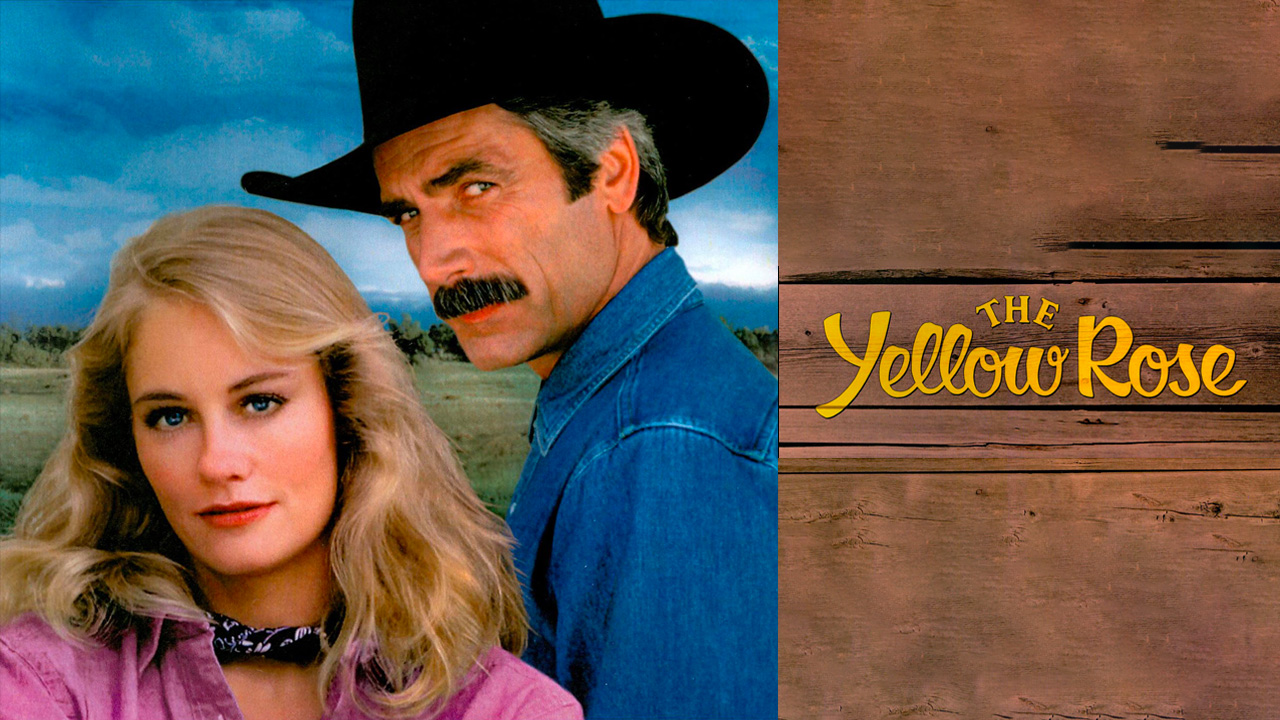
If you try to find the Yellow Rose TV show on a mainstream streaming service today, you’re basically going on a digital treasure hunt. It’s frustrating. This wasn't some tiny, obscure project that nobody cared about back in the eighties. We are talking about a high-budget, star-studded NBC drama that leaned into the massive "Texas oil and cattle" craze sparked by Dallas and Dynasty. But here is the thing: The Yellow Rose wasn't just a carbon copy of the Ewings. It had this gritty, almost modern edge that made it feel different from the soap operas of its era.
Sam Elliott was there. Cybill Shepherd was there. Even Chuck Connors, the legend himself, played a massive role. It premiered in October 1983 and, honestly, it should have lasted a decade. Instead, we got 22 episodes. One single, sprawling, messy, beautiful season that left a lot of fans wondering why the plug was pulled so fast.
The Champion Family and the 200,000-Acre Dream
The core of the show is the Yellow Rose ranch. It’s a 200,000-acre beast of a property in West Texas. Now, if you know anything about Texas land, that size is "legacy" territory. The plot centers on the Champion family. You’ve got the two sons, Roy (played by David Soul) and Quincannon (played by Sam Elliott). They are half-brothers who don't always see eye-to-eye, which is a classic trope, but Elliott’s performance gives it a weight that most 80s TV lacked.
Then there’s Colleen. Cybill Shepherd plays the young widow of the family patriarch. This created a weird, tense dynamic because she’s technically their stepmother, but she’s also their contemporary. The chemistry was thick. It wasn't just about who was sleeping with whom; it was about who owned the dirt under their boots.
The Yellow Rose TV show tried to do something risky. It blended the "prime-time soap" format with the "modern Western." It dealt with drug smuggling, racial tensions at the border, and the crushing debt that comes with trying to run a ranch in a changing economy. It felt grounded.
Why Did It Get Cancelled So Quickly?
It's a question that still haunts TV historians. Ratings weren't actually "basement" level. They were decent, but NBC was struggling in the early 80s and they were looking for a massive, breakout hit to rival Dallas.
- The Saturday Night Death Slot: NBC moved the show around, and eventually, it landed on Saturday nights. Even in 1984, that was where shows went to die.
- Production Costs: Between the location shooting and the high-profile cast, it was expensive. If you aren't hitting top-ten numbers, the accountants start looking for the scissors.
- The Tone: It was maybe a little too dark for the Dynasty crowd. People wanted sequins and shoulder pads; The Yellow Rose gave them dust, sweat, and Sam Elliott looking grumpy in a cowboy hat.
Actually, when you look back at the credits, the creative team was top-tier. John Wilder, who worked on Centennial, was a driving force. He knew how to write a Western that felt lived-in. He didn't want a cartoon version of Texas. He wanted the real deal.
A Cast That Defined an Era
You can't talk about this show without mentioning the sheer amount of talent on screen. This wasn't a "B-list" ensemble.
Sam Elliott (Chance Quincannon) Before he was the voice of Coors or the narrator in The Big Lebowski, Elliott was the quintessential TV cowboy. In the Yellow Rose TV show, he played the quiet, tough-as-nails brother. If you watch the show now, you can see the blueprint for almost every character he played later in his career. The mustache was already iconic.
Cybill Shepherd (Colleen Champion) This was her big TV comeback before Moonlighting. She brought a certain vulnerability to Colleen, but she also had to be tough enough to manage two grown men and a massive ranch. She was the anchor.
Chuck Connors (Jeb Hollister) If you need a villain, you hire the guy from The Rifleman. Connors played the neighboring rancher who wanted to see the Champions fail. He brought a menacing energy that made the stakes feel real.
There were others, too. Edward Albert, Noah Beery Jr., and even Ken Curtis (Festus from Gunsmoke). It was a bridge between the Old Hollywood Western stars and the new wave of 80s television actors.
The Music You Can't Forget
The theme song was a legitimate hit. Performed by country legends Bobby Bare and Lane Brody, "The Yellow Rose" actually hit number one on the Billboard Country charts in 1984. It’s a haunting, melodic track that used the melody of the traditional folk song "The Yellow Rose of Texas" but updated the lyrics to fit the show's narrative.
"There's a yellow rose in Texas, she's the only girl I love..."
That song did more for the show's legacy than almost anything else. Even people who never saw an episode remember that tune playing on the radio. It gave the show an authentic "outlaw country" vibe that resonated with a specific segment of the American public that felt ignored by the glitz of Los Angeles-based shows.
What Most People Get Wrong About the Show
There is a common misconception that The Yellow Rose was just a Dallas rip-off. That's a lazy take.
While Dallas was about corporate boardrooms and bourbon, the Yellow Rose TV show was about the physical labor of ranching. It was about the border. It was about the friction between the old ways and the new world. It featured some of the first honest portrayals of Mexican-American characters in prime time that weren't just caricatures.
Also, it wasn't just a "guy's show." The female characters, led by Shepherd, had significant agency. They weren't just standing around in gowns waiting for the men to come home from the oil fields. They were making decisions that impacted the survival of the family legacy.
How to Watch the Yellow Rose TV Show in 2026
Finding this show is notoriously difficult. For years, it existed only on bootleg VHS tapes traded by collectors.
- DVD Release: Warner Archive eventually released the complete series on DVD. It’s a "manufacture-on-demand" set, meaning you usually have to order it specifically from retailers like Amazon or the Warner site.
- Streaming: It occasionally pops up on niche services like Warner Archive Instant or sometimes as a "digital purchase" on platforms like Vudu or Apple TV. However, rights issues with the music sometimes keep it off the major platforms.
- YouTube: You can often find low-resolution uploads of the pilot episode or clips, but for the full experience, the DVD is the only way to go.
The picture quality on the DVD is surprisingly good. You get to see the sprawling Texas landscapes (mostly shot in California, let's be honest, but they did a good job mimicking the Big Bend area) in decent clarity.
The Long-Term Impact on the Western Genre
Without The Yellow Rose, do we get Yellowstone? It's a fair question.
There is a direct line between the Champion family and the Dutton family. Both shows deal with a massive ranch under siege from outside forces, internal family squabbles between brothers, and a patriarch's ghost hovering over everything.
The Yellow Rose TV show proved that there was an audience for a "prestige Western" on television. It just happened to be on the wrong network at the wrong time. If this show had premiered on a cable network in 2024, it would probably be a multi-season hit with a spin-off in the works.
Notable Guest Stars
The show was also a bit of a revolving door for talent. You’d see faces like:
- Jane Russell: The legendary film star made her final acting appearance on the show.
- Stella Stevens: Brought more of that classic Hollywood glamour.
- Michael Ansara: A veteran character actor who added gravitas to the political subplots.
Final Thoughts on the Legacy of the Champions
Is it worth tracking down? Absolutely. If you’re a fan of Sam Elliott, it’s mandatory viewing. It’s a time capsule of an era where TV was trying to figure out how to be "cinematic" before the technology and the budgets really allowed for it.
The writing is sharper than you’d expect. The stakes feel personal. And while it ends on a bit of a cliffhanger—because, again, they thought they were coming back for Season 2—the journey through those 22 episodes is a great ride.
Next Steps for Fans
If you want to dive deeper into the world of the Yellow Rose TV show, start by looking for the Warner Archive DVD collection. It’s the only way to see the episodes in their original broadcast order without the terrible compression of 40-year-old tape rips.
After that, check out the soundtrack. The work Bobby Bare did for the show is some of his most underrated material. Lastly, if you enjoy the "ranch under siege" vibe, compare it to the first season of Yellowstone. You will be shocked at how many themes the modern hit "borrowed" from this 1983 gem.
The Champion family might have been short-lived, but they left a massive footprint on the dusty trail of television history. Don't let the "cancelled" label fool you; this was a high-quality production that deserved better.



