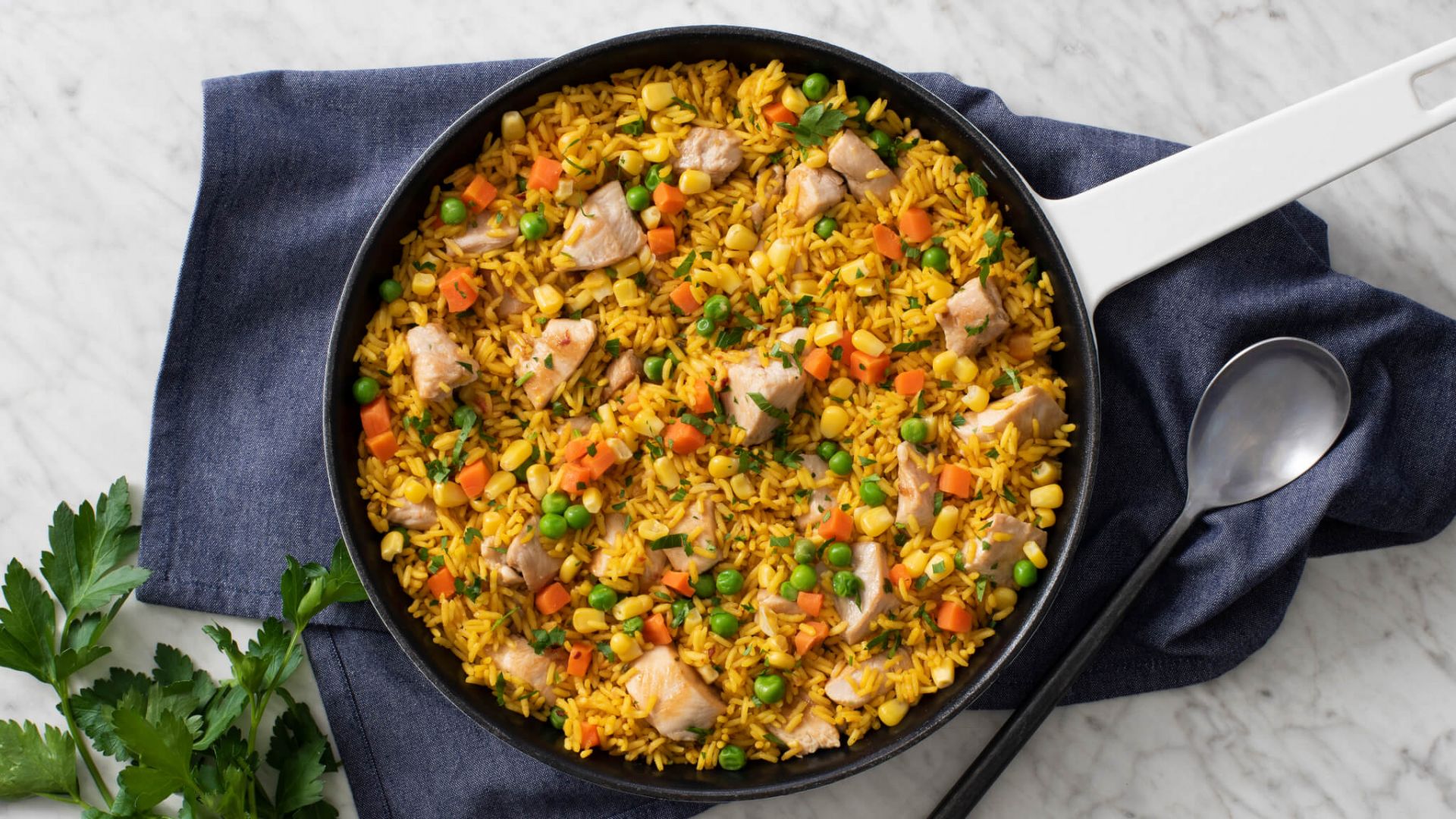
Dinner is usually a disaster when you're rushing. You throw some poultry in a pan, dump in some grains, add water, and hope for the best. Usually, you end up with "rice lava"—that weird, overcooked sludge that sticks to the roof of your mouth while the chicken remains depressingly bland. Making yellow rice and chicken in the oven shouldn't be a gamble. It’s a classic for a reason. Whether you call it Arroz con Pollo, a variation of Paella, or just a Tuesday night bake, the goal is always the same: fluffy, golden grains and succulent meat.
Most people fail because they treat rice like a side dish rather than a living thing that breathes steam. If you don't respect the ratio, you're toast. Well, not toast. You're mush.
The Science of the Yellow Tint
Where does that color actually come from? Honestly, if you’re using those little plastic packets from the grocery store, you’re mostly eating salt and yellow dye number five. Real yellow rice relies on two heavy hitters: Turmeric or Saffron.
Saffron is the "fancy" choice. It comes from the Crocus sativus flower. It’s expensive. Like, "lock it in a cabinet" expensive. It provides a floral, slightly metallic depth that is unmistakable in authentic Spanish cooking. On the flip side, turmeric is the workhorse. It’s earthy. It’s pungent. It’s also a powerful anti-inflammatory, according to researchers at the Cleveland Clinic, though you’d have to eat a mountain of rice to see those medical benefits.
Most home cooks find a middle ground. A pinch of turmeric for the aggressive sunshine color and maybe a little cumin or coriander for soul. If you want that deep, "I spent all day on this" flavor, you need Soffritto. It's basically the holy trinity of Mediterranean and Latin cooking—onions, peppers, and garlic sautéed until they're soft and sweet. This is the foundation. Without it, your yellow rice and chicken in the oven will just taste like wet cardboard.
Why the Oven Changes Everything
Cooking on the stove is high maintenance. You have to hover. You have to peek under the lid, which lets out all the precious steam and ruins the cook time. The oven is different. It provides "surround sound" heat. Instead of the heat only hitting the bottom of the pot, the dry air of the oven circulates around the entire dish. This creates an even cook that prevents the bottom from burning while the top stays raw.
But here is the catch: evaporation.
In a standard 350°F (175°C) oven, moisture escapes differently than on a gas burner. If your lid isn't tight, you lose the liquid before the rice can absorb it. You end up with crunchy bits. Nobody likes crunchy rice unless it’s the socarrat at the bottom of a paella pan, but that's a deliberate scorched-earth policy, not an accident.
Choosing Your Bird
Don't use boneless, skinless chicken breasts. Just don't.
By the time the rice is tender (usually 35-45 minutes), a lean chicken breast will be as dry as a desert hike. You want thighs. Bone-in, skin-on thighs are the gold standard for yellow rice and chicken in the oven. The bone keeps the meat moist, and the skin renders fat into the rice. That fat is liquid gold. It coats each grain, preventing them from sticking together. It’s the difference between a gourmet meal and a cafeteria scoop.
The Ratio Ritual
If you remember one thing, make it this: 1.5 to 1.
For every cup of long-grain white rice, use one and a half cups of liquid. If you’re using brown rice, God help you, because the timing changes completely and you’ll likely need two full cups of liquid and an extra twenty minutes in the oven.
- Step One: Sear the chicken first. Get that skin crispy. You aren't cooking it through yet; you’re just building flavor.
- Step Two: Remove the chicken and sauté your aromatics in the leftover fat.
- Step Three: Toast the rice. This is the secret. Fry the dry rice in the oil for two minutes until it smells nutty. This "seals" the starch.
- Step Four: Add your hot broth and spices.
- Step Five: Nestle the chicken back on top and shove it in the oven.
Common Blunders and How to Dodge Them
Let's talk about the "Peeking Problem." Every time you open that oven door and lift the lid to see if it's done, you drop the internal temperature by 25 degrees and let the steam escape. Stop it. Trust the timer.
Another huge mistake is using the wrong rice. Basmati is great for Indian food. Jasmine is perfect for Thai. For a hearty yellow rice and chicken in the oven, you want a sturdy long-grain or a medium-grain like Valencia or Goya. These grains hold their shape under the weight of the chicken. If you use a short-grain sushi rice, you’ll end up with a chicken-flavored rice pudding. Gross.
And salt. Please, for the love of all things culinary, season your broth. The rice absorbs the liquid. If the liquid is bland, the rice is bland. Taste your broth before it goes into the oven. It should taste slightly too salty—the rice will soak it up and balance it out perfectly.
The Importance of the Rest
When the timer dings, you’re going to want to eat immediately. Resist the urge.
Take the pan out, keep the lid on, and let it sit on the counter for ten minutes. This allows the moisture to redistribute. The grains on the top, which are usually a bit drier, will soften up from the residual steam. This is where the magic happens. After ten minutes, take a fork—never a spoon—and fluff it. A spoon smashes the grains. A fork separates them.
Real World Tweaks
If you’re feeling adventurous, throw in some frozen peas at the very end. The residual heat will cook them in sixty seconds, keeping them bright green and snappy. If you cook them with the rice, they turn into grey mushy orbs that look like they've given up on life.
Some people swear by a splash of beer in the cooking liquid. A light lager adds a fermented, yeasty complexity that pairs incredibly well with the turmeric. Others insist on a squeeze of fresh lime right before serving to cut through the richness of the chicken fat. Both are right. Cooking isn't a court of law; it’s about what makes you happy at 7:00 PM on a Wednesday.
Taking Action in Your Kitchen
To master yellow rice and chicken in the oven, start by auditing your spice cabinet. If that turmeric has been sitting there since the Obama administration, throw it out. It tastes like dust now.
- Buy bone-in thighs. The extra flavor is non-negotiable for a one-pot bake.
- Measure your liquid exactly. Use a glass measuring cup at eye level. Don't eyeball it.
- Use a heavy vessel. A Dutch oven or a heavy cast-iron skillet with a tight lid works best. Thin aluminum pans lose heat too fast and result in unevenly cooked rice.
- Seal the lid. If your lid is a bit loose, put a piece of aluminum foil over the pot before putting the lid on. This creates a "steam vault" that ensures every grain of rice is perfectly tender.
Stop settling for mediocre, mushy rice. By focusing on toasting the grains and respecting the steam, you transform a basic pantry staple into a high-level meal that actually tastes like it came from a kitchen, not a box.



