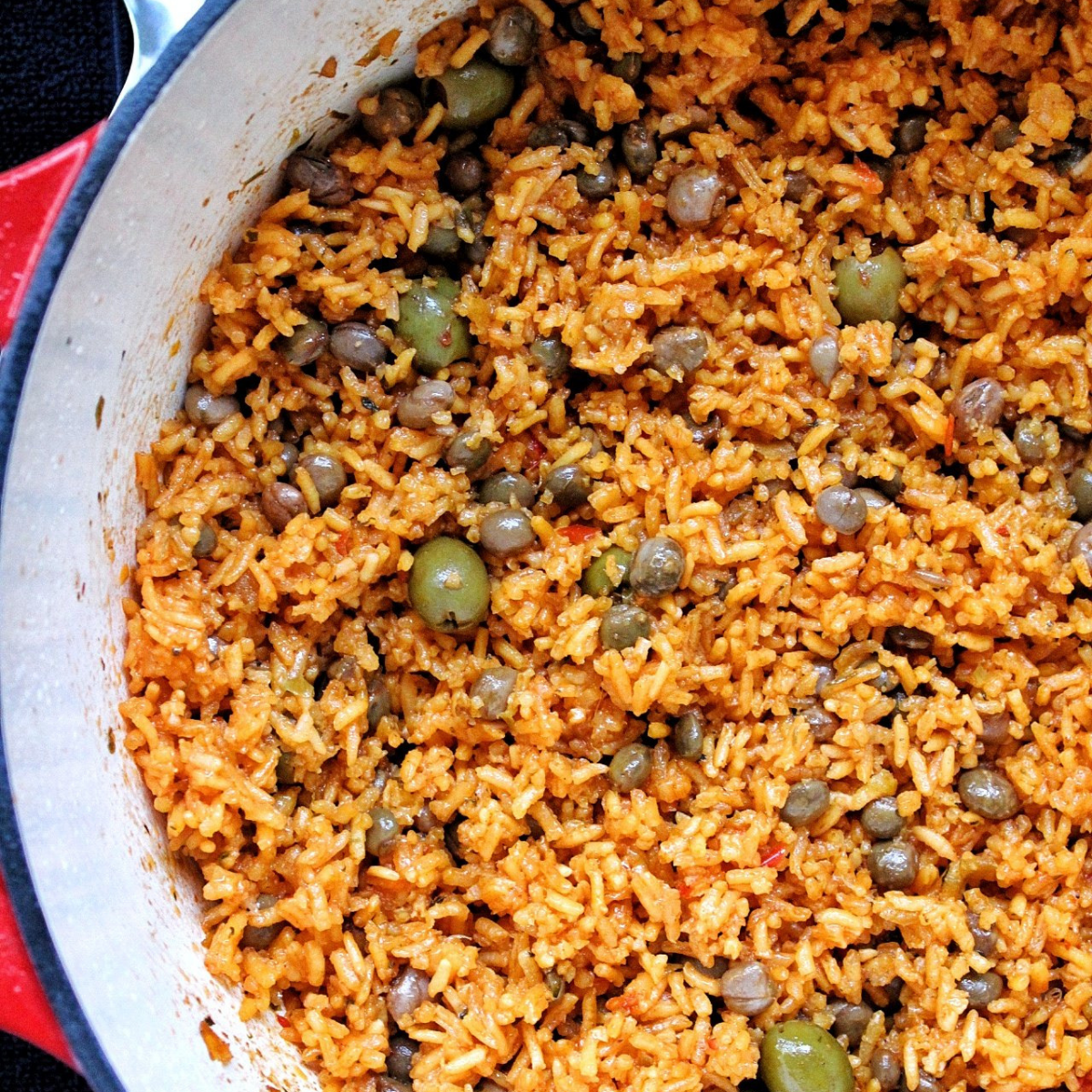
Walk into any Puerto Rican kitchen on a Sunday afternoon and you’ll smell it before you see it. It’s that heavy, savory, slightly sweet aroma of garlic, peppers, and pork fat mingling in a seasoned caldero. We’re talking about yellow Puerto Rican rice, or as locals call it, arroz con gandules (if it has pigeon peas) or simply arroz amarillo. It isn't just a side dish. Honestly, it’s the undisputed soul of the island’s cuisine. If the rice is mushy, the party is a failure. If it’s bland, you’ve offended someone’s grandmother.
Most people think "yellow rice" is just white rice with some turmeric or food coloring thrown in. That’s a mistake. Real Puerto Rican rice is a complex layering of fats, aromatics, and specific cultural techniques that have been passed down for centuries. It’s not just about the color; it’s about the pegao—that crunchy, golden crust at the bottom of the pot that siblings literally fight over.
The Sofrito Secret: It’s Not Negotiable
You can't make authentic yellow Puerto Rican rice using a powder from a jar and expect it to taste like San Juan. Everything starts with sofrito. This is the "holy trinity" plus some. While every family has a slightly different recipe, the backbone usually involves ajíes dulces (small, sweet peppers that look like habaneros but have zero heat), recao (culantro), onions, garlic, and green bell peppers.
Culantro is the big one. It’s not cilantro. Don’t swap them and think nobody will notice. Culantro has long, serrated leaves and a much more aggressive, earthy punch. When you sauté this green paste in oil, the kitchen transforms. The smell is intoxicating. If you’re buying pre-made sofrito in a jar, you’re already behind. The fresh stuff has volatile oils that die out after sitting on a shelf for six months.
I’ve seen people try to shortcut this by using just garlic and onion. It's fine, I guess. But it won't be that rice. The depth comes from the ajíes dulces. They provide a floral note that balances the salt and fat. Without them, the dish is just salty rice.
The Science of the Yellow Hue
So, where does the color come from? It’s usually achyote (annatto) or a seasoning packet like Sazón Goya. Annatto seeds come from the prickly fruit of the Bixa orellana tree. Traditionally, cooks would heat these seeds in lard or oil until the fat turned a brilliant, sunset orange. They’d strain the seeds and use that "achiote oil" to start the rice.
Today, most households use Sazón packets because they're convenient. These packets usually contain MSG, salt, cumin, and annatto. If you’re health-conscious, you can stick to the traditional annatto oil or use high-quality turmeric, though turmeric adds an earthy flavor that isn't strictly traditional to the Boricua palate.
One thing to watch out for: don't overdo the coloring. You want a vibrant golden-yellow or a deep orange, not a neon glow-in-the-dark situation. The color should look appetizing, reflecting the richness of the fat used in the base.
Let's Talk About the Pot (The Caldero)
You cannot make this rice in a thin, stainless steel saucepan. You just can't. You need a caldero. These are heavy-duty, cast-aluminum pots with rounded sides. They distribute heat evenly and, more importantly, they facilitate the creation of pegao.
A rice cooker? Sure, it works. It’s consistent. But a rice cooker is designed to stop cooking before the bottom burns. In Puerto Rican cooking, we want that controlled burn. We want the rice at the bottom to caramelize and crisp up into a savory cracker. If you’re using a standard non-stick pan, you’re robbing yourself of the best part of the meal.
The "Gandules" Controversy and Texture Rules
When people search for yellow Puerto Rican rice, they are often looking for arroz con gandules. Gandules are pigeon peas. They aren't like green peas; they are nuttier, denser, and hold their shape during the long steaming process.
Specific brands matter here. Ask any islander, and they’ll likely point you toward Goya or El Jibarito. The canning liquid is often used as part of the cooking water because it’s packed with flavor. However, some modern chefs prefer rinsing the peas to control the sodium levels. It’s a trade-off.
Texture is the ultimate test of a cook’s skill. The rice should be desgranado. This means every grain is separate. It shouldn't be a sticky, gummy mound.
How do you achieve this? It’s all about the water-to-rice ratio and the "oil seal." You sauté the raw rice in the sofrito and oil for a minute or two before adding the liquid. This coats the grains in fat, preventing them from releasing too much starch and sticking together. Generally, you want a 1:1 or 1:1.25 ratio of rice to water, depending on how much liquid is in your sofrito and olives.
Common Additions That People Argue About
- Alcaparrado: This is a mix of olives, pimientos, and capers. Some people hate biting into a salty caper; others think the rice is naked without it.
- Salt Pork or Tocino: This is the old-school way. Rendering small cubes of fatback provides a smoky, salty base that vegetable oil just can't replicate.
- Smoked Ham: A lot of recipes call for jamón de cocinar. It’s a cheap, salty, smoked ham diced into tiny cubes. It adds a "meaty" backbone to the rice.
- Beer: Believe it or not, some families swap half a cup of water for a light lager. It adds a fermented, yeasty depth.
The Step-by-Step Reality
Let's get practical. You start by heating your oil (or rendering your pork fat) in the caldero. Toss in your ham and let it brown. Add the sofrito. The sound should be a loud sizzle—if it’s a quiet hiss, your pan isn't hot enough.
Once the sofrito is fragrant (about 2-3 minutes), add your tomato sauce, olives, and sazón. Now, add the gandules. Stir it all up. Add the rice and stir until every grain is yellow.
Add your water or chicken broth. The "Spoon Test" is a real thing. Place a large metal spoon in the center of the pot. If it stays upright, you have the right amount of rice to water. If it tips over, you might have too much water. Is it scientific? Not really. Does it work? Usually.
Bring it to a boil. Let it boil uncovered until the water level drops below the surface of the rice and you see "craters" forming. This is the critical moment. Turn the heat to low, stir it once (just once!), and cover it with a tight-fitting lid. Some people put a sheet of aluminum foil or even a piece of a banana leaf under the lid to trap every bit of steam. Leave it alone for 20 to 25 minutes. No peeking.
Why Does Homemade Rice Taste Different Than Restaurant Rice?
Honestly? It's usually the salt and the fat. Restaurants aren't afraid to use a lot of both. They also often use "Bases" (like chicken base) instead of just water.
Another factor is the rice variety. Most Puerto Rican households use medium-grain rice (like Canilla or Sello Rojo). Medium grain is the sweet spot. Long grain (like Basmati) is too fluffy and "dry" for this application. Short grain (like Arborio) gets too mushy and risotto-like. Medium grain has enough starch to feel substantial but stays separate enough to be desgranado.
Handling the Leftovers
Yellow rice is better the next day. Period. The flavors have time to penetrate the core of the grain. To reheat it, don't just microwave it in a bowl. It’ll get dry. Instead, put it in a frying pan with a tiny splash of water and cover it, or better yet, fry it in a little butter to get even more crispy bits.
In the 2020s, we’ve seen a shift toward "healthier" versions. Some people use brown rice or cauliflower rice. While the flavors of the sofrito can make almost anything taste good, you lose the pegao with cauliflower, and brown rice takes much longer to cook, often causing the delicate aromatics in the sofrito to lose their brightness. If you must go healthy, stick to parboiled rice as a middle ground.
Actionable Tips for Your Next Batch
If you want to master yellow Puerto Rican rice, stop measuring everything with clinical precision and start cooking with your senses.
- Freeze your sofrito: Make a giant batch of fresh sofrito in a blender and freeze it in ice cube trays. One cube equals roughly two tablespoons. It makes weeknight cooking way easier.
- Watch the heat: If your pegao is black, it’s burnt and bitter. If it’s golden brown, it’s perfect. This requires knowing your stove’s "low" setting.
- The Leaf Trick: If you can find a banana leaf at a local Hispanic or Asian market, wash a piece and lay it over the rice before closing the lid. It adds a subtle, herbal aroma that screams "authentic."
- Salt carefully: Between the sazón, the ham, the olives, and the canned peas, there is a lot of hidden sodium. Always taste the "rice water" before you cover the pot. It should taste slightly saltier than you want the finished rice to be, as the rice will absorb it.
Authentic Puerto Rican cooking is about patience and the "sofrito base." Once you nail the balance of the aromatics and the steaming technique, you'll never go back to those boxed yellow rice mixes again. It’s a relatively cheap meal that feels like a luxury when done right.
To take this to the next level, serve your rice with pernil (slow-roasted pork shoulder) and some fried sweet plantains (maduros). The sweetness of the plantains cuts through the salty, savory rice perfectly. No one will care if the kitchen is a mess once they taste that first spoonful of pegao.