You’re driving down Colorado Boulevard and you see the line. It’s not just a line; it’s a specific kind of Northeast Los Angeles assembly—skate shoes, vintage chore coats, and a palpable sense of patience. They’re all waiting for Yellow Paper Burger Eagle Rock. It’s funny how a burger wrapped in a simple sheet of mustard-colored parchment became the definitive symbol of what a "proper" smashburger should be in a city that is literally drowning in them.
Honestly, the LA burger scene is exhausting. You’ve got the heavy hitters like Burgers Never Say Die and Win-Dow, but Yellow Paper Burger (YPB) feels different. It’s localized. It’s nomadic yet rooted. When they set up shop outside places like Spacedust or Colorado Wine Co., it doesn't feel like a corporate activation. It feels like a neighborhood block party where the guest of honor happens to be a high-crust, lacy-edged beef patty.
People talk about the "smash" like it’s a science. It sort of is. At Yellow Paper Burger, they aren't just pressing meat onto a flat top; they are essentially obliterating it until the Maillard reaction creates a structural lattice of crispy beef. If you've ever had a burger where the edges felt like a savory tuile cookie, you know what I’m talking about.
The Eagle Rock Residency and Why Location Matters
Eagle Rock isn't Silver Lake. It isn't Highland Park. It has a specific, slightly slower frequency that rewards consistency over flash. Yellow Paper Burger Eagle Rock succeeded because it didn't try to be a "concept." It was a guy, a grill, and a very specific vision of what a burger should look like.
The pop-up model is brutal. You’re hauling equipment, fighting for permits, and praying the weather holds up. Yet, the team behind YPB turned the sidewalk outside local haunts into a destination. When they occupy that slice of Eagle Rock, the air changes. It smells like rendered fat and grilled onions, a scent that acts as a siren song for anyone within a three-block radius.
Is it the best burger in LA? That’s a trap. "Best" is subjective. But is it the most Eagle Rock burger? Absolutely. It’s unpretentious. It’s messy. It’s built on the idea that if you do one thing—the smash—better than anyone else, the people will find you. And they did. They found them in droves.
What Actually Goes Into the Build?
Let’s get into the weeds because the details matter. Most people think a smashburger is just a thin patty. They’re wrong. A real YPB burger is about the ratio. You have the soft, squishy bun—usually potato—that has to be steamed just enough to meld with the cheese but toasted enough to not disintegrate under the grease.
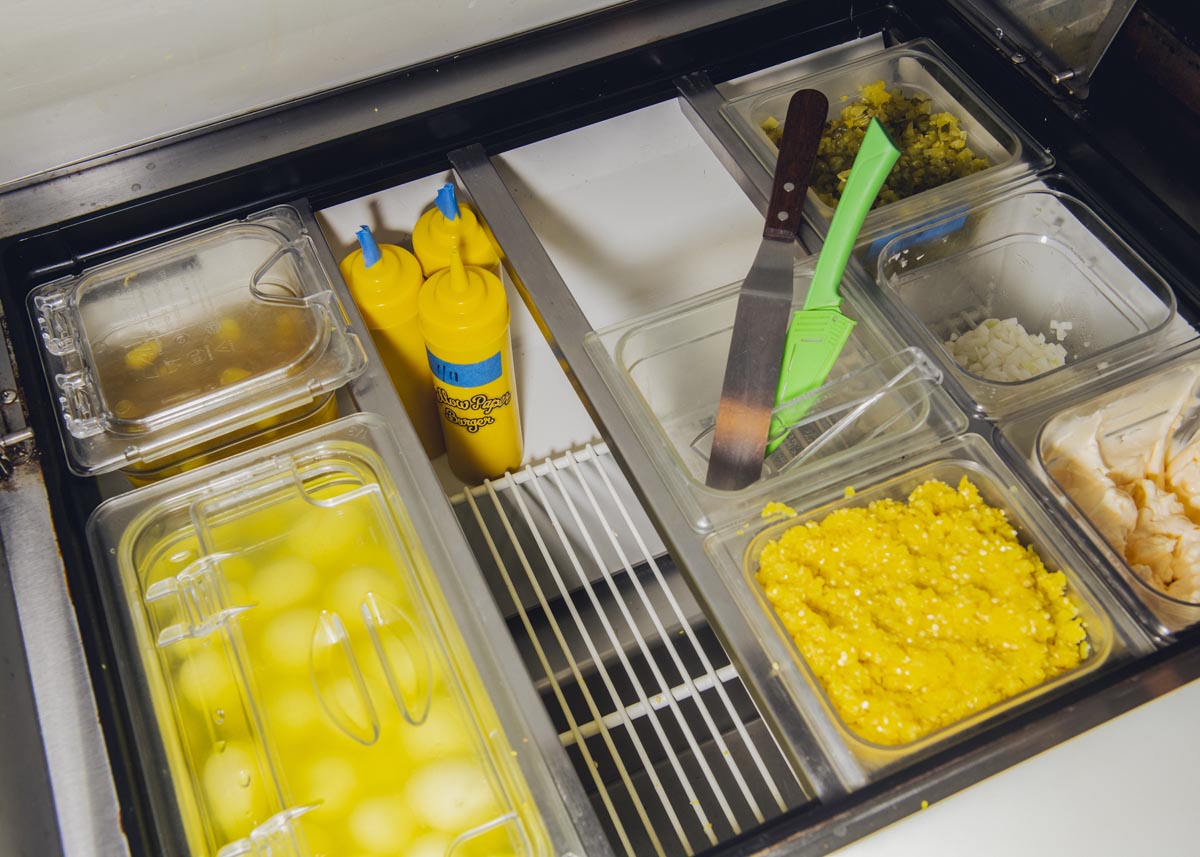
The onions are key. We aren't talking thick rings. We’re talking paper-thin slivers that are smashed into the meat while it’s on the heat. They caramelize in the beef fat. It’s a technique often associated with the Oklahoma fried onion burger style, but YPB gives it a California edge. The "yellow paper" isn't just branding; it serves a functional purpose. Wrapping the burger for a minute or two before eating allows the heat to redistribute. It creates that cohesive, unified bite where you can't tell where the bun ends and the cheese begins.
Then there's the sauce. It’s tangy. It’s creamy. It’s got that hit of vinegar that cuts through the richness of the beef. Most places over-sauce. YPB understands restraint. They know the beef is the star, and everything else is just a supporting actor.
Dealing with the Hype: The "Discovery" Factor
Google Discover loves a trend, but Eagle Rock locals love their secrets. There was a window of time where Yellow Paper Burger was a "if you know, you know" situation. Then the food influencers arrived. You know the ones—holding the burger up to the sky, squeezing the bun for the "cheese pull" shot.
Usually, that’s the death knell for a good spot. Quality drops. The owners get overwhelmed. But YPB stayed remarkably consistent. They didn't expand too fast. They didn't try to open five locations in a year. They stayed focused on the grill.
- The Wait: You’re going to wait. Accept it.
- The Menu: Keep it simple. Get the double. A single is a tease; a triple is an ego trip. The double is the golden mean.
- The Vibe: It’s strictly sidewalk dining or "eat it on your trunk" vibes.
I remember standing on the sidewalk one Tuesday night. It was cold for LA. The line was twenty deep. I watched the cook. He was in a flow state. Scrape, flip, press. Scrape, flip, press. There’s a rhythm to it that you don't get at a fast-food joint. It’s a performance. You aren't just paying for a $12 burger; you’re paying for the fact that someone is standing over a 450-degree plate specifically for your dinner.
Common Misconceptions About the "Smash"
People see a thin patty and think "frozen." That’s the biggest mistake you can make. You cannot get these crispy, lacy edges with frozen meat. The moisture content is all wrong. Yellow Paper Burger uses fresh, high-fat-ratio ground beef. If it’s not 80/20 or even 70/30, it won't work. You need that fat to fry the meat as it’s being pressed.
Another myth: "It's just a burger." Sure. And a Ferrari is just a car. A Yellow Paper Burger is an exercise in minimalism. When you have so few ingredients, there is nowhere to hide. If the pickles are too soggy, the whole thing fails. If the salt is off by a gram, it’s noticeable. The reason YPB maintains its status in Eagle Rock is that they haven't started cutting corners. They still use the good stuff.
The Cultural Impact on Northeast LA
NELA has changed. A lot. But the food scene remains the heartbeat of the area. Yellow Paper Burger Eagle Rock represents a bridge between the old-school burger stands that used to dot the neighborhood and the new "foodie" culture. It’s accessible. You don't need a reservation on Resy. You just need to show up.
There is something deeply democratic about a burger pop-up. You see construction workers, families, and college students from Occidental all standing in the same line. It levels the playing field. In a city that is increasingly divided by "exclusive" experiences, YPB is refreshingly open.
However, we have to acknowledge the "pop-up fatigue." LA has a million burger pop-ups now. Every guy with a Blackstone griddle thinks he’s a chef. What separates YPB is the crust. Most amateurs just make a thin burger. They don't get the crust. That crunch is what keeps the Eagle Rock crowd coming back even when there are five other options within walking distance.
The Logistics: How to Actually Get One
Don’t just show up and hope for the best. That’s a rookie move.
- Check Instagram: Their schedule is as fluid as a jazz solo. If you don't check their stories, you’re going to end up staring at an empty sidewalk.
- Arrive Early: If they start at 5:00 PM, be there at 4:45. The "first-batch" burgers are always the best because the griddle is at peak seasoning.
- Napkins: Bring your own or grab a handful. These things are structural hazards in the best way possible.
One thing most people overlook is the beverage pairing. If you’re at a wine bar pop-up, get something acidic. A funky natural orange wine or a crisp pilsner. The fat from the burger needs something to fight against.
Beyond the Bun: The Future of Yellow Paper Burger
Where does it go from here? Some pop-ups move into brick-and-mortar and lose their soul. The lighting is too bright, the overhead is too high, and suddenly the burger costs $18 and tastes like disappointment.
I hope Yellow Paper Burger stays a bit nomadic. There’s magic in the "limited time only" nature of their presence in Eagle Rock. It creates a sense of urgency. It makes the burger taste better because you had to work for it.
If they do eventually settle down, they need to keep the grit. The yellow paper, the scorched edges, and the absolute refusal to add "truffle oil" or "caviar toppings" to the menu. The purity is the point.
Taking Action: How to Replicate the Experience (Sorta)
If you can't make it to Eagle Rock this weekend, you can try to mimic the vibe, but you probably won't get the crust. To get close:
- Use a cast-iron skillet.
- Get the pan screaming hot until it smokes.
- Don't make a patty first. Put a ball of meat on the pan and then smash it with a heavy spatula and a weight.
- Season heavily with salt and pepper only after the smash.
But honestly? Just go to Eagle Rock. Support the local ecosystem. The guys at Yellow Paper Burger are doing the heavy lifting so you don't have to ruin your kitchen with grease splatter.
Practical Steps for the Burger Enthusiast
If you are planning a trip to experience Yellow Paper Burger Eagle Rock, treat it like a mini-event. Don't rush it. Park a few blocks away and walk. Take in the Eagle Rock architecture.
- Step 1: Verify the location via their official social media. They move between various spots, though they have "favorites."
- Step 2: Bring a friend. The line is better with someone to talk to, and you can split a third burger "for the table."
- Step 3: Eat it immediately. Do not take this burger "to go." Do not drive it 20 minutes back to Glendale. The steam in the bag will kill the crust. Eat it standing up, right there on the street.
The reality is that food trends come and go in Los Angeles. Today's smashburger is tomorrow's forgotten fad. But quality has a way of sticking around. Yellow Paper Burger isn't just a trend; it's a testament to the idea that if you do one thing—even something as simple as a cheeseburger—with absolute intensity and focus, you can define a neighborhood's culinary identity.
Keep your eyes on the yellow paper. When you see it, you know you’ve found the right spot. It’s not just a meal; it’s a piece of Eagle Rock history in the making, served on a paper sheet that’s probably going to get a little greasy. And that’s exactly how it should be.
Next Steps for Your Visit: Map out your route to Northeast Los Angeles and check the current residency schedule for Yellow Paper Burger. Prepare for a 20-40 minute wait during peak hours. If they are stationed at a local bar or bottle shop, plan to purchase a beverage to support both businesses. Always confirm the "sold out" status on social media before making a long drive, as they frequently close early once the nightly allotment of beef is exhausted.



