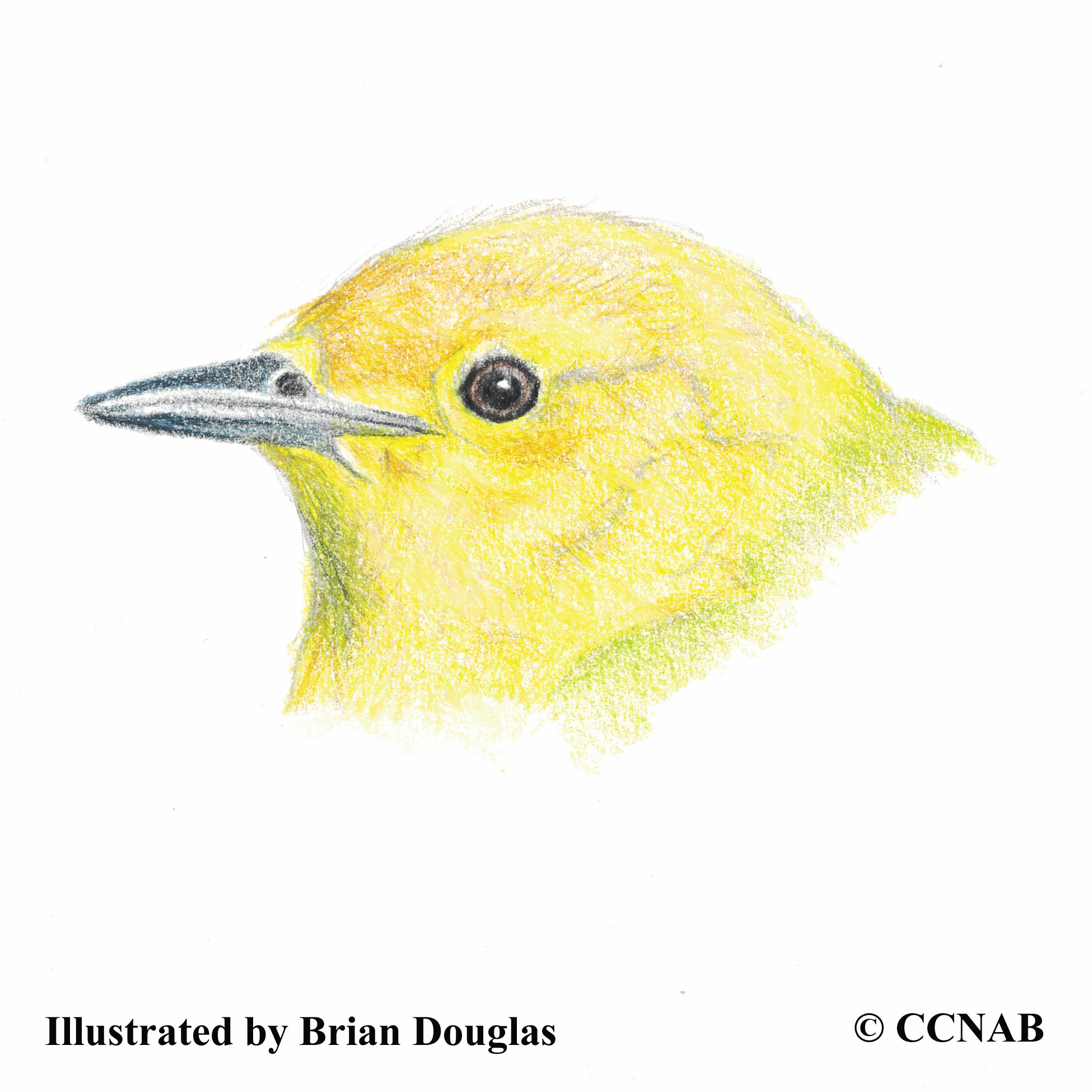
You see a flash of gold in the privet hedge. It’s bright. It’s tiny. Your brain immediately goes to "Wild Canary," right? Except, here’s the thing: we don’t really have wild canaries in the States or Canada. What you’re actually looking at is likely one of about a dozen different species that have mastered the art of looking like a lemon with wings. Yellow North American birds are notoriously tricky because their plumage changes based on the season, their age, and even what they ate for breakfast. Seriously.
Identifying these birds isn't just about spotting a color. It’s about the "jizz"—a term birders use for "General Impression of Size and Shape." If you just look at the yellow, you're going to get it wrong. Honestly, even the experts second-guess themselves when a female warbler pops up in late August.
The Usual Suspects: American Goldfinch vs. Everyone Else
The American Goldfinch is basically the mascot for this category. In the summer, the males are impossibly bright, sporting a black cap that looks like a tiny beret. But have you seen them in January? They turn a drab, brownish-olive that makes them look like a completely different species. This "molt" is why people think their birds disappeared for the winter. They didn't leave; they just changed clothes.
- Goldfinches have a short, conical beak built for cracking thistle seeds.
- They fly in a "rollercoaster" pattern—up and down, up and down—often chirping per-chic-o-ree as they go.
- Yellow Warblers, on the other hand, are yellow all over (even their tails!) but they have thin, needle-like beaks for picking off caterpillars.
If you see a bird that looks like it was dipped in a bucket of highlighter fluid, check the chest. Male Yellow Warblers have these delicate reddish-brown streaks that look like someone painted them on with a fine-tipped brush. If the bird is plain yellow with a thick beak, it's a finch. If it’s yellow with a skinny beak and moving like it’s had five espressos, it’s a warbler.
The Summer Tanager Confusion
Wait, aren't Tanagers red? Mostly. But the female Summer Tanager is this weird, mustard-yellow color that throws everyone off. They’re much bigger than warblers and they have a heavy, pale beak. You’ll find them high in the canopy, often bees-hunting. Yes, they eat bees. They’ll catch a wasp, smash its head against a branch to kill it, and then rub the stinger off before swallowing. It’s metal.
Why Yellow Is Actually a High-Stakes Game
Color in the bird world isn't just for aesthetics. For most yellow North American birds, that pigment comes from carotenoids in their diet. If a male Prothonotary Warbler isn't finding enough high-quality larvae, his yellow will look dull and washed out. Females know this. They use the intensity of the yellow to judge if a male is a good hunter and has a strong immune system. Basically, being bright is a giant glowing sign that says, "I have great genes."
Then there’s the Evening Grosbeak. These birds are chunky. They look like a House Finch that’s been lifting weights and taking steroids. They have massive, bone-crushing beaks and a striking yellow "eyebrow" that makes them look perpetually annoyed. They are nomadic. You might see a hundred of them at your feeder one winter and then not see a single one for the next five years. Scientists call these "irruptions," and they usually happen when the seed crops in the boreal forests of Canada fail.
The "Butterbutt" Mystery
You’ve probably heard people talk about the Yellow-rumped Warbler. Birders call them "Butterbutts." Why? Because they are mostly gray and white, but they have a distinct, bright yellow patch right above their tail.
It’s like a little signal flare.
When they fly away from you, that yellow patch is the last thing you see. They are one of the hardiest warblers, often staying much further north during the winter than their cousins because they can actually digest the wax in bayberries and wax myrtles. Most warblers are strictly insect-eaters, which is why they head to the tropics when it gets cold, but the Butterbutt is built different.
Common Mistakes People Make in the Field
- Ignoring the wings. Is there a white wing bar? The American Goldfinch has prominent black wings with white stripes. The Pine Warbler (which is a duller yellow) has blurry white wing bars and prefers—you guessed it—pine trees.
- Focusing on the face only. The Common Yellowthroat is a warbler that lives in marshes. The male has a literal Batman mask. Black across the eyes, bright yellow throat. If you don't see the mask, look for a bird that stays low in the reeds and says witchity-witchity-witchity.
- Assuming it's an escapee. Every year, someone calls a local Audubon chapter claiming they found an escaped pet canary. 99% of the time, it’s just a particularly bright Yellow Warbler or a goldfinch in peak breeding plumage.
Western vs. Eastern Varieties
Geography matters. If you're in California or the Rockies, you're going to see the Western Tanager. These birds are stunning—bright yellow body, black wings, and a flame-orange head. They look like they belong in the rainforest, not a suburban backyard in Boise. In the East, you're more likely to see the Great Crested Flycatcher. They aren't "yellow" yellow, but they have a lemon-tinted belly and a habit of hanging snakeskins in their nests to scare off predators. No, I'm not joking. They actually seek out shed snakeskins to use as wallpaper.
The Science of Seeing Yellow
Human eyes are actually pretty good at spotting yellow against green foliage. This is an evolutionary advantage for us, but a disadvantage for the birds. To survive, many yellow North American birds utilize "countershading." Their backs might be a darker, olive-green to blend in with the leaves when viewed from above by a hawk, while their bellies are yellow to blend in with the bright sky when viewed from below by a predator on the ground.
- The Hooded Warbler: Features a yellow face peering out from a black "hood." They are ground-nesters, which is risky business.
- The Nashville Warbler: Has a white eye-ring that makes it look like it's perpetually surprised. No streaks on the breast, just clean yellow.
- The Lesser Goldfinch: Common in the West. Smaller than the American Goldfinch and often has a solid black back.
How to Attract These Birds Without Ruining Their Diet
If you want yellow birds in your yard, stop spraying pesticides. It’s that simple. Most of these species, especially the warblers and flycatchers, rely on insects. If you kill the bugs, you kill the food source.
For the finches, Nyjer seed (often called thistle) is the gold standard. But buy a specific feeder for it. The seeds are so tiny they'll just fall out of a regular sunflower seed feeder. Also, keep your seed fresh. Nyjer is oily; if it gets wet, it molds quickly and can actually kill the birds you're trying to help.
Landscaping for Color
Native plants are the real secret. Planting American Highbush Cranberry or Serviceberry provides the caterpillars that warblers need during spring migration. If you have the space, a water feature—specifically a dripper—is a magnet for yellow North American birds. They can’t resist the sound of moving water. Warblers are notoriously shy about coming to feeders, but they will absolutely drop down for a shallow birdbath.
A Note on the "Rare" Sightings
Sometimes, you’ll see something that truly doesn't belong. The Painted Bunting is a legendary bird in the Southeast, and while the male is a rainbow, the female is a shocking, uniform lime-yellow. She’s often mistaken for a weird warbler.
Then there’s the Dickcissel. They look like miniature Meadowlarks, with a yellow chest and a black "V" on the throat. They’re birds of the grasslands, and their populations fluctuate wildly depending on the health of the prairies.
Actionable Steps for Your Next Birding Walk
Don't just head out with a pair of binoculars and hope for the best.
- Download the Merlin Bird ID app. It’s free, and the "Sound ID" feature is a game-changer. It listens to the songs and tells you who’s singing in real-time. Since many yellow birds hide in the high canopy, your ears are often better than your eyes.
- Look for movement patterns. A bird that "gleans" (picks insects off leaves while hovering) is likely a warbler. A bird that sits still and then darts out to catch a fly in mid-air is a flycatcher.
- Check the tail. Does it wag? The Palm Warbler (yellowish-brown) constantly pumps its tail up and down. Almost no other yellow bird does that.
- Get a decent field guide. Sibley’s or Peterson’s are the bibles. Look at the "fall" plumage sections. That’s where the real identification skills are forged.
Identifying yellow North American birds takes patience. You’re going to misidentify a dozen goldfinches as something exotic before you finally spot that first Wilson’s Warbler with its little black cap. But that’s the point. It’s a puzzle that changes with the seasons.
Next Steps for Enthusiasts: Start by auditing your backyard. Identify three native plants in your zip code that produce berries or support local caterpillar populations. Swap out one section of your lawn for these plants. If you're in an apartment, a window box with native perennials can still serve as a "refueling station" for migrating warblers. Finally, keep a notebook by your window. Documenting the specific date the American Goldfinches transition from their dull winter olive to their bright summer yellow will give you a better understanding of the local climate cycle than any weather app ever could.



