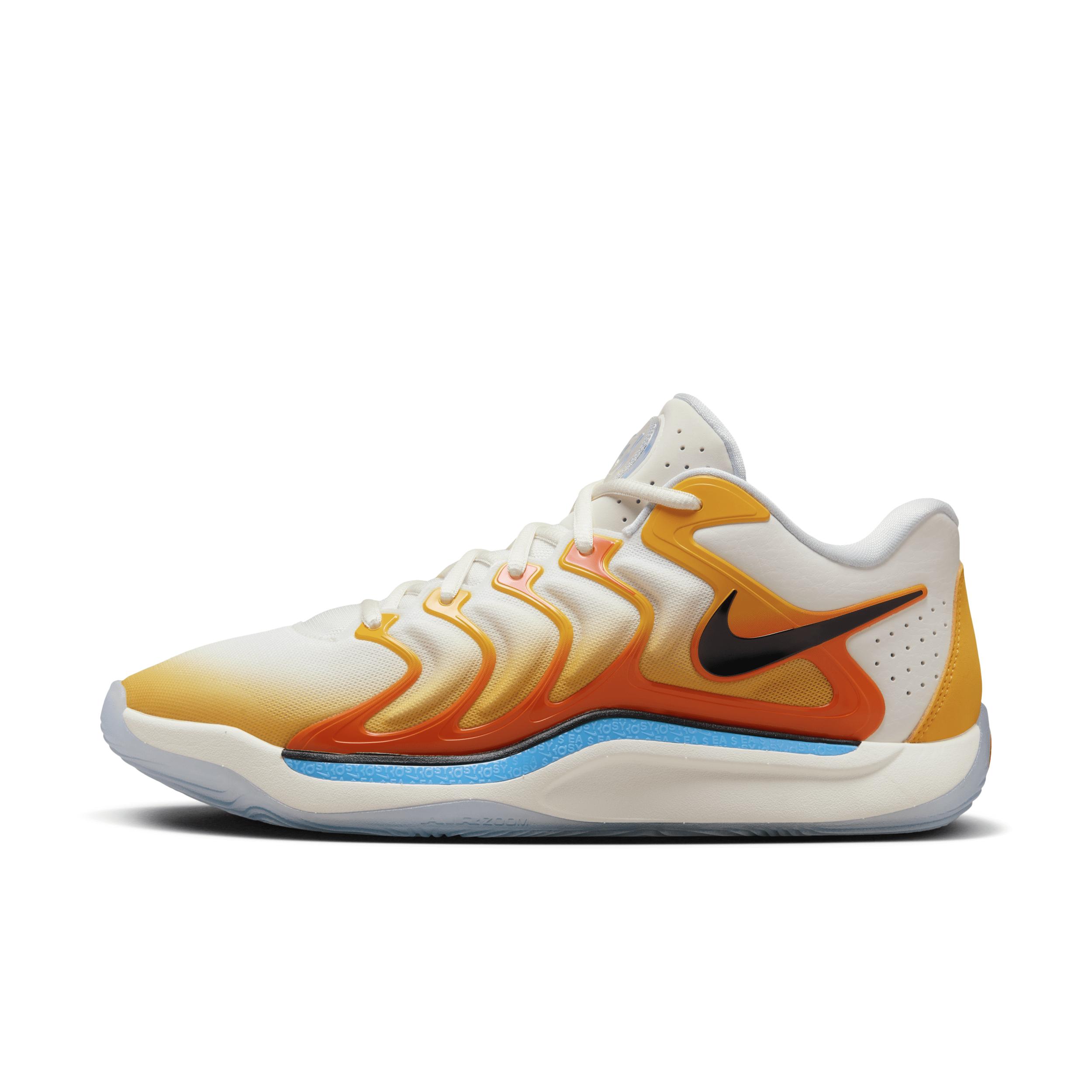
Look at the floor during any NBA warmup and you'll see a sea of white, black, and "team color" sneakers. Then, out of nowhere, a pair of yellow Nike basketball shoes flashes under the arena lights like a neon sign. It’s loud. Some might even say it's obnoxious. But honestly? It’s arguably the most iconic color choice in the history of the game.
Think about it.
Yellow isn't just a color in basketball; it's a statement of belonging or a declaration of war. If you’re wearing them in Los Angeles, you’re repping the Lake Show. If you’re in Indiana, it’s Reggie Miller’s legacy. Everywhere else, you're just the person who wants everyone to know exactly where you are on the fast break. Nike knows this better than anyone, which is why they’ve used "Tour Yellow," "Opti Yellow," and "Amarillo" to define some of the most technically advanced footwear ever made.
The Kobe Connection and the Bruce Lee Legacy
You can’t talk about yellow Nike basketball shoes without talking about Kobe Bryant. Period. While most players were sticking to safe palettes, Kobe pushed the boundaries of storytelling through his footwear. The most famous example is undoubtedly the "Bruce Lee" colorway. First appearing on the Nike Kobe 5 back in 2010, this wasn't just a random yellow shoe. It was a tribute to Lee's iconic jumpsuit from Game of Death, complete with those visceral red scratch marks on the forefoot.
It changed everything.
Suddenly, a bright yellow shoe wasn't "distracting"—it was a badge of the Mamba Mentality. Fans went crazy. The resale market for original "Bruce Lee" 5s still hovers at astronomical prices because that specific shade of yellow represented a crossover between martial arts philosophy and hardwood dominance. It’s a shoe that feels fast just sitting on a shelf.
Nike didn't stop there, though. They brought the vibe to the Kobe 9 Elite High, a shoe that looked more like a boxing boot than a basketball sneaker. In the "Restoration" or "University Gold" iterations, the yellow Flyknit wasn't just for show; it provided targeted tension and flex. It’s a weirdly specific technical detail that most casual fans miss. The yellow yarn actually feels different to the touch than the black yarn because of the dye saturation required to get that pop.
When Brightness Meets Performance Tech
Why does Nike keep using yellow for their flagship tech? There's actually a bit of a psychological play here. High-visibility colors like "Volt" (Nike's signature neon yellow-green) are designed to scream "innovation." When Nike launched the Cosmic Unity—their first serious foray into sustainable performance gear—they leaned heavily on "Amalgam" and yellow-adjacent tones. They wanted you to see the recycled content. They wanted the trash-to-treasure story to be impossible to ignore.
Technically, yellow pigment can be tricky on certain materials. On the Nike LeBron 20, the "NXXT Gen" versions featured a striking yellow that had to be bonded to engineered mesh. If the bond isn't perfect, the color bleeds. Nike's chemical engineers have spent years perfecting how "University Gold" sits on synthetic leather versus how it absorbs into the Zoom Air units' translucent rubber outsoles.
It's Not Just About the Lakers Anymore
Seriously, the "Lakers Colorway" is the default setting for any yellow Nike basketball shoes, but the narrative has shifted. Look at Kevin Durant. The KD 15 and KD 16 have played with "Vivid Sulfur" in ways that have nothing to do with Los Angeles. They represent the "Easy Money Sniper" persona—bright, flashy, and lethal.
Then you have the Giannis Antetokounmpo line. The Zoom Freak 4 and 5 have utilized yellow to celebrate his Nigerian roots and his journey through Greece. It’s a more global take on the color. It’s less about "Gold" and more about "Sunlight."
- The Kyrie Influence: Even though the partnership ended, the "SpongeBob SquarePants" collaboration on the Kyrie 5 remains a masterclass in using yellow. It was a literal interpretation of a cartoon character that somehow performed like a beast on court.
- The GT Series: Nike’s Greater Than (GT) series—Cut, Jump, and Hustle—often uses yellow accents to highlight where the Zoom Air Strobel or the Pebax plates are located. It’s a visual map of the shoe’s engine.
- WNBA Impact: Players like Sabrina Ionescu have brought a new energy to the color. The Sabrina 1 "Ionic" and various PE (Player Exclusive) versions often use yellow to signify energy and the "electric" nature of the modern game.
What Most People Get Wrong About Yellow Sneakers
Kinda funny thing happens when people buy bright shoes: they expect them to stay bright. Yellow is a magnet for floor scuffs. If you’re playing on a dusty court in a pair of yellow Ja 1s, they’re going to look dingy within three games. That’s the trade-off.
There’s also a common misconception that "Yellow" and "Volt" are the same thing. They aren't. Not even close. Volt lives in the 555-nanometer wavelength of the light spectrum, which is where the human eye is most sensitive. Pure yellow is warmer. If you’re looking for that classic "Iowa" or "Michigan" feel, you want "University Gold." If you want to look like a literal lightning bolt, you go for "Volt."
Another thing? Traction.
It sounds crazy, but the color of the rubber outsole can actually affect the grip. Many yellow Nike basketball shoes use "solid" rubber outsoles rather than "translucent" ones. Solid rubber generally has a more consistent "bite" on clean hardwood, whereas translucent rubber (often used for aesthetic reasons on yellow shoes) can sometimes require more break-in time or be more prone to picking up dust. It’s a small detail, but if you’re a guard who relies on hard cuts, it’s something to watch for.
Why You Should (or Shouldn't) Buy Them
Let's be real. Not everyone can pull these off.
If you’re the type of player who wants to blend into the background and just set screens, maybe stay away from the neon yellow LeBrons. These shoes are for the loud ones. They’re for the player who wants the ball in the closing seconds.
However, from a safety standpoint, yellow is actually great for outdoor hoops. If you're playing at a park as the sun goes down, that high-viz yellow actually helps your teammates spot you in their peripheral vision. It’s accidental safety gear.
Nike’s current lineup, including the LeBron 21 and the various "Team Bank" (TB) versions of the Air Zoom GT Cut 3, offers plenty of yellow options. They’ve moved toward a more refined "Honey" yellow recently, which feels a bit more premium and less like a highlighter. It’s a shift toward lifestyle versatility—shoes you can actually wear with jeans without looking like you’re headed to a construction site.
The Sustainability Factor
Interestingly, yellow is one of the easier pigments to produce using more eco-friendly processes. As Nike pushes toward their "Move to Zero" initiative, expect to see more yellow in their "Next Nature" products. The recycled Nike Grind material often has a speckled look that pairs perfectly with yellow midsoles, hiding the imperfections of the recycled plastic.
The Actionable Guide to Rocking Yellow Nikes
Don't just buy them and hope for the best. If you're going to commit to the look, you need a plan.
1. Check the Outsole Material. Before you drop $170, look at the bottom of the shoe. If it’s a translucent yellow, be prepared to wipe your soles frequently. If it’s solid rubber, you’re good for both indoor and outdoor play.
2. Match the "Socks" to the "Pop." Avoid wearing yellow socks with yellow shoes unless you want to look like a banana. Stick to white, black, or a contrasting primary color like royal blue. It makes the shoe the centerpiece rather than part of a costume.
3. Use a Synthetic Cleaner. Yellow shows dirt faster than almost any color except white. Invest in a dedicated sneaker cleaner (like Jason Markk or Crep Protect). Avoid using harsh bleach, which can actually turn some Nike foams a weird, sickly orange-brown.
4. Rotate Your Pairs. Because yellow materials (especially the knit and mesh) show wear and tear vividly, don't make them your only "daily driver" if you care about the aesthetic. Keep them for game days or specific runs.
5. Know Your Shade. If you're buying online, search for "Nike University Gold" for a classic yellow, "Yellow Ochre" for a darker, mustard vibe, or "Volt" if you want to be seen from space.
Yellow Nike basketball shoes aren't just a choice; they’re a vibe. Whether you’re channeling the ghost of Kobe’s Bruce Lee era or just trying to brighten up a local rec center, these shoes carry a weight that black-and-white pairs simply don't. They demand a certain level of play. You can’t wear bright yellow shoes and go 0-for-10 from the field. Well, you can, but people will definitely notice.
Choose your shade, check your traction, and make sure your game is as loud as your footwear. These aren't just shoes; they're an invitation for the defense to try and stop you. Give them something to look at while you blow past them.