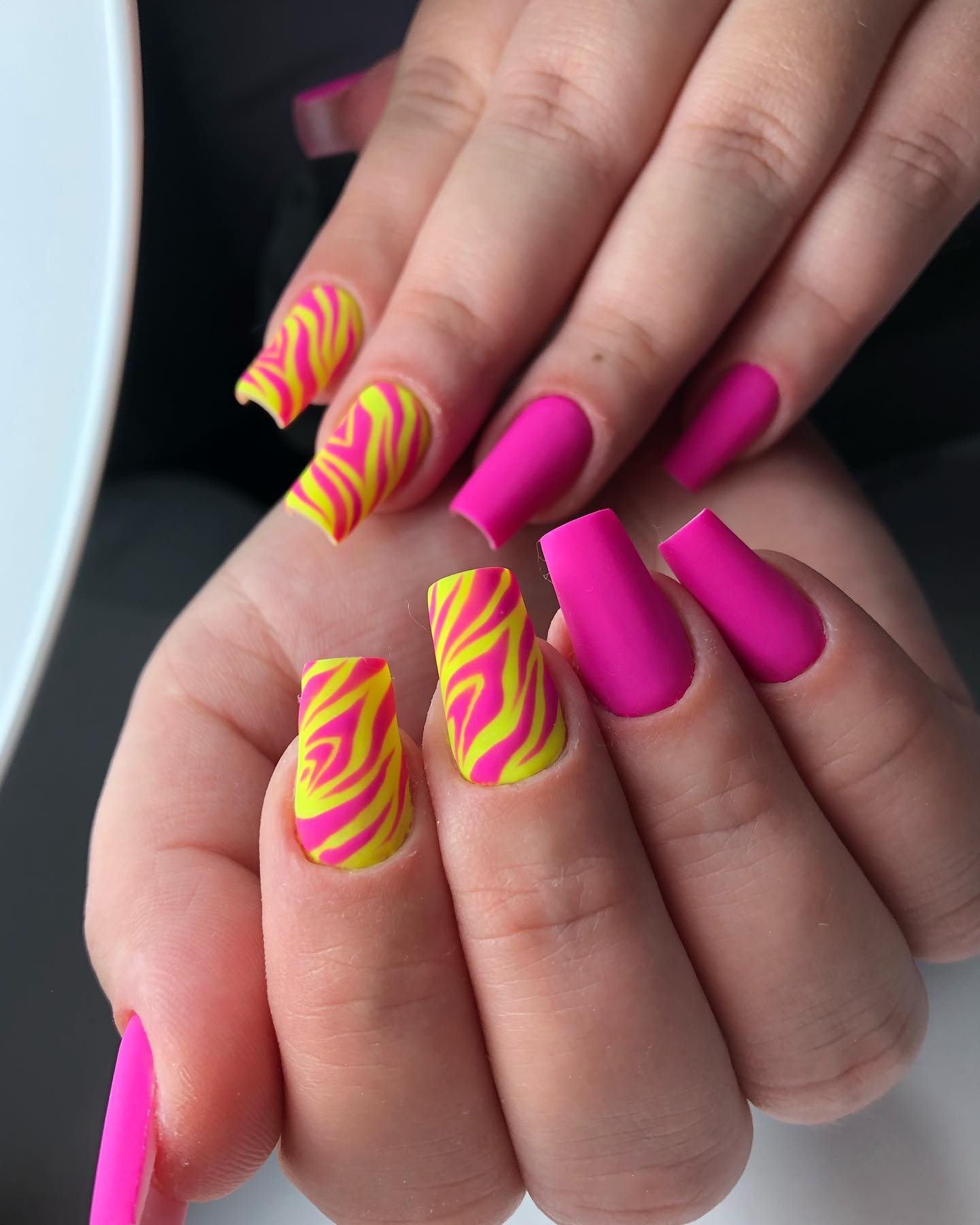
Yellow nail polish is a polarizing choice. It’s loud. It’s bright. Sometimes, honestly, it looks a little sickly if you pick the wrong undertone. But yellow nail polish designs are having a massive moment right now because people are tired of the same old "clean girl" sheer pinks that have dominated salons for the last three years.
You’ve probably seen it on your feed—that specific shade of butter yellow that looks like a high-end French pastry. Or maybe you've spotted the neon "Gen Z yellow" that almost glows in the dark. There is a psychology to this color. It’s associated with dopamine—literally "dopamine dressing" for your hands. It’s hard to stay in a bad mood when your fingernails look like little bits of sunshine. But let's be real: yellow is notoriously difficult to apply. It streaks. It’s patchy. If you aren't careful, you end up with three thick, gloppy layers that never quite dry. You might also find this similar story insightful: Why Father's Day Still Confuses Everyone and What You Actually Need to Know About It.
The Science of Finding Your Perfect Yellow
Before we even get into the art, we have to talk about the color theory. This is where most people mess up. If you have cool undertones (veins look blue/purple), a bright, lemon-chiffon yellow will make your hands look slightly gray or "washed out." You actually need a yellow that leans toward green or a very crisp, cool primary yellow. On the flip side, if you have warm undertones (veins look green), you can rock those deep mustard tones and honey golds like nobody’s business.
Olive skin tones are the trickiest. If you choose a yellow with too much green in it, it blends into your skin in a way that looks... well, unintentional. You want a high-contrast pastel or a true, bold neon. As discussed in latest reports by Apartment Therapy, the effects are worth noting.
Think about the formula too. Professional nail techs often complain that yellow pigment is the hardest to stabilize in a bottle. Brands like OPI, Essie, and Zoya have spent years trying to fix the "streakiness" issue. If you’re doing this at home, you absolutely need a ridge-filling base coat. It provides a smooth, white-ish canvas that makes the yellow pop without needing five coats.
Modern Yellow Nail Polish Designs That Aren't Tacky
Forget those old-school flower decals from 2005. The current aesthetic is all about minimalism and negative space.
One of the most popular yellow nail polish designs right now is the Micro-French. Instead of a thick white tip, you use a tiny, needle-thin brush to paint a sliver of dandelion yellow at the very edge of the nail. It’s subtle. It’s professional enough for an office but still feels like you have a personality.
Then there’s the "Aura" nail. This requires an airbrush or a very steady hand with a makeup sponge. You start with a nude or sheer base and bloom a soft circle of sunny yellow in the center of the nail. It looks like a heat map or a glowing orb. It’s ethereal. It’s also a great way to wear yellow if you’re scared of a solid block of color.
If you’re feeling more adventurous, Chrome Yellow is the 2026 upgrade to the glazed donut trend. You apply a solid yellow gel base, cure it, and then rub a gold or iridescent "mermaid" powder over the top. The result is a metallic, liquid-gold look that feels expensive. It’s less "school bus" and more "vintage jewelry."
Mixing Textures and Finishes
Don’t feel like every nail has to be shiny. A matte top coat transforms a bright yellow into something that looks like Italian ceramics or Mediterranean tiles. Try this: paint your thumb and ring finger a matte mustard, then do the rest in a high-gloss cream. It creates a visual break that makes the color more wearable.
Another high-fashion move is the "mismatched" hand. You can do a gradient—starting with a deep burnt orange on the thumb, moving through amber, honey, and ending with a pale lemon on the pinky. It creates a cohesive story rather than just a loud shout of color.
Dealing with the Application Nightmare
Let’s talk about the "three-coat rule." Most yellow polishes are translucent. To get that bottle-true color, you’re tempted to pile it on. Don't.
- Layer One: Should be almost transparent. Don't worry about the streaks.
- Layer Two: This is where the color builds. Keep your brush parallel to the nail to avoid "dragging" the polish off.
- Layer Three: This is the "flooding" layer. A slightly beadier drop of polish to level everything out.
If you're using a shade like Essie’s "Check Your Baggage" or OPI’s "Exotic Birds Do Not Tweet," you might even want to put a single coat of white polish underneath. It acts like a primer for a wall. It makes the yellow look vibrant instead of muddy.
Why Maintenance Matters More with Yellow
Yellow shows everything. If you chip a nude nail, nobody notices. If you chip a yellow nail, it looks like a missing tooth. Because yellow is so bright, it also stains the natural nail plate more than other colors (except maybe blue or red).
Always, always use a high-quality base coat to prevent your natural nails from turning that weird stained orange color after you take the polish off. If you do get staining, a quick soak in lemon juice and warm water usually does the trick.
The Cultural Shift Toward "Ugly-Cool" Colors
There is a movement in the beauty world right now toward colors that were previously considered "ugly." Chartreuse, mustard, muddy ochre—these are the colors of the 1970s interior design world, and they’ve made a massive comeback in nail art.
Influencers like Betina Goldstein (who is basically the queen of editorial nail art) have shown that a single dot of yellow on a bare nail can be more impactful than a full set of glitter extensions. It’s about intentionality. When you wear yellow, you are telling the world you aren't afraid of being noticed. It’s a high-energy color. In a world of "beige aesthetics," yellow nail polish designs are a small act of rebellion.
Seasonal Transitions
People think yellow is just for summer. That’s a mistake.
- Spring: Pale primrose and buttery pastels.
- Summer: High-vis neons and sunflower yellows.
- Fall: Deep amber, mustard, and "spiced" yellows that lean toward brown.
- Winter: Pale, icy "frosted" yellow or rich gold-adjacent hues.
Getting Results: Actionable Next Steps
To actually pull this off without looking like you’ve been working with turmeric in the kitchen, follow these specific steps:
- Identify your undertone first. Look at your wrist in natural sunlight. If you're "cool," buy a lemon yellow. If you're "warm," buy a mango or honey yellow.
- Invest in a "Long-Wear" Top Coat. Yellow pigments can fade or turn "smoky" when exposed to UV light and household cleaners. A UV-filter top coat keeps the color crisp.
- Try a "Half-Moon" design. If you hate the look of regrowth, leave the little half-moon at the base of your nail bare and paint the rest yellow. As the nail grows out, it looks like a deliberate design choice rather than a three-week-old manicure.
- Texture is your friend. If you find the solid color too daunting, look for a yellow polish with "black pepper" flakes (matte black hex glitters). It mimics the look of a quail egg and hides any application imperfections or streaks perfectly.
- Clean up the edges. Use a small brush dipped in acetone to crisp up the line around your cuticles. Because yellow is so bright, any "overspill" onto the skin looks messy and detracts from the design.
Yellow isn't just a color; it’s a statement of confidence. Whether you go for a full set of neon stiletto nails or a tiny yellow heart on your ring finger, you're embracing one of the most challenging—and rewarding—shades in the beauty world.



