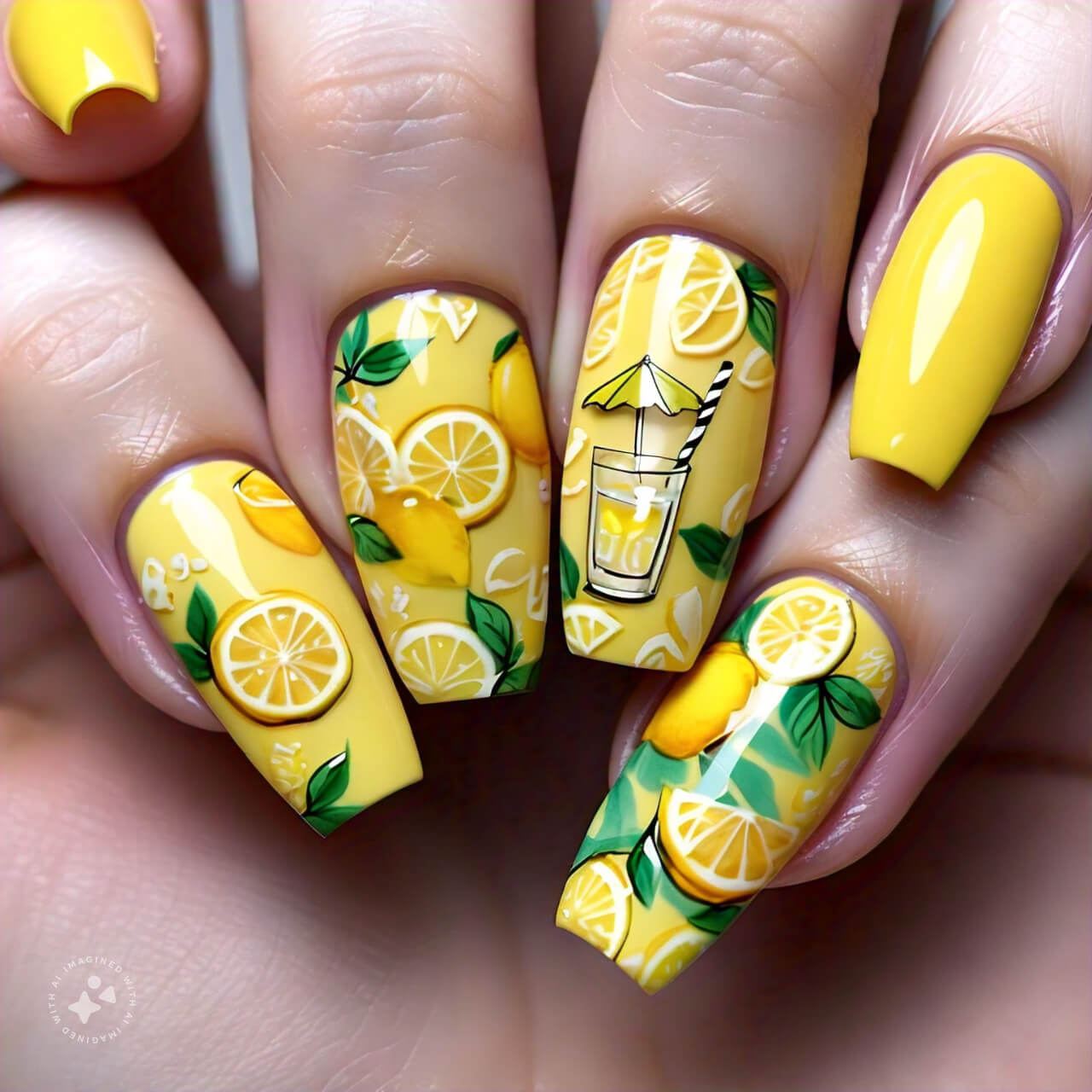
Yellow is a mood. Honestly, it’s one of those colors that people either absolutely adore or steer clear of because they’re afraid it’ll make their hands look "washed out" or weirdly sickly. But if you look at what’s happening in salons from Seoul to New York right now, yellow nail art designs are having a massive, unapologetic moment. It’s not just about that bright, highlighter neon we saw everywhere a few seasons ago. We’re talking buttery pastels, deep ochres, and those weirdly cool mustard tones that somehow go with everything in your closet.
Yellow is tricky.
If you pick the wrong undertone, it’s a disaster. But get it right? It’s basically like carrying around your own personal hit of dopamine on your fingertips.
Most people think yellow is just for summer. That's a total myth. I’ve seen some of the most stunning sets using a burnt saffron or a "honey" yellow in the dead of November, and it looks incredibly high-end. The key isn't just the color itself; it’s the design architecture you build on top of it. You can't just slap on a coat of lemon polish and hope for the best. Well, you can, but it’s probably going to look like a DIY project gone wrong because yellow pigment is notoriously streaky.
The Science of Why Yellow Nail Art Designs Often Look Streaky
Let’s get technical for a second because this is where most people fail. Yellow pigment is physically different from red or black pigment. It's often more transparent. In the world of professional nail chemistry, yellow polishes require a higher concentration of white base to become opaque, which is why they can feel chalky or end up looking like a picket fence with visible brush strokes.
Professional manicurists—think of someone like Betina Goldstein or Miss Pop—often suggest a "base hack." If you’re going for a bright yellow, apply a single coat of a blurred white or a very pale nude first. This gives the yellow something to grab onto and makes the color pop without needing five thick, goopy layers.
It’s about the light. Yellow reflects the most light of any color on the spectrum. This means every little bump or ridge on your natural nail is going to be magnified tenfold. If you aren't prepping the nail plate with a high-quality ridge filler or a solid buffing session, your yellow nail art designs will look lumpy. No one wants lumpy nails.
Mixing Textures and Tones
You've probably seen the "mismatched" trend. It's still huge. Instead of doing ten fingers in the exact same shade of dandelion, try a gradient. Start with a deep, brownish mustard on the thumb and work your way up to a pale, milky chiffon yellow on the pinky. It creates a visual flow that feels intentional and curated rather than just "I found a bottle of yellow paint."
Matte top coats change the entire vibe of yellow. Seriously. A matte mustard nail looks like expensive leather or high-end ceramics. On the flip side, a high-gloss "jelly" yellow—which is basically a translucent tint—looks like hard candy or stained glass. The "syrup nail" trend from Korea works exceptionally well with yellow because it mimics the look of honey. You apply it thicker at the tips and fade it toward the cuticle. It’s subtle, it’s sweet, and it doesn't scream "look at me" quite as loudly as a solid neon.
Yellow Nail Art Designs That Actually Work for Minimalists
Not everyone wants to look like they dipped their hands in a bucket of sunshine. I get it. If you're a minimalist, the "Micro French" is your best friend. Instead of a thick white tip, you use a razor-thin line of chrome yellow or even a soft pastel yellow. It’s barely there, but when the light hits it, it’s a total "cool girl" move.
Then there’s the negative space approach. Think: a single, crisp yellow dot at the base of a naked, well-manicured nail. Or a thin vertical stripe down the center. This works because the natural nail color breaks up the intensity of the yellow. It makes the color feel like an accent rather than the main event.
You can also play with "Earthy Yellows."
- Ochre
- Saffron
- Turmeric
- Raw Amber
These aren't the primary-school yellows we grew up with. These are sophisticated. They lean into the brown and orange families, making them much more flattering for a wider range of skin tones, especially those with olive or deep undertones. If you have a cool skin tone, look for "lemon" yellows that have a hint of green. If you're warm-toned, go for the "honey" and "gold" yellows.
The Impact of Seasonal Trends on Your Palette
In the spring, everyone reaches for "Butter Yellow." It’s the color of the moment. It’s creamy, soft, and feels fresh. But as we move into summer, the trend shifts toward "Aperol Spritz" vibes—bright, citrusy yellows that border on orange.
By the time fall hits, the industry moves toward "Marigold." This is a heavy, saturated yellow that looks incredible paired with navy blue or forest green. It’s a power move. Imagine a matte marigold nail with a tiny bit of gold foil near the cuticle. It looks like a million bucks.
Winter is the hardest time for yellow, but it’s not impossible. The trick is to go "Ice Yellow." This is a shade so pale it’s almost white, but with just enough yellow pigment to give it warmth. It looks stunning against a chunky grey sweater. It’s unexpected. People expect red or glitter in December; giving them a soft, buttery yellow is a refreshing change of pace.
3D Elements and Advanced Techniques
If you're going to a pro, ask about 3D "blob" art. Using a thick builder gel, artists are creating raised, transparent droplets over yellow bases. It looks like dew on a flower or melted sugar. It’s tactile. It’s weird. It’s very trendy in the London and Tokyo nail scenes right now.
Chrome powder is another game-changer. You can apply a yellow chrome powder over a white base to get a "lemon drop" metallic finish, or apply it over a black base to get a weird, swampy, futuristic gold-green that changes as you move your hands.
Don't forget about the "Chrome Ombre." Start with a solid yellow base and buff a silver or gold chrome into just the tips. It’s a modern take on the French manicure that feels much more current.
Real-World Wearability and Maintenance
Yellow shows dirt. There, I said it. If you’re someone who works with your hands, uses a lot of hair dye, or even just cooks with a lot of spices (looking at you, turmeric), your yellow nail art designs might start to look a little dingy after a week. The solution is a high-quality, stain-resistant top coat. Most professional brands like CND or OPI have formulations specifically designed to prevent color shifting.
Also, yellow fades in the sun faster than almost any other color except maybe neon pink. If you’re headed on a beach vacation, your bright lemon nails might come home looking like a pale lime. Using a top coat with UV inhibitors is non-negotiable if you want the color to last until your next fill.
Actionable Steps for Your Next Appointment
If you're ready to dive into the world of yellow, don't just walk in and ask for "yellow." You'll end up with something you hate. Follow these steps for a guaranteed win:
- Check Your Undertones: Hold a piece of gold jewelry and a piece of silver jewelry against your hand. If gold looks better, go for warm, orangey-yellows. If silver looks better, go for "cool" lemon yellows.
- The "Two-Coat" Test: Ask your tech to swatch the color on one nail first. If it looks streaky after two coats, ask for a white base layer underneath. It’ll save you both a headache.
- Commit to the Shape: Yellow looks particularly striking on shorter, "squoval" (square-oval) nails or long, elegant almonds. Avoid super-sharp stilettos with bright yellow unless you’re going for a very specific, aggressive look.
- Mix Your Finishes: If you're doing a complex design, try making the yellow parts matte and the rest of the nail glossy. It adds a level of sophistication that makes the design look expensive.
- Aftercare is Key: Keep a cuticle oil in your bag. Yellow polish draws attention to the skin around the nail. If your cuticles are dry and raggedy, the yellow will only highlight it. Well-hydrated skin makes the color look intentional and clean.
Yellow isn't just a color choice; it’s a statement of confidence. It says you aren't afraid to be noticed and that you know how to handle a difficult palette. Whether you go for a tiny yellow heart on a nude base or a full-set of neon chrome, you're tapping into a trend that is fundamentally about joy and creativity. Stop overthinking it and just pick a shade. You might be surprised at how much you actually love it once it's on your tips.