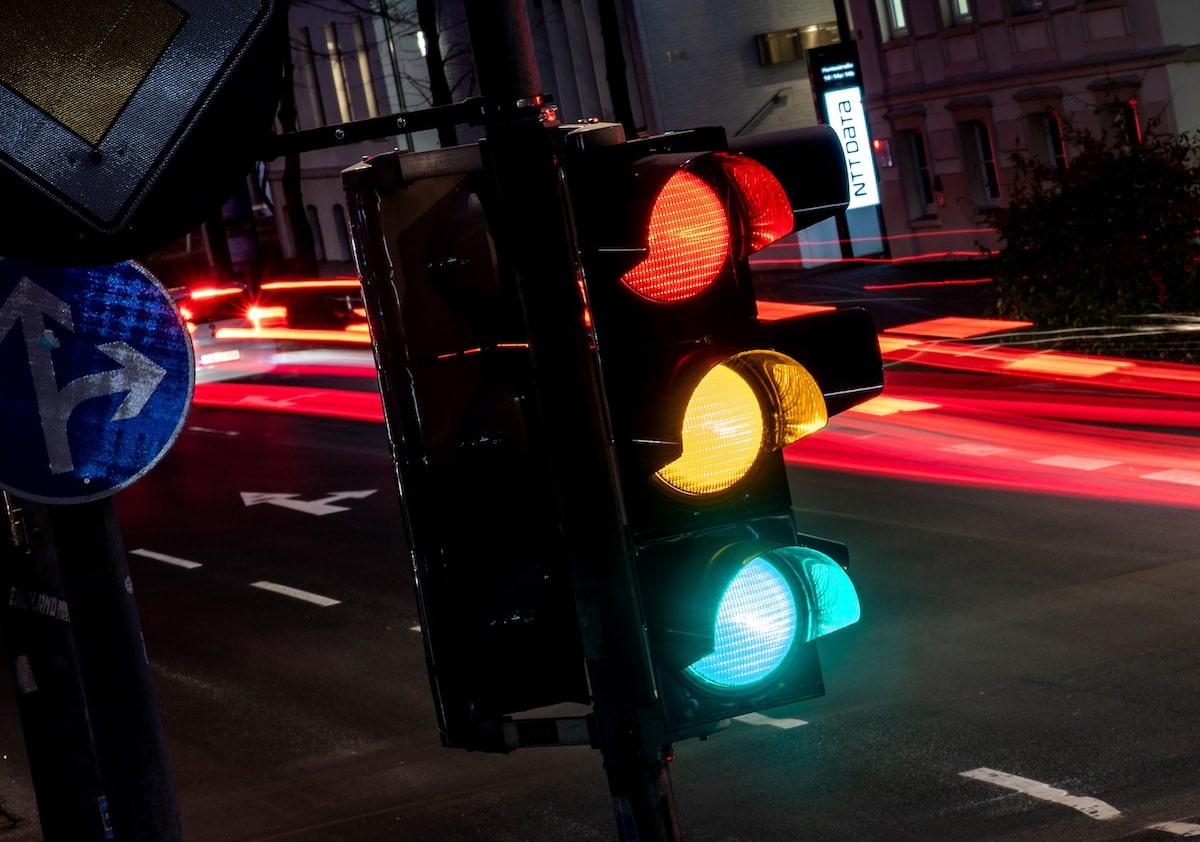
You're driving through a thick curtain of fog or a blinding snowstorm, and your standard white LED headlights are basically just bouncing light right back into your eyes. It’s frustrating. It’s also dangerous. This is exactly where the debate over the yellow light for car setups begins, and honestly, it’s a topic that divides gearheads and safety experts alike. Some people swear by that vintage "selective yellow" look because it reminds them of old-school European endurance racers, while others think it’s just a cosmetic fad that belongs on Instagram, not the highway.
The truth is way more technical than just "it looks cool." For another view, see: this related article.
The Science of Why Yellow Light for Car Fog Lamps Works
Have you ever noticed how blue light feels harsh? There’s a physical reason for that. Rayleigh scattering explains why the sky is blue, but in the context of driving, it explains why shorter wavelengths (like blue and violet) scatter more easily when they hit water droplets or snowflakes. Standard "cool white" LEDs often have a heavy blue peak in their spectral output. When that blue-heavy light hits a wall of fog, it creates a "glare curtain."
Yellow light has a longer wavelength. Because it lacks those aggressive blue frequencies, it doesn't scatter as intensely against the atmosphere. It’s not that the yellow light "cuts through" the fog—that’s a bit of a myth—it’s that it doesn't bounce back into your retinas as much. This improves your depth perception and contrast. You can actually see the lines on the road or the edge of the ditch because your eyes aren't struggling against a wall of white noise. Further insight on this matter has been provided by Cosmopolitan.
Back in the day, France actually mandated selective yellow headlights for decades. They only stopped in 1993 to harmonize with the rest of the European Union. But even now, if you look at the 24 Hours of Le Mans, you'll see GT cars running yellow lenses. Why? Because it helps drivers distinguish between different classes of cars in their mirrors at 200 mph, and it reduces eye fatigue during a grueling 24-hour stint. If it's good enough for a pro driver at La Sarthe, it's probably got some merit for your commute during a rainy Tuesday night.
Choosing the Right Bulb: LED vs. Halogen vs. Film
If you're looking to add a yellow light for car application to your own ride, you’ve got three main paths. Each has its own set of headaches.
Selective Yellow Halogen Bulbs: Companies like Hella or PIAA make these. They use a special coating on the glass. The upside is that they're cheap and the color is usually "true" yellow. The downside? Halogens run hot and don't last nearly as long as modern tech. Plus, the coating can sometimes peel or fade over several years of heat cycles.
Yellow LED Conversion Kits: These are incredibly popular right now. They’re bright. Really bright. But you have to be careful. A lot of cheap LEDs from random sites don't align the "chips" with the focal point of your car's housing. This results in light bleeding everywhere, blinding oncoming traffic while giving you worse visibility. If you go LED, look for brands like Diode Dynamics or Morimoto. They actually engineer the beam pattern to mimic a filament.
Yellow Tint Film: This is the easiest "mod." You just stick a yellow laminate (like Lamin-x) over your existing fog light housings. It protects the lens from rock chips, which is nice. However, you're effectively filtering light. You lose a small percentage of total lumen output because you're blocking other parts of the spectrum. For fog lights, this is usually fine. For main low beams? Don't do it. It's usually illegal and honestly pretty sketchy for night driving on clear roads.
The Legality Problem
You need to check your local laws. In the United States, the Department of Transportation (DOT) is pretty specific. While fog lights are generally allowed to be yellow or amber, your primary headlights (low beams and high beams) almost always need to be white. Specifically, "DOT compliant" white.
In some states, you'll get pulled over the second a cop sees yellow main beams. In others, they couldn't care less as long as you aren't blinding people. But if you're involved in an accident at night and you've modified your safety equipment with non-compliant colors, insurance adjusters will have a field day with you. Be smart. Keep the yellow for the fogs and "ditch lights."
Does Color Temperature Actually Matter?
We talk about "Kelvin" (K) when measuring light color. A standard warm halogen is around 3000K. "Daylight" white is about 5000K. Most of those "cool blue" lights you see are 6000K or higher.
For a true yellow light for car setup, you’re looking for something in the 2500K to 3000K range. Anything higher starts looking "lime green" or just "off-white." Anything lower starts looking orange (amber), which is usually reserved for turn signals.
There is a psychological element here too. Warm light is just less taxing on the brain. When you're driving for four hours in a storm, the harshness of 6000K LEDs can lead to "snow blindness" or general mental fatigue. Switching to a warmer, yellow-toned fog light gives your eyes a break. It's similar to why your phone has a "night shift" mode.
Performance in Different Conditions
- Dry Pavement: White light wins. It's crisper and shows more detail.
- Rain: Yellow light starts to show its value. It reflects less off the wet asphalt.
- Heavy Snow: Yellow is king. White light against snow is just a blur of white-on-white.
- Dust/Silt: If you do any off-roading, yellow or amber "dust lights" are essential so the guy behind you can actually see your vehicle through the cloud you're kicking up.
Installation Tips for the Weekend Mechanic
Installing a yellow light for car upgrade is usually a 30-minute job, but people mess it up all the time.
First, don't touch the glass of a halogen bulb with your bare fingers. The oils from your skin stay on the glass, heat up, and cause the bulb to shatter or burn out prematurely. Use gloves. If you touch it, wipe it down with rubbing alcohol.
Second, aim your lights. If you install high-output yellow LEDs in your fog light buckets, park 25 feet away from a flat wall on level ground. Your fog light beam should be several inches lower than your headlight cut-off. If they're aimed too high, they're useless in fog because they'll just illuminate the mist right in front of your windshield.
Third, check your seals. When swapping bulbs, make sure the rubber O-ring is seated perfectly. A tiny bit of moisture getting into a modern headlight assembly can cause thousands of dollars in damage to the LED drivers or fog up the lens permanently.
Real World Experience: The 3000K Choice
I've spent years testing different lighting setups on various project cars. In my experience, the best middle ground is a high-quality 3000K LED in a dedicated fog housing. You get the instant-on capability of LED, the longevity, and that distinct yellow hue that actually helps when the weather turns nasty.
Don't buy the "all-in-one" bulbs that claim to switch between white and yellow with a flick of the switch. They usually have mediocre heat sinks and the beam pattern is almost never optimized for either color. Pick a purpose and stick to it.
Making the Move to Yellow
If you're tired of squinting through the rain or you just want your car to have a bit more personality, upgrading to a yellow light for car setup is one of the most functional mods you can do. It’s not just about aesthetics; it’s about physiological comfort and optical physics.
Start by identifying your bulb size. You can usually find this in your owner's manual or by pulling the existing bulb and looking at the base (common sizes are H11, 9006, or H3).
Decide on your budget. A set of yellow films costs $20 and takes ten minutes. A high-end LED swap might cost $150 but will significantly change how you see the road.
Whatever you choose, remember that lighting is a safety system. Aim them properly, keep them clean, and don't go so "deep yellow" that you lose the ability to see the road ahead. Proper visibility is the difference between a close call and a tow truck.
Actionable Next Steps:
- Check your bulb type: Look up your car's year, make, and model on a site like Sylvania or Phillips to find the fog light bulb size.
- Inspect your housings: If your fog light lenses are pitted or hazy, no bulb will help. Use a restoration kit first.
- Test the "Wall Method": Before you change anything, turn on your lights against a garage door and mark the current beam height with painter's tape.
- Choose your tech: Buy 3000K LEDs if you want max brightness, or 2500K halogens if you want the most "authentic" deep yellow color.
- Install and Re-aim: Swap the bulbs and ensure the new beam pattern matches or sits slightly lower than your original marks to avoid blinding other drivers.



