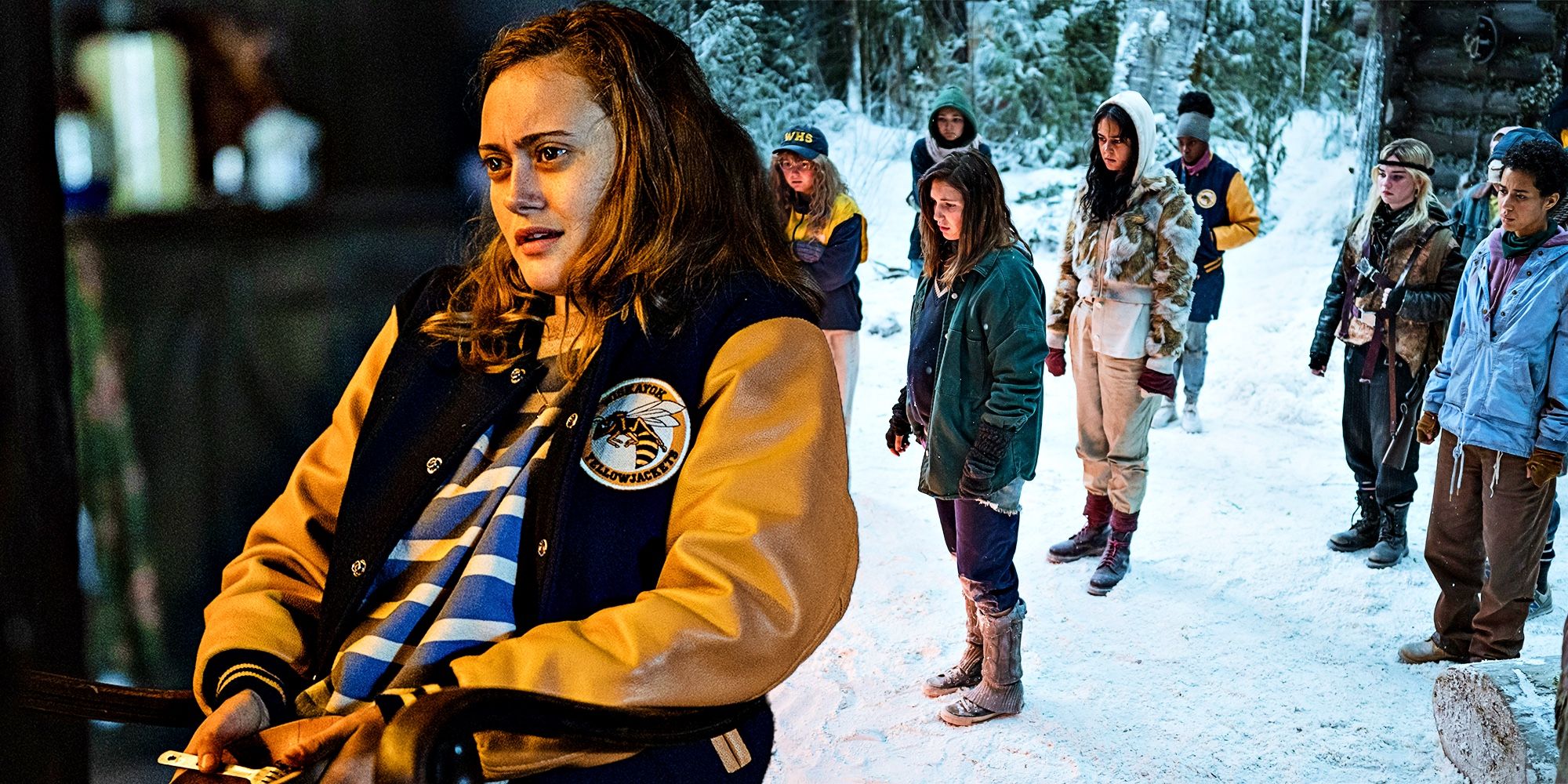
It was the moment that changed everything for Showtime’s hit series. If you've been following the survival horror drama, you know exactly which scene I'm talking about. People spent months speculating how the show would handle the inevitable slide into cannibalism, and then, in Season 2, Episode 2, it finally happened. Yellow jackets eat Jackie in a sequence that was somehow both beautiful and utterly revolting. It wasn't just a shock tactic; it was a turning point for the characters' humanity. Honestly, the way the creators handled the transition from a "dream feast" to the grim reality of a charred corpse was a masterclass in psychological horror.
You might think the show was just being edgy. It wasn't. There’s a lot of biological and psychological weight behind why that specific moment had to happen the way it did.
The Brutal Reality of the Feast
Let’s be real: the girls were starving. When the episode titled "Edible Complex" aired, viewers were already on edge. Jackie, played by Ella Purnell, had died in the Season 1 finale after freezing to death outside. Because the ground was too frozen to bury her, her body remained in the meat shed. The desperation had been building for weeks. When the survivors finally decide to cremate her, the smell of the "cooking" meat—enhanced by a fortuitous fall of snow that essentially slow-roasted her—becomes too much for their starving brains to ignore.
What makes the scene where the yellow jackets eat Jackie so jarring is the shift in perspective. We see the girls dressed in Roman-style robes, sitting at a lush banquet table filled with fruits, wine, and roasted meats. It’s a hallucination. It’s their brains protecting them from the horror of what they are actually doing. But then, the camera cuts back to the reality of the cold, dark wilderness. They are animalistic. They are tearing at a human body with their bare hands. It’s messy. It’s desperate.
Why Jackie Was the Chosen One
It had to be Jackie. From a narrative standpoint, Jackie represented the old world. She was the prom queen, the captain, the girl who thrived in a world of social hierarchies and suburban comfort. She couldn't adapt to the wilderness. By having the yellow jackets eat Jackie, the show symbolically kills off the last remnant of their civilized selves.
Sophie Nélisse, who plays the younger Shauna, has talked in interviews about how difficult that scene was to film—not just because of the gore, but because of the emotional weight. Jackie was Shauna's best friend. The act of consumption is the ultimate betrayal and the ultimate union. Shauna, specifically, is the one who "starts" the process by tasting the ear earlier in the episode. It’s a slow descent into madness that culminates in that midnight feast.
The Practical Effects and "Human" Meat
Ever wonder what they were actually eating on set? To make the scene where the yellow jackets eat Jackie look realistic without traumatizing the actors too much, the production team had to get creative. The "body" was a prosthetic, and the "meat" the actors were tearing into was actually made of rice paper, jackfruit, and maple-flavored seitan.
Kinda gross, right?
But it worked. The texture allowed the actors to look like they were struggling with something tough and fibrous. The makeup department, led by Adrien Morot, spent weeks perfecting the look of a body that had been both frozen and then roasted. They didn't want it to look like a generic prop; it had to look like Jackie.
The Psychology of Starvation
There is real science behind why the group succumbed so quickly once the smell hit them. When the human body enters a state of advanced starvation, the frontal lobe—the part of the brain responsible for logic and morality—begins to shut down to conserve energy. The "reptilian" brain takes over. This part of the brain only cares about survival: breathing, heartbeat, and eating.
In the case of the yellow jackets eating Jackie, the "smell" was the trigger. Experts in wilderness survival and human physiology often note that in extreme cold, the body burns through calories at an accelerated rate just to maintain core temperature. The girls weren't just hungry; they were dying. The hallucination of the banquet is a documented phenomenon where the brain, deprived of nutrients, creates vivid sensory experiences to cope with trauma.
Misconceptions About the Scene
Some fans thought the cannibalism happened too early. Why not wait another season?
Well, the showrunners, Ashley Lyle and Bart Nickerson, have been vocal about the fact that they didn't want to "tease" the audience forever. If you’re stuck in the Canadian Rockies in the dead of winter with no food, you don't last months. You last weeks. By having the yellow jackets eat Jackie early in Season 2, the show forced the characters to deal with the psychological fallout for the rest of the series. It’s not about the "act" of eating; it’s about what you become after you’ve done it.
- Coach Ben’s Reaction: He is the only one who doesn't participate. His horror serves as the audience’s moral compass.
- The "Antler Queen" Connection: Many theories suggest the ritualized nature of the feast was the birth of the cult-like behavior we see in the 1998 timeline.
- The Music: Using "Climbing Up the Walls" by Radiohead during the scene added an extra layer of psychological dread.
The Cultural Impact of the Jackie Feast
The internet went wild after the episode. Memes, deep-dive TikToks, and Reddit threads dissected every frame. Why? Because it tapped into a primal fear. Shows like Alive or The Terror have explored cannibalism before, but Yellowjackets made it intimate. These weren't strangers; these were teammates.
The fact that the yellow jackets eat Jackie—their friend, their leader—makes it a tragedy rather than just a horror story. It changed the way fans viewed Shauna especially. Her grief turned into a literal consumption of her guilt.
How the Production Pulled It Off
The lighting in that scene was crucial. It was filmed mostly in a dark, outdoor set with heavy use of practical firelight. This obscured just enough of the "body" to let the viewer's imagination do the heavy lifting, while still showing enough charred detail to be disturbing. The sound design was also key. The wet, tearing sounds were amplified to make the transition from the "silent banquet" to the "reality" feel like a slap in the face.
It’s interesting to note that the actors weren't told exactly how the "banquet" would be edited against the "corpse" until they saw the dailies. That separation helped them play the two different tones—the bliss of the dream and the desperation of the reality.
What This Means for Season 3 and Beyond
Now that the "seal is broken," the dynamic of the show has shifted entirely. The guilt of what they did to Jackie hangs over the adult survivors in the present day. You can see it in adult Shauna’s (Melanie Lynskey) eyes every time she cooks meat. The act of the yellow jackets eating Jackie wasn't a one-time event; it's a permanent stain on their souls.
Expect future seasons to lean harder into the "ritual" aspects. Now that they know they can survive this way, the "wilderness" (or whatever force they believe is out there) will likely demand more. Jackie was the first, but she won't be the last.
Dealing with the Aftermath
If you're a writer or a creator looking at how to handle "taboo" subjects, there are a few things to learn from this episode:
- Contrast is king. The jump between the beautiful dream and the ugly reality made the horror hit harder.
- Character first. The feast mattered because we spent a whole season getting to know Jackie.
- Sound matters. Sometimes what you hear is scarier than what you see.
- Don't blink. If you're going to go there, go all the way. Half-hearted horror usually falls flat.
Final Thoughts on the Jackie Incident
Ultimately, the scene where the yellow jackets eat Jackie is the "Red Wedding" of the series. It’s the point of no return. It validated the show’s dark premise and proved that it wasn't going to shy away from the most uncomfortable parts of human survival. For the characters, it was a night of shame they would carry for thirty years. For the viewers, it was one of the most memorable moments in modern television history.
If you’re catching up on the show, pay close attention to the episodes following this one. The way the group avoids looking at the site of the cremation, and the way they treat the leftover "bones," says more about their mental state than any dialogue ever could.
Actionable Insights for Fans and Creators:
- Analyze the "Banquet" Motif: Look at how other media uses food to represent social status vs. survival.
- Study the Sound Design: Re-watch the scene with headphones; notice how the wind dies down during the banquet and ramps up during the reality.
- Track the Guilt: Follow Shauna’s arc specifically; her relationship with Jackie’s memory is entirely defined by this one night.
- Explore the "Survival Psychosis" Lore: Read up on real-life cases like the Donner Party or the 1972 Andes flight disaster to see how Yellowjackets pulls from history.
The series continues to challenge our ideas of morality. Jackie might be gone, but the way she left the show ensures she’ll never be forgotten by the characters or the fans.



