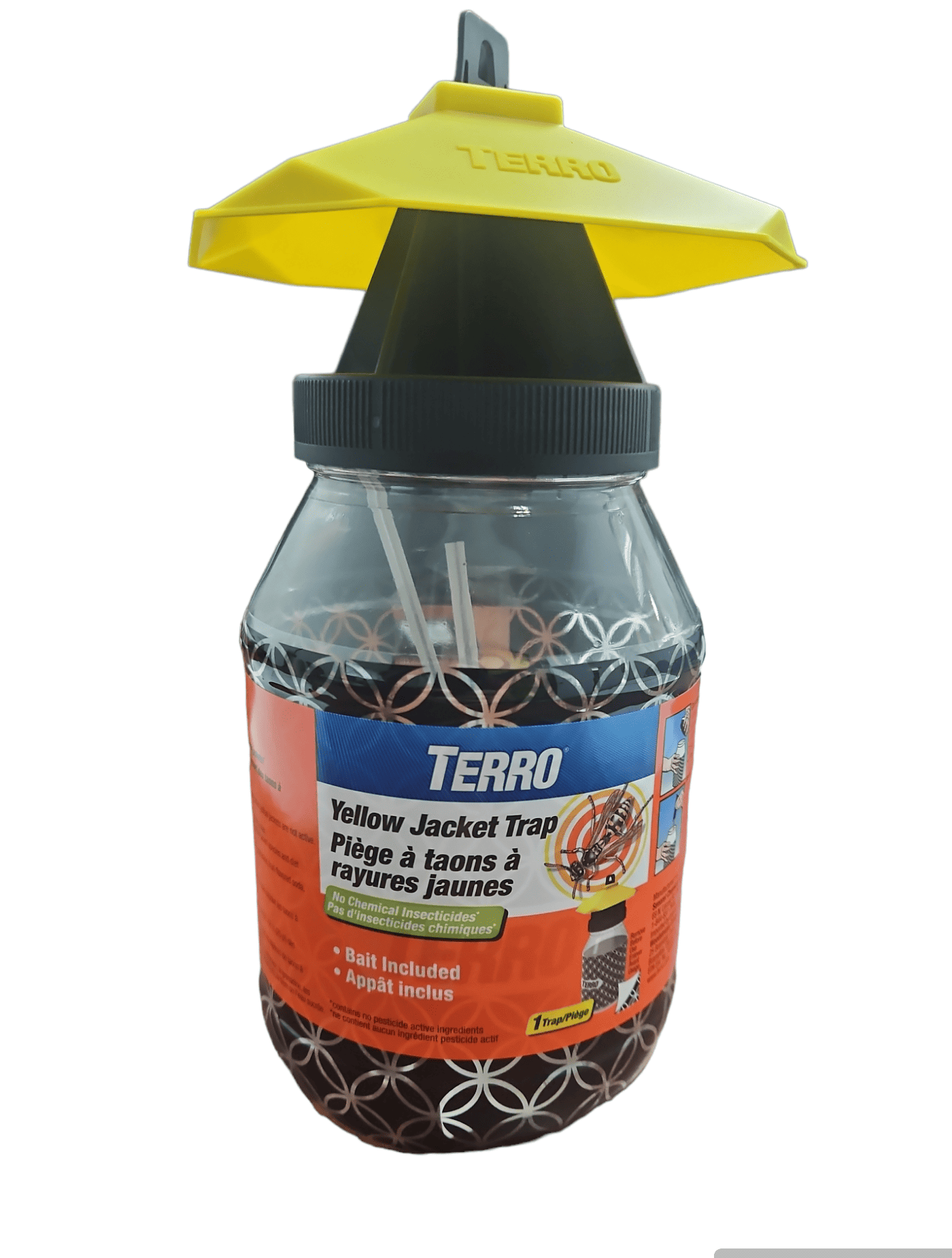
You've seen them. Those aggressive, buzzing streaks of yellow and black ruining your backyard barbecue or hovering menacingly over your soda can. It’s frustrating. You buy the expensive plastic traps, hang them up with high hopes, and then... nothing. Two days later, the trap is bone dry and the yellow jackets are still landing on your sandwich.
The problem usually isn't the trap itself. It’s the yellow jacket trap bait.
Most people treat bait like a "set it and forget it" situation, but these insects are surprisingly picky eaters depending on the time of year. They aren't just mindless drones; their nutritional needs shift violently between spring and autumn. If you’re using sugar in May, you’re basically shouting into a void. If you’re using ham in October, you’re wasting lunch meat.
The Biology of the Binge: Why Timing is Everything
Yellow jackets (Vespula and Dolichovespula) have a lifecycle that dictates their menu. Early in the season, usually late spring and early summer, the queen is busy establishing the colony. She needs protein. The workers are hunting for insects to feed the larvae back at the nest. They want meat. They want savory, fatty, high-protein fuel.
Basically, they’re bodybuilders in the spring and sugar-crazed toddlers in the fall.
As the season progresses into late August and September, the colony’s priorities shift. The larvae are mostly pupated, and the workers no longer need to bring home the bacon. Instead, they’re out for themselves. They need energy to stay warm and active as the temperatures drop, which means they develop a massive "sweet tooth." This is why yellow jackets become such a nightmare at fall festivals and cider mills.
Proteins: The Best Yellow Jacket Trap Bait for Early Season
If it’s June and you’re seeing scouts, you need to go savory.
Honestly, the "commercial" attractants that come in those little vials are often just synthetic pheromones like heptyl butyrate. While they work okay, they often lack the "punch" of real food. Many seasoned pest control experts, like those at the University of California’s Integrated Pest Management (UC IPM) program, suggest that raw protein is often superior for drawing in western yellow jackets and German yellow jackets.
- Canned Chicken: This is the gold standard. It’s smelly, it’s soft, and it stays moist longer than a slice of deli turkey. Use a small binder clip to hang a piece inside your trap so it doesn't fall into the water and rot too fast.
- Fish: Specifically, tuna or slightly oily fish. The scent trails are incredible. Just be warned: you might attract the neighborhood cat along with the wasps.
- Liverwurst: It’s gross to most humans, but yellow jackets find the high fat and protein content irresistible in the early summer months.
Avoid using red meat like steak. It tends to dry out and form a "skin" that makes it hard for the insects to grab a piece and take it back to the hive. You want something "mushy."
Sweets: Turning the Tide in Late Summer
When the calendar hits September, stop buying chicken. It’s time to raid the pantry for sugar-heavy yellow jacket trap bait.
At this stage, the workers are essentially "free agents." The social structure of the hive is breaking down, and they are desperate for carbohydrates. This is the time to use:
- Apple Cider: The fermentation smells like heaven to a wasp.
- Fruit Juice (with a twist): Use a high-sugar juice like grape or cranberry.
- Grenadine: This is a secret weapon. It’s thick, incredibly sweet, and the bright red color acts as a visual lure.
- Beer: Believe it or not, a stale lager or an ale works wonders. The yeast and sugar combo is a classic bait choice.
Pro-tip: Add a drop of dish soap to any liquid bait. This breaks the surface tension of the liquid. When the yellow jacket lands to take a sip, instead of floating on top, they immediately sink and drown. It sounds harsh, but it’s the only way to ensure the trap actually reduces the population rather than just providing a free snack bar.
The Vinegar Trick: Saving the Honeybees
This is the part most people get wrong. You don’t want to kill everything that flies. Honeybees are struggling, and they are attracted to many of the same sugary scents as yellow jackets.
How do you keep the "good guys" out of your traps? Vinegar.
Bees absolutely hate the smell of acetic acid (vinegar). Adding a tablespoon of apple cider vinegar to your sweet bait will act as a powerful repellent for honeybees while having zero effect on the yellow jackets. It’s a simple, ethical tweak that keeps your garden's pollinators safe while you deal with the aggressive pests.
Placement: Don't Invite Them to the Table
You've got the right bait. Now, where do you put it?
If you hang a trap directly over your patio table, you’re just inviting the yellow jackets to your dinner party. The trap should be at least 20 feet away from where people gather. You want to intercept them before they get to you.
Hang them in the sun. The heat helps vaporize the scent of the yellow jacket trap bait, sending that "smell trail" further into the wind. If the trap is hidden in a shady, cool corner, the scent won't travel, and the wasps won't find it.
Maintenance is the Secret Sauce
A trap full of dead yellow jackets is actually less effective.
As the bodies pile up and start to decompose, they release a different scent that can actually warn other wasps away. You need to clean these things out every few days. It’s a disgusting job, I know. But if you want a sting-free yard, you have to keep the bait fresh and the "graveyard" empty.
Also, watch the water level. In hot July weather, a liquid bait can evaporate in 48 hours. If the bait dries up, the trap becomes a hollow plastic ornament. Check it twice a week.
Understanding the "Meat" vs. "Sweet" Exception
There is one species, the Southern Yellow Jacket (Vespula squamosa), that doesn't always play by the rules. In some regions, they stay interested in protein much longer than their cousins. If you find your sugar traps are being ignored in late August, try switching back to a piece of fish for a day or two. Observation is your best tool.
If they’re hovering around your soda, go sweet. If they’re landing on your burger, go meat. It’s really that simple.
Actionable Steps for a Wasp-Free Weekend
Don't just hang one trap and hope for the best. Success requires a tactical approach.
- Identify the Season: If it's before July 4th, use canned chicken or fish. If it's after, use juice or soda with dish soap.
- Add the Bee Guard: Always put a splash of vinegar in your sweet baits to protect local pollinators.
- The Perimeter Strategy: Place traps 20-30 feet away from your deck, spaced about 15 feet apart. This creates a "scent wall" that captures foragers before they reach your food.
- The Morning Swap: Change your bait in the early morning or late evening when the wasps are inactive. Doing it at noon is a great way to get stung.
- Stay Consistent: One trap rarely solves a nest problem. If you have a high volume of wasps, you likely have a nest within 1,000 feet. Use multiple traps to keep the pressure on the population.
By matching your yellow jacket trap bait to the biological needs of the colony, you stop guessing and start winning. It’s about working with their instincts, not against them. Keep the meat fresh, the sugar spiked with soap, and the bees out of the equation.