You’re at a backyard barbecue, hamburger in hand, when something striped and angry starts hovering over your plate. Someone screams, "It's a bee!" Another person yells, "No, it's a hornet!" Meanwhile, you’re just trying not to get stung while your brother-in-law tries to swat it with a rolled-up newspaper—which, honestly, is the worst thing he could possibly do.
Most people use the terms yellow jacket hornet wasp interchangeably, but they aren't the same thing. Not even close. If you treat a yellow jacket nest like a paper wasp nest, you’re going to have a very bad Saturday.
Basically, the "yellow jacket hornet wasp" confusion stems from the fact that all yellow jackets are wasps, but not all wasps are yellow jackets. And almost none of the things people call "hornets" in North America are actually true hornets. It's a taxonomic mess that leads to thousands of unnecessary ER visits every year because people don't know what they're dealing with.
The Identity Crisis: What Is a Yellow Jacket Anyway?
Let’s get the science out of the way so we can talk about how to keep them from biting your face. Yellow jackets belong to the genera Vespula and Dolichovespula. They are distinct from the European Hornet (Vespa crabro) and the common paper wasp (Polistes).
You can tell them apart by their build. Yellow jackets are the "gym rats" of the wasp world. They’re short, stocky, and have a very specific "waist" that is hard to see because they’re so compact. Paper wasps, by contrast, are the "runway models"—long, dangling legs and a very thin, distinct waist. If it looks like it's wearing a corset, it's probably a paper wasp. If it looks like a flying pebble with stripes, it’s a yellow jacket.
One big misconception is that they're just "aggressive bees." Nope. Honeybees are fuzzy vegetarians. They want your flowers. Yellow jackets are sleek, shiny carnivores. They want your turkey sandwich. In the early summer, they hunt for protein to feed their larvae—caterpillars, flies, and spiders. But as fall approaches, their diet shifts. They become sugar addicts. This is why they crawl into your soda can and ruin your life in September.
Why the Yellow Jacket Hornet Wasp Label Is So Confusing
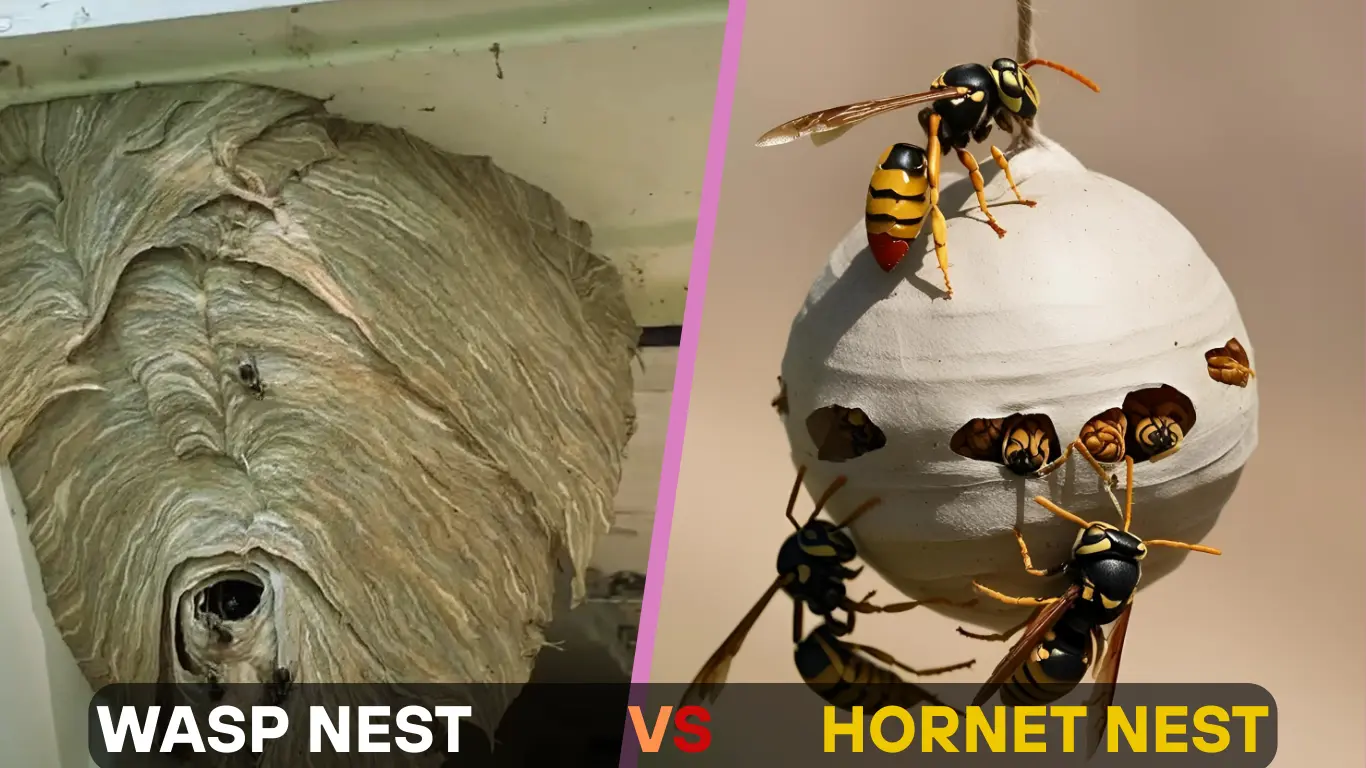
In the southern United States, people often point at a massive grey football-shaped nest in a tree and call it a "yellow jacket nest." Usually, that’s actually the work of the Bald-faced Hornet (Dolichovespula maculata). Here’s the kicker: the Bald-faced Hornet isn't even a hornet. It’s a large, aerial-nesting yellow jacket.
True hornets are rare in the U.S., with the exception of the introduced European Hornet. The European Hornet is huge—sometimes over an inch long—and brownish-yellow. If you see something that looks like a yellow jacket on steroids that flies at night, that’s your guy.
The distinction matters because of where they live.
- Yellow Jackets: Usually ground-nesters. They love old rodent burrows, hollow logs, or the gaps in your home’s siding.
- Paper Wasps: Open-faced nests that look like an inverted umbrella. You see these under your eaves.
- Bald-faced "Hornets": Huge, enclosed grey nests high in trees.
If you step on a yellow jacket nest in the ground, you aren't just dealing with one bug. You're dealing with a literal underground city of up to 5,000 angry soldiers.
The "Aggression" Myth (And the Reality)
People say yellow jackets are "mean." Honestly? They aren't mean; they're just incredibly protective of their real estate.
Unlike honeybees, which die after one sting, a yellow jacket has a lance-like stinger without barbs. They can—and will—stab you repeatedly like a tiny, winged sewing machine. To make matters worse, they mark you with a chemical pheromone. Once you’re "tagged," every other wasp in the vicinity knows exactly who the enemy is.
I’ve seen people try to drown a ground nest with a garden hose. Please, don't. You’re just making them wet and even more furious. They can fly through the water. They are surprisingly fast.
Why they get "drunk" in the fall
Ever notice how yellow jackets get way more annoying in late September? It’s not just your imagination. The queen stops laying eggs, which means the workers no longer have larvae to feed. Usually, the larvae secrete a sugary substance the adults eat. Without larvae, the adults go into a sugar-starved frenzy. They start scavenging fermented fruit, which essentially makes them tipsy and irritable. A "drunk" yellow jacket is a territorial yellow jacket.
How to Actually Get Rid of Them Without Dying
If you have a nest in your yard, you have a choice to make. If it’s far away from the house, leave it. They actually kill a ton of garden pests. But if it’s near your front door or under the deck where your kids play, it’s gotta go.
Forget the "gasoline down the hole" trick. It’s terrible for the environment, it’s a fire hazard, and it often doesn't even work because the nest can be six feet deep.
The Nighttime Ninja Method Wasps have terrible night vision. They also don't fly well when it’s cold. If you must use a spray, do it at 3:00 AM. Wear thick clothing, cover your neck, and use a "long-shot" foam spray that lets you stand 20 feet away. Aim for the entrance. Don't use a flashlight—they’ll fly right toward the light source (your hand). If you have to use a light, cover the lens with red cellophane. They can’t see red light.
Professional Intervention If the nest is inside your walls? Call a pro. Do NOT plug the hole. If you caulk the hole they’re using to get outside, they won't just die. They will chew through your drywall to find a new exit. Suddenly, you have 2,000 yellow jackets in your living room. That is a real thing that happens.
Real World Dangers: Anaphylaxis and Beyond
For most of us, a sting is just a painful welt. But for about 3% of the population, it’s a life-threatening emergency.
Dr. David Golden, an allergist and expert on insect stings at Johns Hopkins, notes that systemic reactions can happen even if you’ve been stung before with no issues. Your body can "prime" itself over time. If you start feeling dizzy, get hives in places you weren't stung, or have trouble breathing, that’s a 911 call. No questions asked.
Interestingly, yellow jackets are responsible for more deaths in the U.S. than sharks, bears, and snakes combined. It sounds dramatic, but it’s mostly because of their ubiquity and the frequency of allergic reactions.
Practical Steps for a Wasp-Free Life
You don't need a PhD in entomology to keep these things away from your porch. It’s mostly about managing their "buffet."
- Seal your trash. If your bin lids don't click shut, you're inviting the whole neighborhood.
- Pick up fallen fruit. If you have an apple or pear tree, get the "drops" off the ground before they ferment.
- The "Water Trap" trick. You can buy or make traps using a soda bottle. Put some meat (like deli turkey) in there in the spring to catch queens, or sugar water in the fall to catch workers. Just remember to hang them away from where you sit. Putting a trap on your patio table is basically like putting a "Free Pizza" sign in your front yard and wondering why there's a crowd.
- Fake Nests? You’ve probably seen those crocheted or paper "decoy" nests. The theory is that yellow jackets are territorial and won't build near another nest. The science on this is... shaky. It works okay for paper wasps, but ground-nesting yellow jackets couldn't care less about a paper bag hanging in a tree.
Final Word on the Yellow Jacket Hornet Wasp
At the end of the day, these insects are just trying to survive the winter. Only the new queens survive the freeze; the rest of the colony dies off every year. They are a vital part of the ecosystem, acting as nature’s pest control.
But when they're in your space, you need to be smart. Know the difference between a solitary mud dauber (harmless) and a yellow jacket colony (dangerous). Look for the "gym rat" body shape. Watch for the ground holes. And for the love of everything, keep your thumb over your soda can when you’re outside in October.
Actionable Next Steps:
- Inspect your property: Walk your perimeter during the day and look for "heavy traffic" areas where insects are flying in and out of a single hole in the ground or a crack in the siding.
- Audit your trash: Ensure all outdoor bins have airtight seals to remove the primary food source.
- Update your first aid kit: If you or a family member has a known allergy, check the expiration date on your EpiPen today. If you don't have an allergy, keep some antihistamines on hand just in case.