You’re scrolling through your DMs and there it is. A bright, sunny yellow heart from someone you like—or maybe just someone you work with. It feels different than the classic red one, right? It's less "I'm in love with you" and more "I really enjoy our vibe." But figuring out what does a yellow emoji heart mean depends entirely on who sent it and where you're seeing it.
Context is everything.
If your mom sends it, she's just being sweet. If a crush sends it after a first date, you might be heading straight for the "friend zone" faster than you can type "LOL." It’s the color of sunshine and lemonade, which is why it carries a heavyweight reputation for platonic affection.
The Snapchat Factor: The "Besties" Badge
We can't talk about this emoji without mentioning Snapchat. For years, the yellow heart has been a literal status symbol on the app. It’s not just an icon you pick; it’s an icon you earn.
When you see a yellow heart next to a friend’s name on Snapchat, it means you are each other’s #1 Best Friend. You send the most snaps to them, and they send the most snaps to you. It’s a mutual exchange of digital attention. If one of you starts snapping someone else more frequently, that yellow heart vanishes. It might turn into a red heart (which signifies being #1 best friends for two weeks straight) or a pink heart (two months).
Because of this, many Gen Z and Millennial users associate the yellow heart with loyalty. It represents a "Gold Standard" of friendship. It’s transparent. It’s reliable. It’s basically the digital version of a friendship bracelet that you both have to work to keep.
Friendship, Not Fireworks
Outside of social media algorithms, the yellow heart is the universal "safe" heart. Think about it. Red is romantic. Purple can be "horny" or royal, depending on the vibe. Blue is often "bro-ish" or calm.
Yellow is pure.
According to color psychology, yellow is the brightest color of the visible spectrum. It’s associated with happiness, optimism, and enlightenment. In the world of emojis, the yellow heart is often used to show support without crossing a romantic line. It’s perfect for reacting to a friend’s promotion, a cousin’s new puppy, or a coworker’s "out of office" message.
Honestly, it’s the heart you use when you want to show warmth but you don’t want to be "extra." It says "I care about you" without the baggage of "I want to take you to dinner and hold your hand." It’s low-pressure.
When a Crush Sends One
This is where things get tricky. If you’ve been flirting with someone and they hit you with the yellow heart, it’s time to pay attention. Sometimes, people use it because they are playing it safe. They might be nervous about using the red heart too soon.
However, more often than not, it’s a subtle boundary.
If you send a heart-eyes emoji and they respond with a yellow heart, they might be gently nudging you back into the friend category. It’s the "I think you’re a great person" heart. It’s kind, but it’s rarely passionate.
Digital Etiquette: When to Use the Yellow Heart
You’ve probably wondered if you’re overthinking your emoji choices. You aren't. In a world where we communicate through glass screens, these tiny icons carry the weight of our tone.
- Group Chats: Use it freely. It keeps the vibe light and positive.
- Professional Settings: It’s generally the only "safe" heart for Slack or LinkedIn if you have a very close relationship with a colleague. Even then, use it sparingly.
- Family: It’s a great way to show love to siblings or parents without the intensity of the red heart.
- New Friendships: It’s the perfect "thank you for the invite" follow-up.
Beyond the Basics: Subtle Variations
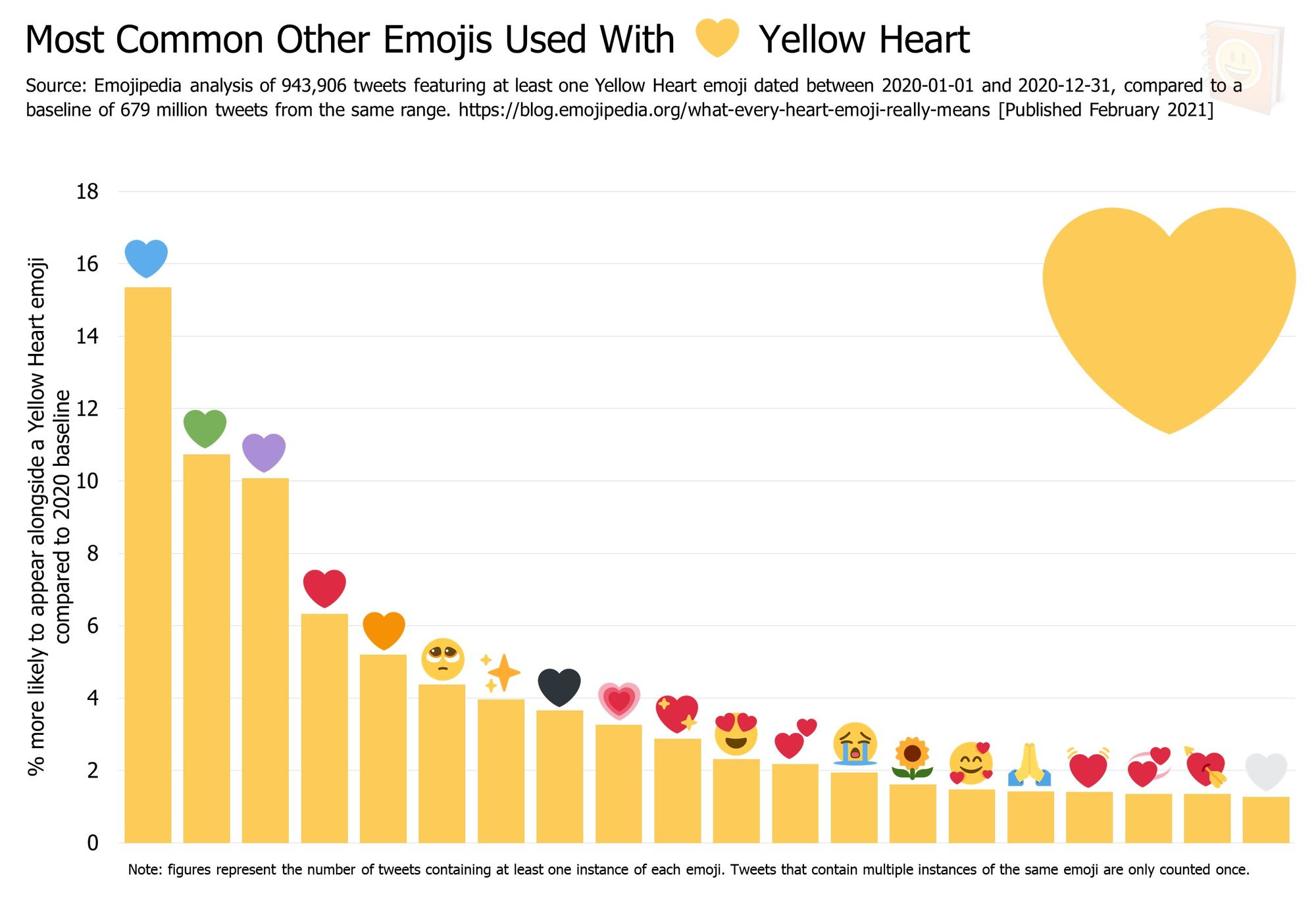
Sometimes the yellow heart isn't alone. When paired with the "sparkles" emoji, it emphasizes a "golden" moment or a particularly wonderful day. When paired with the "sun" emoji, it’s purely about summer vibes and happiness.
Interestingly, the Emojipedia records show that the yellow heart (officially called the "Yellow Heart" emoji) was approved as part of Unicode 6.0 in 2010. Since then, its usage has remained consistently high because it fills a gap that other colors can't. It’s the bridge between a "like" and a "love."
The Cultural Nuance of Yellow
It’s worth noting that color meanings aren't universal, though emojis have standardized a lot of our digital body language. In some cultures, yellow can represent jealousy or even deceit, but in the emoji lexicon, those meanings almost never apply. The tech giants—Apple, Google, Samsung—all design their yellow hearts to be bright, saturated, and cheerful. They want it to feel like a "hug in an icon."
So, what does a yellow emoji heart mean in the grand scheme of things?
It means clarity. It means "I’m here for you, I value you, and I’m glad you’re in my life." It’s the heartbeat of a solid friendship.
How to Use the Yellow Heart Effectively
To make sure your message is received correctly, follow these simple guidelines:
- Check the History: If you’re using Snapchat, remember the yellow heart is an automated badge of mutual friendship. Don’t get offended if it disappears; it just means the data changed.
- Match the Energy: If someone sends you a yellow heart, responding with a red one might escalate the vibe too quickly. Stick to yellow or another "cool" color like green or blue to keep things balanced.
- Use for Encouragement: It’s the best emoji for someone going through a tough time who isn't a romantic partner. It shows "light" at the end of the tunnel.
- Avoid Ambiguity: If you are trying to be romantic, maybe skip the yellow. It’s too easy to misinterpret as "just friends." Go for the classic red or the pink "growing heart" to show your feelings are developing.
Ultimately, the yellow heart is the most honest emoji in your keyboard. It doesn't pretend to be something it's not. It’s bright, it’s bold, and it’s perfectly platonic. Use it to celebrate the people who make your life better without making things complicated.
Next time you see that yellow glow in your notifications, take it as a compliment. You’ve got a "bestie" in your corner.



