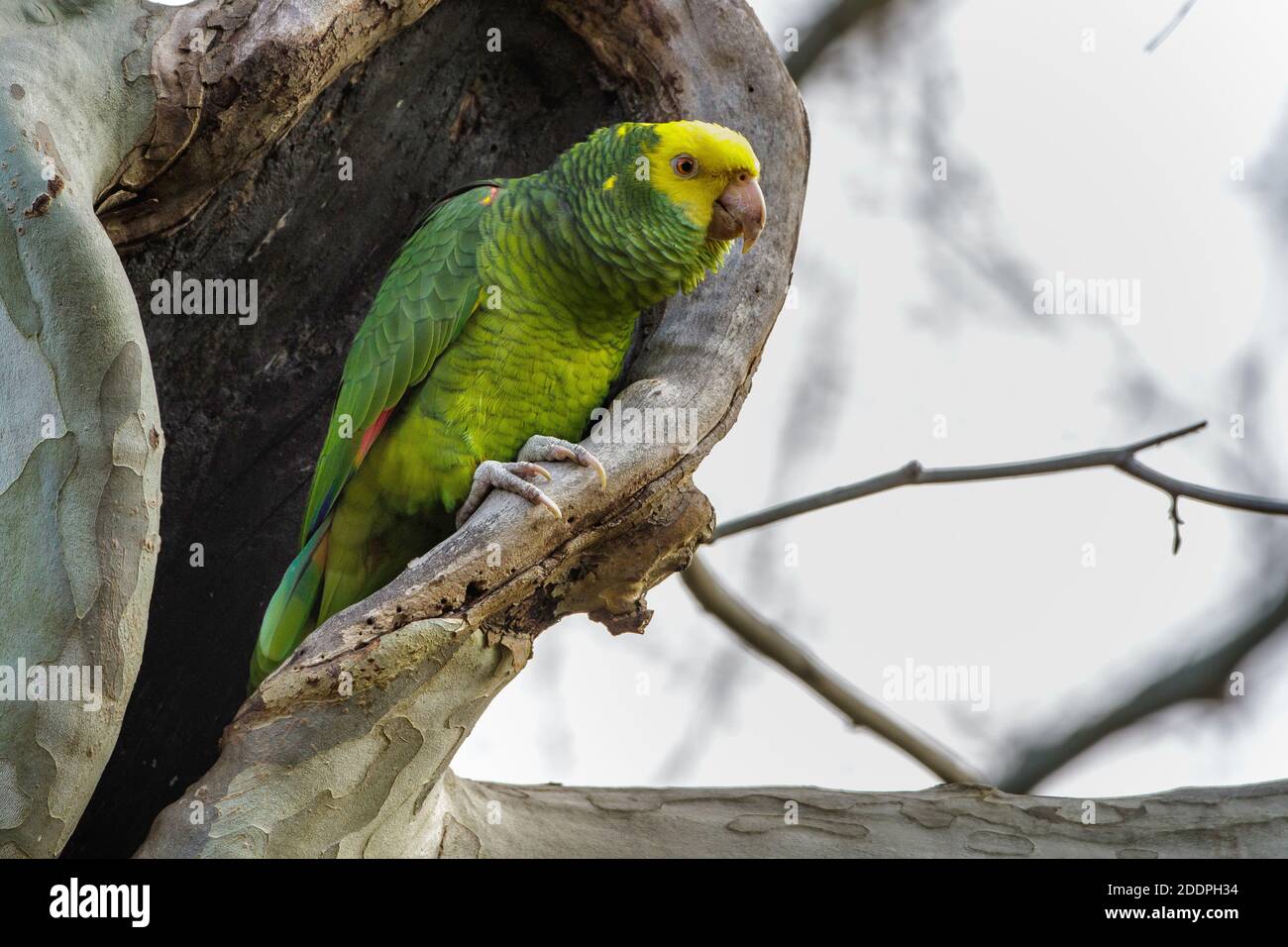
You’ve seen the videos. A bright green bird with a shocking yellow crown belt out an opera aria or mimic a ringing phone with terrifying precision. It’s hilarious. It’s charming. It makes you want to run out and buy a yellow headed amazon parrot immediately. But honestly? Living with one is a lot less like a 30-second TikTok and a lot more like living with a permanent, caffeinated toddler who owns a pair of bolt cutters.
These birds are brilliant. They are legendary. Amazona oratrix has been a staple in the pet trade for decades because they are arguably the best talkers in the New World. But there’s a massive gap between liking them and being the right person to share a house with one for 60 years.
The Reality of the Yellow Headed Amazon Parrot
Most people don’t realize how loud these birds actually are. We aren’t talking about a cute little chirp. We are talking about a vocal range designed to pierce through a dense Mexican rainforest canopy. If you have neighbors or a low tolerance for noise, stop right now. They scream at sunrise. They scream at sunset. It’s how they check in with the "flock." In your house, you are the flock.
They are also incredibly "beaky." A yellow headed amazon parrot uses its beak as a third hand, a climbing tool, and a way to tell you they don't like the way you're holding that cracker. They are prone to something bird people call "the bluffing stage." This usually happens during adolescence. Your sweet little bird suddenly becomes a lunging, biting machine. It's hormonal. It's temporary. But it’s enough to make most owners give up and drop the bird off at a rescue.
Where They Actually Come From
In the wild, things aren't looking great. These birds are native to Mexico and northern Central America. Specifically, they love the coastal slopes and the Tres Marías Islands. But here is the thing: they are currently listed as Endangered on the IUCN Red List.
Decades of habitat loss and illegal trapping for the pet trade have decimated their numbers. When you see one in a pet store, you absolutely must verify it was captive-bred. CITES Appendix I status means international trade of wild-caught individuals is a huge no-go. Real talk: if you buy one, ask for the paperwork. Ensure it's a legitimate breeder.
Personality: The "Macho" Bird
There is a specific vibe to a yellow headed amazon parrot. Unlike the cuddly, somewhat needy Cockatoo, an Amazon is a bit of a show-off. They have big egos. They love to be the center of attention, but they don't necessarily want to be petted all the time.
They show affection by hanging out near you, talking to you, and participating in your activities. If you're looking for a bird that wants to be cuddled like a puppy, this isn't it. They are independent. They are assertive.
The Talkers of the Bird World
Why do people obsess over them? The speech.
While an African Grey might mimic the exact tone of your microwave, a yellow headed amazon parrot puts emotion into it. They sing. They laugh. They develop "opera voices." It’s not just mimicry; it’s a performance. Famous examples like "Groucho," the singing parrot who appeared on television shows for years, cemented their reputation. Groucho could whistle "How Much Is That Doggie in the Window" and actually hit the notes.
But here is the catch: not every bird talks. You might get one that only learns to whistle the theme song to The Andy Griffith Show and scream when the mailman arrives. You have to love the bird, not the potential vocabulary.
Diet and Health (The Silent Killers)
If you feed this bird a seed-only diet, you are basically handing it a death sentence. It sounds dramatic because it is. Amazons are notorious for becoming "perch potatoes." They love to eat, and they have a physiological predisposition to obesity and fatty liver disease (hepatic lipidosis).
A healthy yellow headed amazon parrot needs a high-quality pellet as a base. Then, you pile on the veggies. Think kale, carrots, squash, and peppers. Fruit is a treat, not a meal, because of the sugar.
- Vitamin A is non-negotiable. Without it, they get respiratory infections and crappy skin.
- Exercise matters. They need a cage big enough to flap in, plus several hours of "out time."
- Calcium levels. Especially for females who might try to lay eggs, even without a mate.
I’ve seen too many Amazons that look like green footballs because they just sit and eat sunflower seeds all day. A fat parrot is a sick parrot.
The Commitment Nobody Tells You About
You’re looking at a 50 to 80-year lifespan. Let that sink in. This is a pet you have to put in your will. You are likely choosing a companion that will outlive your current car, your current house, and potentially your current marriage.
They also go through "The Change." When spring hits and the days get longer, their hormones go wild. A male yellow headed amazon parrot in breeding mode is a force of nature. His eyes will "pin" (the irises rapidly dilate and contract), his tail will fan out, and he might try to attack your feet. You have to learn to read bird body language. If his eyes are pinning and his feathers are ruffled, don't try to pick him up. Just walk away.
Social Dynamics
Amazons are often labeled "one-person birds." This is usually a training failure. If only one person feeds them and interacts with them, they will bond fiercely to that person and treat everyone else like an intruder. To prevent this, everyone in the household needs to handle the bird, offer treats, and participate in training.
Setting Up the Right Environment
Don't put them in a round cage. Just don't. They need corners to feel secure. The cage should be the largest one you can afford and fit in your living room. Stainless steel is best because they will chip the powder coating off cheaper cages with those powerful beaks.
Toys are not optional. They are destructive chewers. If you don't provide them with wood to destroy, they will find your crown molding or your antique dresser. They need "foot toys," hanging "shredders," and puzzle toys that make them work for their food. In the wild, they spend most of their time foraging. In a cage, they get bored. Boredom leads to feather plucking and screaming.
Real-World Costs
Let's talk money. A well-bred yellow headed amazon parrot can cost anywhere from $2,500 to $5,000. Then there's the cage ($800+), the toys (a monthly $50–$100 expense because they destroy them), and the specialized avian vet bills. Standard vets usually won't see parrots. You need an avian specialist, and they aren't cheap.
Actionable Steps for Potential Owners
If you are seriously considering bringing a yellow headed amazon parrot into your life, do not start at a pet store. Start at a rescue. There are thousands of Amazons in bird rescues right now because people didn't realize they were loud or lived forever.
- Volunteer at a parrot sanctuary. Spend time around adult Amazons, not just babies. Babies are easy. Adults have personalities and "attitudes."
- Audit your noise tolerance. Record a video of an Amazon screaming and play it at full volume at 6:00 AM. If that makes you angry, don't get the bird.
- Find an avian vet before you buy. Make sure you actually have someone in your area who can treat an exotic bird.
- Prepare your house. Get rid of Teflon/non-stick pans (the fumes are toxic to birds), scented candles, and plug-in air fresheners. Parrots have incredibly sensitive respiratory systems.
- Check local laws. Some regions have specific permits required for CITES-listed species, even if they were bred in captivity.
Living with a yellow headed amazon is like living with a feathered rock star. They are loud, demanding, and occasionally destructive, but they are also incredibly soulful, funny, and brilliant. Just make sure you're ready for the "rock star" lifestyle before you commit to the next 60 years.