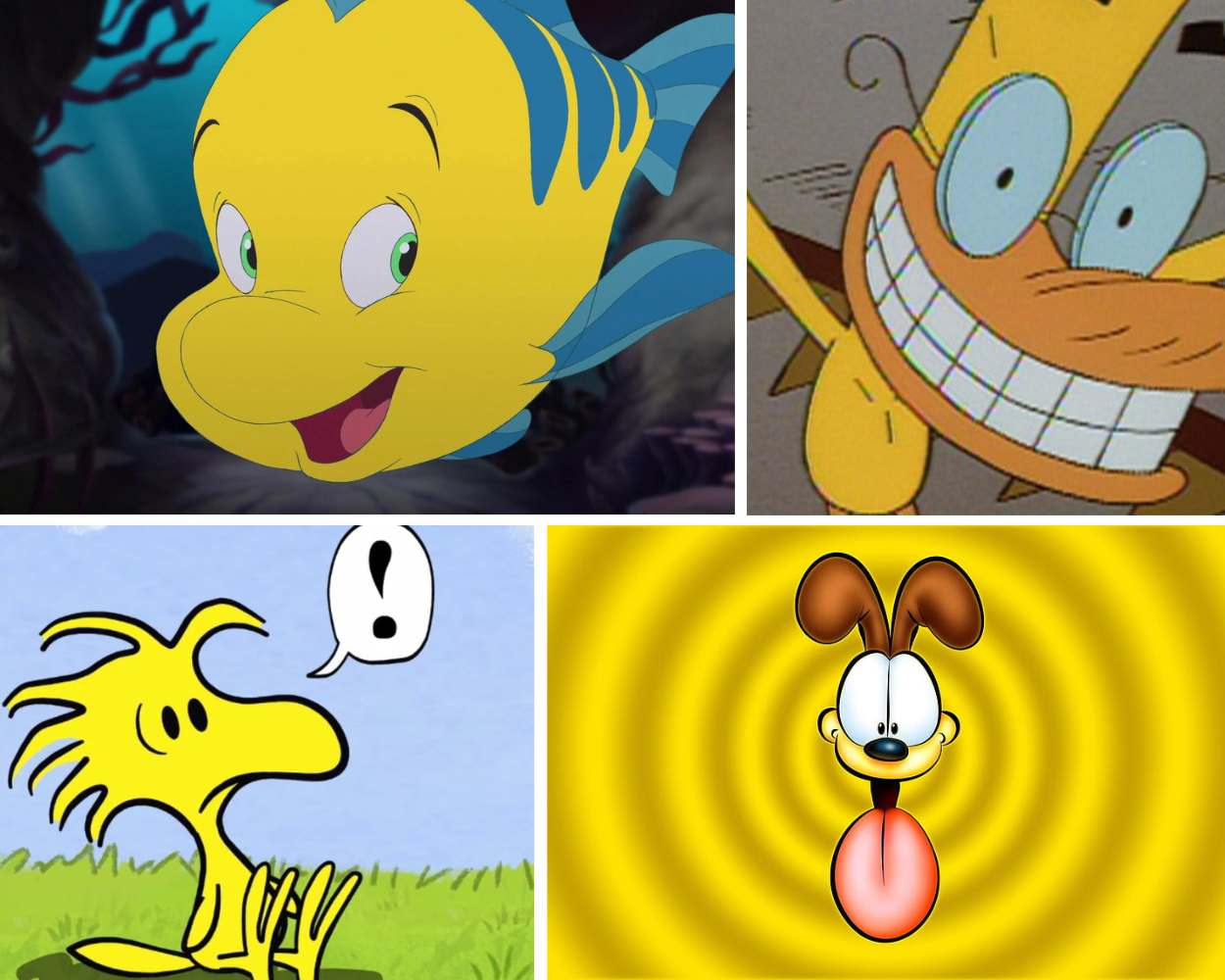
Color isn't just an aesthetic choice in animation. It’s a psychological tool. When you think of the most iconic figures in television history, a specific, vibrant hue probably pops into your head. Why? Because yellow haired cartoon characters aren't just common; they are an intentional industry standard designed to grab your attention before you even realize you're looking.
Think about the first time you saw The Simpsons. Matt Groening famously chose that neon-yellow skin tone so that channel surfers would stop when they saw the flash of bright color. But the hair? That's a different beast entirely. From the spiky defiance of Bart Simpson to the ethereal flows of Disney princesses, yellow hair serves as a shorthand for personality, power, and even social status.
The Science Behind the Golden Glow
It's basically basic physics.
TV screens use the RGB color model. Yellow is high-contrast against blue backgrounds—the sky, the ocean, or even the typical suburban backdrop. Animation studios like Hanna-Barbera and Disney figured out decades ago that if you want a protagonist to pop, you give them hair that mimics light.
But it isn't just about contrast. It's about readability. In the early days of low-resolution broadcasting, fine details got lost in the "noise" of the screen. A character with dark hair might blend into a dark background, becoming a muddy blob. Yellow haired cartoon characters remained distinct. They stayed sharp. You could always tell exactly where Johnny Bravo’s pompadour ended and the background began, even on a fuzzy 1990s tube TV.
From Sailor Moon to Super Saiyans: The Power of Transformation
In anime, yellow hair is often a literal signal of evolution. Take Dragon Ball Z. When Akira Toriyama first had Goku transform into a Super Saiyan, the hair change wasn't just for style. Honestly, it was partly about saving time. In the original black-and-white manga, Goku’s normal hair was solid black, which required a lot of tedious "inking." By making the Super Saiyan form blonde, it could be left as white space in the manga, saving the artists hours of labor.
It worked.
That golden glow became the universal symbol for "unlocked potential." We see this everywhere now. It’s a trope because it works. When a character’s hair turns yellow, the audience knows the stakes just went up.
Why the "Dumb Blonde" Trope is Mostly Dead in Toons
For a long time, Western media leaned hard on the "bimbo" or "surfer dude" stereotype. You had characters like Leni Loud from The Loud House who, while sweet, isn't exactly a rocket scientist. But if you look closer at the history of yellow haired cartoon characters, the trend has shifted toward leadership and competence.
Adora from She-Ra and the Princesses of Power is a prime example. Her golden hair isn't a sign of vanity; it’s a crown of responsibility. Same goes for Naruto Uzumaki. His bright yellow hair—meant to evoke the sun and the Nine-Tailed Fox's chakra—represents his boisterous, "never give up" attitude. He isn't a sidekick. He's the focal point of the entire universe.
The Disney Influence and the "Golden Standard"
Disney has a complicated relationship with yellow hair. For decades, it was the default for "purity" and "innocence."
Cinderella. Sleeping Beauty. Alice in Wonderland.
These characters were designed during an era where color film was expensive and the "Technicolor look" demanded saturated primaries. However, as the studio evolved, so did the meaning of the color. Rapunzel’s hair in Tangled isn't just yellow; it’s a plot device. It’s a source of magic, a weapon, and eventually, a symbol of her shedding her old life when it’s finally cut and turns brown.
It’s interesting to note that Elsa from Frozen actually has "platinum" or "strawberry blonde" hair, which is a subtle shift away from the traditional primary yellow of the 1950s. It reflects a more modern, nuanced approach to character design where color reflects internal mood rather than just "good vs. evil" archetypes.
Notable Icons You Probably Forgot
We talk a lot about the big names, but what about the weird ones?
- He-Man: The Master of the Universe himself. That pageboy haircut is undeniably yellow, representing the pulp-fantasy hero aesthetic of the 80s.
- Bubbles from The Powerpuff Girls: Her pigtails are a key part of the "sugar, spice, and everything nice" silhouette.
- Arnold Shortman: From Hey Arnold!. His tiny yellow hat sits atop a massive head of yellow hair, shaped like a football. It’s one of the most distinct silhouettes in Nickelodeon history.
- Finn the Human: We rarely see it because of his bear hat, but when Finn takes it off, he has flowing, beautiful golden locks. It was a huge "reveal" for fans.
The Cultural Weight of a Crayon Color
Is there a bias? Maybe.
In Western animation, yellow hair often correlates with the "main character" energy. This can be problematic when it limits diversity, which is why we've seen a massive (and necessary) push in the last decade to move away from the "blonde as default" hero. Studios are realizing that you can get that same "pop" on screen with vibrant purples, greens, or deep textured blacks that use lighting effects to create contrast.
Still, the legacy of the yellow haired cartoon character persists because it’s baked into the foundation of the medium. It’s the color of the sun. It’s the color of gold. It’s the color of a Post-it note that tells your brain: "Look here! This is important!"
How to Use This Knowledge
If you’re a creator, an artist, or just a fan trying to understand why some shows "feel" more professional than others, look at the palette.
- Analyze the Silhouette: If you turn the brightness down until the character is just a black shadow, can you still recognize them? Yellow hair often provides the "fringe" light that defines that shape.
- Contrast is King: Notice how many yellow-haired heroes wear blue or purple. It’s the color wheel in action. Complementary colors create visual harmony that makes a show easier to watch for long periods.
- Symbolism Matters: Ask yourself what the color is doing for the story. Is it a sign of royalty? Is it a transformation? Or is it just a way to make sure the kid in the back of the room can see the protagonist?
Animation is the art of exaggeration. Nothing says "larger than life" quite like a character with hair the color of a lemon. Whether it's the chaotic spikes of a ninja or the soft curls of a princess, yellow hair remains the most effective shortcut in a character designer's toolkit. It’s not just a color; it’s a beacon.
To really dive into this, start by re-watching the pilots of your favorite 90s shows. Pay attention to the background art. You’ll notice that the backgrounds are often desaturated—lots of browns, greys, and muted greens. This is a deliberate "stage" set specifically to let those bright yellow designs stand out. If everyone was bright, no one would be. The "blonde" protagonist is often the only truly "lit" object in a scene, which subconsciously forces your eyes to follow their journey above everyone else's.
Next time you’re scrolling through a streaming service, look at the thumbnails. You’ll see it everywhere. That flash of yellow isn't an accident; it’s a calculated move to win the war for your attention in a world where everything is fighting to be seen.



