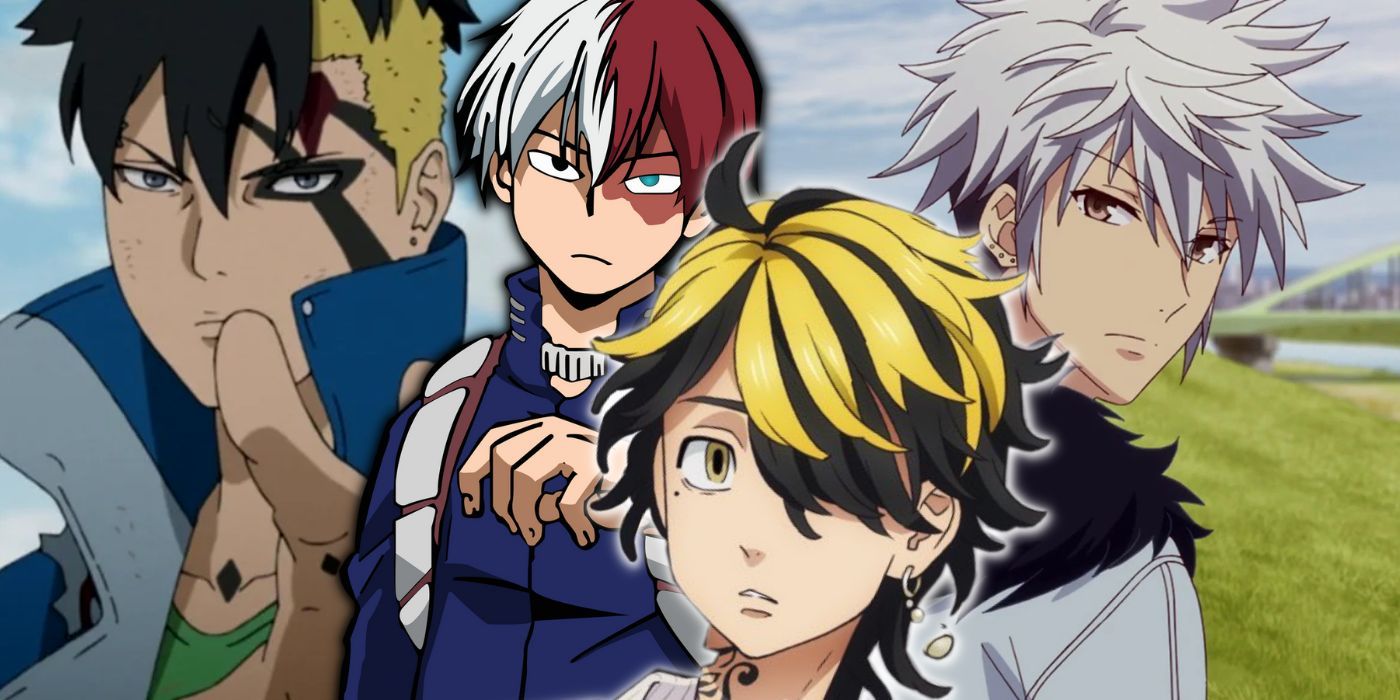
Walk into any Japanese hobby shop and you'll see a sea of gold. It's almost overwhelming. From the spiky, gravity-defying locks of a Super Saiyan to the flowing, aristocratic tresses of a shoujo prince, yellow hair anime characters are basically the backbone of the entire medium. It's not just a random color choice. It's a statement.
Honestly, if you ask a casual fan to name five iconic characters, I’d bet money at least three of them have blonde or yellow hair. Think about it. Naruto. Edward Elric. Sailor Moon. Sanji. The list just keeps going. But have you ever stopped to wonder why? Why is yellow the "default" for protagonists who are supposed to be Japanese? The answer is a weird mix of technical limitations from the 80s, Western influence, and a very specific Japanese trope called the "delinquent" look.
The Cultural Weight of Yellow Hair Anime Characters
In Japan, hair color isn't just an aesthetic choice; it’s a character profile. Naturally, most Japanese people have black or very dark brown hair. So, when an artist gives a character yellow hair, they’re immediately marking them as an "outsider" or someone special. Sometimes it’s meant to signal that the character is of foreign descent—think of someone like Tamaki Suoh from Ouran High School Host Club. He’s half-French, so the blonde hair makes sense in a literal, biological way.
But then you have characters like Naruto Uzumaki. Naruto isn't European. He's from a fictional ninja village. In his case, the yellow hair is a loud, visual representation of his status as a pariah. It screams for attention in a world where he was initially ignored. It’s vibrant. It’s energetic. It’s "kitsune" (fox) energy.
The Delinquent Connection
You’ve probably noticed that "punks" in older anime almost always have bleached blonde hair. This is based on a real-world subculture in Japan where rebellious students would bleach their hair (kinpatsu) as a way to defy school regulations that demanded natural black hair. When you see a character like Kenji Harima from School Rumble or even some of the guys in Tokyo Revengers, that yellow hair is shorthand for: "I don't follow your rules." It’s a rebellion you can see from a mile away.
Why Artists Love Using Yellow (The Technical Secret)
Back in the day, when manga was primarily consumed in black-and-white magazines like Weekly Shonen Jump, artists had a massive problem. If everyone has black hair, the pages look incredibly dark and "heavy." It’s hard to see the linework. By leaving a character's hair white (which translates to yellow/blonde in color spreads), artists saved time on inking and created immediate visual contrast.
Akira Toriyama, the creator of Dragon Ball, famously admitted that the Super Saiyan transformation was designed to have "blonde" (white in manga) hair specifically to save his assistant the work of painstakingly inking Goku’s black hair every single frame. It was a productivity hack that turned into the most iconic power-up in history. That’s the kind of practical reality that shapes the art we love. Sometimes, legendary character design is just about a deadline.
Breaking Down the Iconic Archetypes
Not all yellow hair anime characters are built the same. There’s a huge difference between the "Golden Hero" and the "Cold Aristocrat."
The Shonen Powerhouse These are your Narutos and your Gokus. The hair is usually spiky, bright, and symbolizes heat or sunlight. It’s meant to evoke a sense of optimism and raw power. When Zenitsu from Demon Slayer gets serious, his lightning-themed yellow hair isn't just for show—it's an extension of his elemental ability. It’s loud. Just like him.
The European Prince/Princess Then you have the refined type. Characters like Reinhard von Lohengramm from Legend of the Galactic Heroes or Saber from Fate/Stay Night. Here, the yellow is more like "gold." It represents nobility, purity, and a certain "otherness" that feels regal. It’s rarely messy. It’s groomed. It’s perfect.
The Ditzy or "Baka" Blonde We can't ignore the trope of the clumsy blonde girl, though it's thankfully fading a bit. Usagi Tsukino (Sailor Moon) is the blueprint here. She’s relatable because she’s a mess, and her yellow pigtails became the international symbol for a specific kind of "magical girl" energy that is both vulnerable and incredibly strong.
The Science of Color Theory in Animation
Studios like MAPPA or Ufotable don't just pick a hex code and call it a day. They use yellow to balance the frame. If a character is wearing a dark blue uniform (very common in school settings), yellow hair provides a complementary color pop that makes the character’s face the focal point of every shot.
In Fullmetal Alchemist: Brotherhood, Edward Elric’s golden hair and eyes are vital. Because he wears a bright red cloak, the yellow acts as a transition color that keeps him from looking like a giant red blob on screen. It’s about readability. If he had black hair, he’d disappear into the shadows of the dark, industrial backgrounds of Amestris.
It's Not Just "Blonde"
Calling it "blonde" is actually a bit of a misnomer in many cases. In Japanese, the term is often kinpatsu (gold hair). If you look closely at modern digital coloring, characters like Dio Brando from JoJo’s Bizarre Adventure don't have natural-looking blonde hair. It’s aggressive, neon yellow. It’s supernatural.
There’s also the "lemon" yellow seen in comedy series, which is meant to feel lighthearted. Compare that to the "strawberry blonde" or "dirty blonde" of a more grounded seinen series. The shade tells you the genre before the characters even speak.
Real-World Impact and Global Appeal
Why does this matter to us in 2026? Because yellow hair anime characters have become a bridge. When anime was first being exported to the West in the 80s and 90s, these characters felt "familiar" to American and European audiences, even if the cultural context was totally different. It helped the medium explode globally.
But it’s also led to some interesting discussions about representation and "white-washing" in character design. Critics often argue that the prevalence of yellow hair erases Japanese identity in anime. However, most creators argue that they view these colors as "symbolic" rather than "racial." To a Japanese animator, yellow hair is as much a fantasy element as purple eyes or giant mechs. It’s a tool for expression, not a literal ethnic marker.
How to Spot a "Fake" Blonde in Anime
Occasionally, a show will actually address the hair dye. In Great Teacher Onizuka, Eikichi Onizuka’s bleached hair is a core part of his identity as a former biker gang leader trying to go straight. If you see roots showing or characters talking about "bleach," the show is likely making a commentary on Japanese social conformity.
Conversely, in "Isekai" (portal fantasy) anime, yellow hair is almost always used to denote "Commoner" vs. "Royal" status within the fantasy world's internal logic. It’s a shorthand that helps the viewer understand the social hierarchy in five seconds flat without needing a narrator to explain it.
Actionable Takeaways for Fans and Artists
If you're a cosplayer or a budding artist, understanding the nuance of yellow hair anime characters changes how you approach the craft.
- For Artists: Don't just use one shade of yellow. Use oranges for shadows and almost-white creams for highlights. This prevents the "LEGO head" look.
- For Cosplayers: The "yellow" in anime is rarely natural blonde. Look for "Canary" or "Lemon" wigs if you want to look like the character, rather than "Natural Blonde" which can look dull under convention lights.
- For Watchers: Pay attention to when a character loses their color. In many series, when a yellow-haired character is defeated or loses their "spark," the animators will desaturate their hair to a pale, grayish yellow. It’s a subtle emotional cue.
The yellow hair trope isn't going anywhere. It's too useful, too iconic, and frankly, it looks too good against a blue sky background. Whether it’s a symbol of a literal god or just a kid who wants to stand out in a crowded classroom, those golden locks are here to stay.
Next time you start a new series, look at the blonde lead. Is the hair a sign of their royal blood, their rebellious spirit, or just a way for the artist to get some sleep? Usually, it's a bit of all three.
To dive deeper into character design, start by comparing the specific "shades" of yellow used in different decades of anime. You'll notice that the 90s favored a "mustard" yellow, while the 2020s have shifted toward high-contrast, "glowing" neon shades. Observing these shifts is the fastest way to understand how animation technology influences the stories we see on screen. Check out the production notes for series like Dragon Ball Super or Fate/Zero to see how they specifically chose their palettes to match the digital compositing of the time.
Expert Insight: Research from the Kyoto International Manga Museum suggests that the "bright" palette of modern anime, specifically the use of yellow hair, is directly correlated to the shift from cel-painting to digital coloring in the late 90s, which allowed for much higher vibrancy without the paint cracking or looking "muddy" on film.



