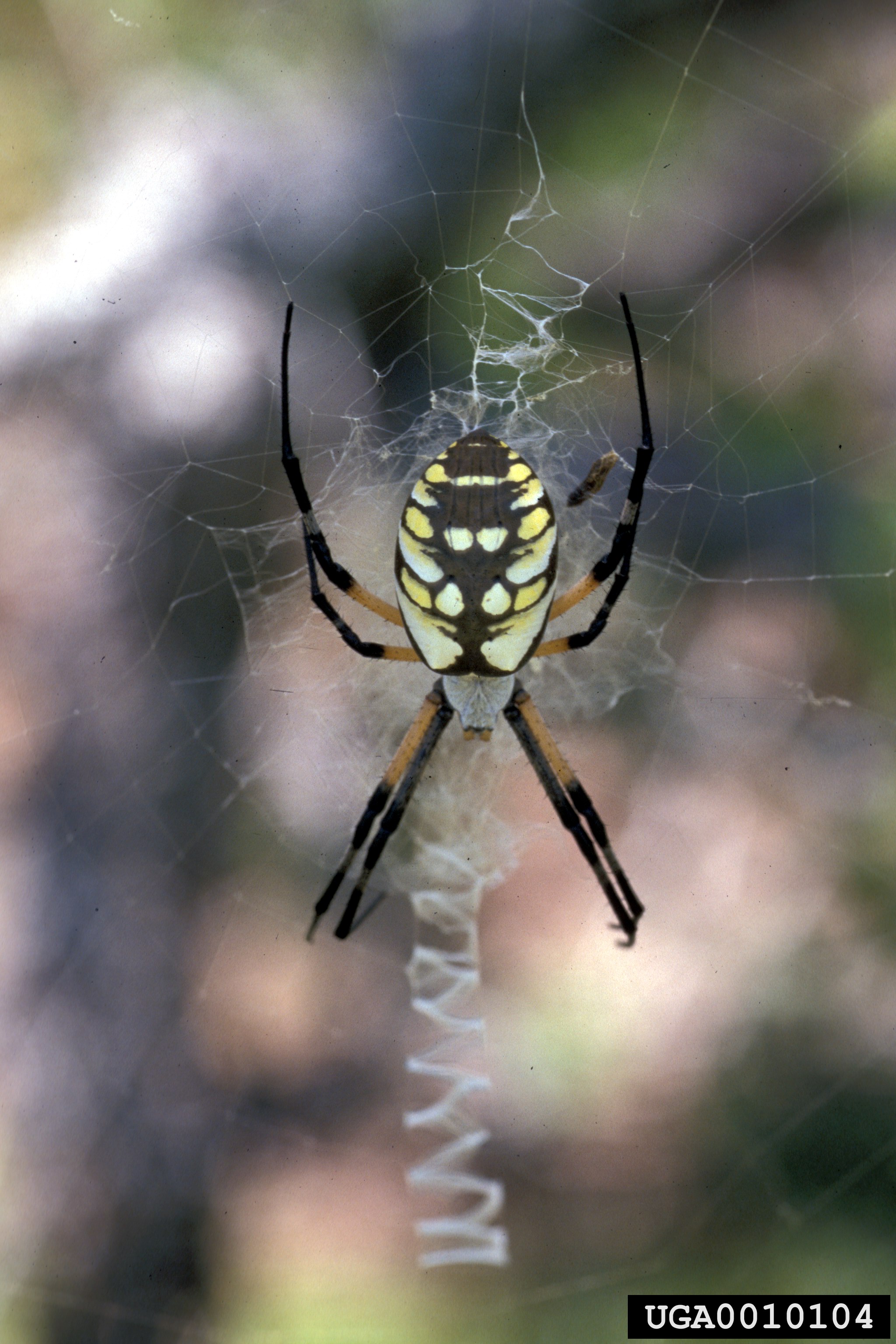
You’re walking through the backyard, coffee in hand, when you almost face-plant into a massive, zigzagging web. Right in the middle sits a beast. It’s bright yellow, jet black, and looks like something straight out of a tropical rainforest or a creature feature movie. If you’ve managed to snap some pictures of yellow garden spiders (scientifically known as Argiope aurantia), you know exactly how intimidating they look. They’re huge. They’re flashy.
Honestly, they’re kinda terrifying if you don’t know what you’re looking at.
But here’s the thing. Despite the "danger" vibes they give off with those high-contrast colors, these spiders are basically the gentle giants of the garden world. They aren't interested in you. They want the grasshoppers that are eating your tomatoes.
Spotting the Real Deal: What Do Yellow Garden Spiders Actually Look Like?
When people look for pictures of yellow garden spiders, they’re usually trying to confirm if the "monster" in their bushes is venomous. It isn't. Not to humans, anyway. A female Argiope aurantia can grow her body up to an inch long, but once you factor in those spindly legs, she’s easily the size of a silver dollar.
The males? They’re pathetic by comparison. Small, brownish, and they rarely get the spotlight.
You’ll notice the abdomen has this distinct, symmetrical pattern of yellow and black. It looks almost painted on. Some people call them writing spiders because of the thick, white silk "zipper" they weave down the center of their webs. That structure is called a stabilimentum. Scientists like those at the University of Florida's Entomology department have debated for years about why they do this. Is it to attract mates? To keep birds from flying through the web? Or is it a lure for insects?
Most experts now lean toward the "don't hit my house" theory. It makes the web visible so birds don't wreck a masterpiece that took hours to build.
That Famous Zigzag Web
If you’ve seen a web with a thick, white zigzag but no spider, you’ve likely found an Argiope home. They are orb-weavers. This means they build those classic, circular webs we see in Halloween decorations.
But these spiders are tidy.
They often eat and rebuild the circular part of their web every single night. They consume the old silk to recycle the proteins. It’s incredibly efficient. If you’re trying to get high-quality pictures of yellow garden spiders, the best time is early morning when the dew clings to the silk. The moisture highlights the intricate geometry. It makes the spider pop against the green foliage of your garden.
Why Your Garden Needs Them (Seriously)
I get it. You want them gone. But before you grab the broom, consider what they’re doing for you. Yellow garden spiders are apex predators in the world of backyard pests.
- They eat flies.
- They devour wasps.
- They snatch up those annoying grasshoppers.
- They even catch beetles that chew on your roses.
A single female can eat multiple large insects a day. Because they stay in one spot for most of their lives, they act like a stationary security guard for your flower beds. Entomologist Doug Tallamy often points out that a healthy garden is an ecosystem, and you can't have the "good" bugs without the predators that manage the "bad" ones. These spiders are a sign that your yard is thriving. It means you haven't over-sprayed with pesticides.
The Venom Question: Should You Be Scared?
Let’s be real. If you get bitten by something that big, it’s going to hurt. But Argiope aurantia is not aggressive.
You basically have to pinch them or sit on them to get bitten. Their venom is chemically similar to a bee sting. Unless you have a specific allergy to spider venom, a bite usually results in some redness and a bit of swelling. It’s nothing like the necrotic damage you’d get from a Brown Recluse or the systemic issues from a Black Widow.
Most people who share pictures of yellow garden spiders online are doing so because they’re fascinated, not because they’ve been attacked. These spiders prefer to vibrate their webs wildly when they feel threatened—a behavior meant to blur their outline and scare you away. It’s a bluff. And it works.
Lifecycle of the Writing Spider
These spiders are annuals. They don't live for years like tarantulas. A female hatches in the spring, grows rapidly all summer, and by late autumn, she’s a powerhouse.
In the fall, she’ll produce one or more brown, papery egg sacs. These look like little kettledrums. She attaches them to the side of her web or nearby bark. Each sac can contain over a thousand eggs. Once the first hard frost hits, the adult female usually dies.
The babies? They stay inside that sac all winter. They actually hatch while it’s still cold, but they stay huddled together for warmth and protection until spring arrives. If you find an egg sac in your garden during winter, leave it alone. You’re looking at next year’s pest control team.
Getting the Best Photos Without Getting Bitten
If you’re a hobbyist photographer, these spiders are one of the best subjects you can find. They stay still. They’re colorful. They live in bright sunlight.
To get great pictures of yellow garden spiders, try to shoot from the side. This captures the profile of the spider and the depth of the web. If you shoot straight on, you might lose the spider against the background.
Wait for a breeze-less day. Even a tiny wind will make the web bounce, which ruins your focus. Use a macro lens if you have one, but even a modern smartphone can get a great shot if you use "Portrait Mode" to blur the background. Just don't get too close—not because of the bite, but because you might spook her into dropping out of the web.
Common Misconceptions and Myth-Busting
People tell some wild stories about these things.
- Myth: If they "write" your name in their web, you're going to die.
- Reality: This is old folklore. They're just spinning silk, not practicing calligraphy.
- Myth: They are invasive species from the tropics.
- Reality: They are native to most of North America, from southern Canada all the way down to Central America.
- Myth: They hunt birds.
- Reality: While a massive web might occasionally snag a very small hummingbird by accident, these spiders aren't bird-hunters. They find birds much too large and dangerous to deal with.
How to Coexist with Argiope Spiders
If a yellow garden spider has set up shop right across your front door, it’s okay to move her. You don't need to kill her.
Take a large plastic container and a piece of cardboard. Gently coax the spider into the container. She might drop on a "safety line" of silk, which makes it easy to catch her. Move her to a tall patch of grass or a vegetable garden away from high-traffic areas. She’ll spin a new web by morning.
If she’s in a corner of the yard where you don't walk? Just leave her be. Watching them wrap up a fly is a better nature documentary than anything on TV.
Actionable Next Steps for Gardeners and Photographers
If you find one of these spiders today, here is how you should handle it to get the most value out of its presence in your yard:
- Check the Web Structure: Look for the stabilimentum (the zigzag). If it’s missing, the spider might be stressed or the web might be newly under construction.
- Document the Location: Take pictures of yellow garden spiders from a distance of about two feet. This allows the camera to focus on both the spider and its environment.
- Identify the Egg Sacs: In late September or October, look for the brown, teardrop-shaped sacs nearby. Mark the location so you don't accidentally prune those branches during winter cleanup.
- Avoid Broad-Spectrum Pesticides: If you want these spiders to stay, stop using "all-in-one" garden sprays. These kill the spiders directly and eliminate their food source.
- Observe the Vibration: If you get too close and the spider starts shaking the web, back off. It’s her way of saying she’s stressed. Give her ten minutes to calm down before trying for more photos.
By following these steps, you maintain a natural balance in your backyard while capturing some of the most striking wildlife photography possible in a domestic setting. These spiders are a testament to the fact that "scary-looking" rarely means "dangerous." Keep them around, and your garden will thank you for it.