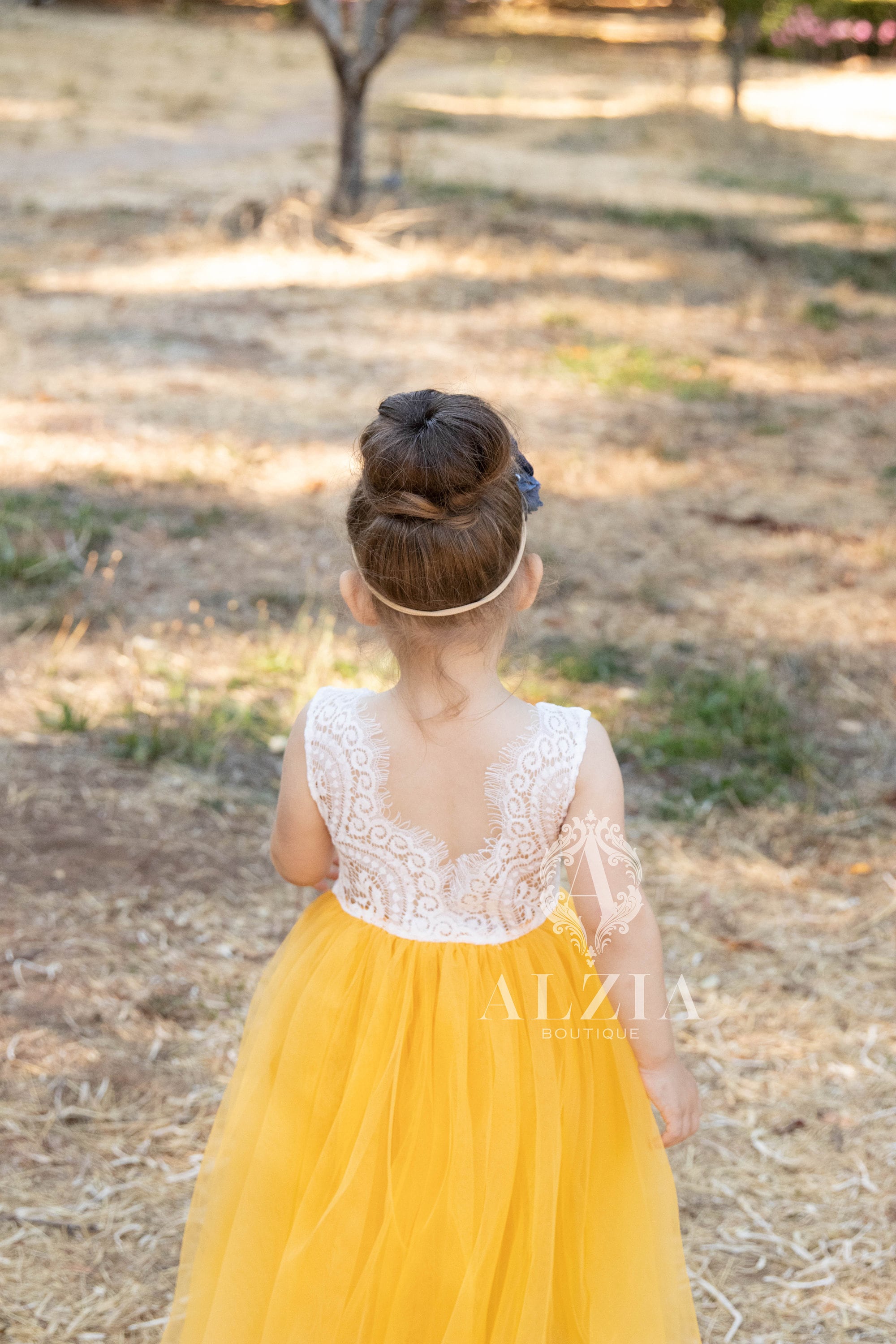
Yellow is a bold choice. Honestly, for a long time, it was the color people were scared of because they thought it would wash out the kids or clash with the bridal white. But walk into any high-end boutique or scroll through bridal Pinterest right now and you’ll see it. Yellow flower girl dresses are everywhere. It’s not just about "sunshine" anymore. We are seeing everything from deep, moody marigolds to those super pale, buttery creams that almost look like an antique lace.
It works.
People are moving away from the stiff, formal traditions of the early 2000s. Back then, everything had to be "bridal white" or maybe a "blush" if you were feeling crazy. Now? Brides want personality. They want the little ones in the wedding party to actually stand out rather than blending into the tablecloths.
The Psychological Shift Toward High-Visibility Weddings
Why now? Why yellow? Basically, the vibe of weddings has shifted toward "joy" and away from "prestige." According to color psychology experts like Leatrice Eiseman of the Pantone Color Institute, yellow represents spontaneous happiness. When a three-year-old comes tossing petals down the aisle in a bright lemon frock, it immediately breaks the tension of a formal ceremony.
It’s an icebreaker.
Actually, the surge in outdoor and "cottagecore" weddings has a lot to do with this. If you’re getting married in a botanical garden or a rustic barn, a white dress gets lost. A yellow one? It pops against the greenery in a way that looks incredible in photos. Photographers love it because yellow reflects light back onto the face, which helps avoid those weird under-eye shadows you sometimes get with darker colors or stark whites under harsh noon sun.
Tones That Actually Work (and Ones to Avoid)
Not all yellows are created equal. This is where most people mess up. If you grab a "neon" yellow, you’re going to regret it the second the flash goes off.
- Honey and Amber: These are the heavy hitters for 2026. They have a bit of brown or orange in the base. It looks expensive. It looks like "old money" but for kids.
- Buttercream: This is the safe bet. If the bride is wearing ivory, a buttercream yellow flower girl dress provides a soft gradient that looks intentional.
- Marigold: Best for fall weddings. It’s rich. It’s deep. It looks stunning next to navy blue or forest green bridesmaid dresses.
- Citron: Be careful here. Citron has a green undertone. It’s very "fashion forward," but it can make certain skin tones look a little sallow if you aren't careful with the fabric choice.
Fabric Choice Changes Everything
You can't just pick a color and call it a day. The material determines if the dress looks like a high-fashion statement or a cheap costume. Tulle is the classic choice for a reason. When you layer yellow tulle, the color deepens in the folds and lightens at the edges, giving it this ethereal, glowing effect.
Silk and satin are different. They hold color flatly.
If you go with a yellow satin, make sure it’s a high-quality matte satin. Shiny yellow polyester is the enemy. It looks like a Disney princess costume—which is fine for a birthday party, but maybe not for a black-tie-optional wedding at the Ritz. Linen is also huge right now for summer "micro-weddings." A mustard yellow linen dress with some simple embroidery? It’s effortless. It’s breathable. The kid won’t be itching and crying by the time the cake is cut.
Dealing With the "Stain" Factor
Let’s talk reality. Flower girls are usually under the age of eight. They eat chicken nuggets. They play in the dirt. They find the one mud puddle in a three-mile radius.
The nightmare.
Yellow is actually a bit more forgiving than white, but less so than navy. If a kid spills apple juice on a yellow flower girl dress, it’s almost invisible. Chocolate? Different story. If you’re going the yellow route, many modern designers like those found on platforms like Etsy or high-end boutiques like Maisonette are starting to use treated fabrics that repel liquids.
Always check the tag for "performance" fabrics or blends.
Also, keep a Tide pen in the bridal suite. Seriously. Don't leave home without it.
Coordination Without Looking Like a Circus
How do you mix a yellow dress with the rest of the bridal party? You don't want it to look random.
The most successful palettes right now are "Sunset Tones" or "Wildflower Mix." Imagine the bridesmaids in shades of terracotta, dusty rose, and sage green. The flower girl in yellow becomes the "highlight" of that palette. It ties the whole garden vibe together.
Some people try to match the yellow dress exactly to the flowers. Honestly? Don't. It’s too much. If the dress is yellow, keep the bouquet mostly white with maybe some yellow centers (like daisies or chamomile) or just go full greenery. You want contrast. If she’s holding a ball of yellow flowers against a yellow dress, it just looks like a yellow blob in the wide shots.
Real World Examples of Iconic Yellow Moments
We saw this trend start to bubble up in celebrity circles a couple of years ago. While not a "flower girl" in the traditional sense, the influence of high-fashion moments—like the iconic yellow dresses worn by stars at the Met Gala—has filtered down into the wedding industry.
Designer Nellystella has been a pioneer here. Their "Love" dress in various shades of yellow became a cult favorite among the "cool bride" set. It wasn't about being traditional; it was about the silhouette and the sheer joy of the color.
Common Misconceptions About Yellow
"Yellow doesn't photograph well." False.
Old film cameras used to struggle with bright yellows, often blowing out the highlights. Modern digital sensors—like the ones in a Sony A7R V or a Canon EOS R5 that your wedding photographer is likely using—handle yellow beautifully. It actually provides a wonderful "warmth" to the skin tones in the frame.
"It’s only for spring." Nope.
A deep burnt-yellow or ochre is the quintessential autumn color. Pair it with a little faux-fur shrug or a cardigan, and it’s perfect for an October wedding. Yellow is a four-season color if you get the shade right.
Sourcing and Budgeting
Where do you actually buy these?
If you’re on a budget, places like JJ’s House or Azazie have expanded their yellow palettes significantly. You can find a decent dress for under $60. If you’re looking for "heirloom" quality—the kind of dress you save in a box for thirty years—you’re looking at brands like Doloris Petunia or Peppa & Co. These can run anywhere from $200 to $500.
Is it worth it?
Depends on the kid. If she’s going to grow out of it in three months and get grass stains on it in three minutes, maybe stay in the mid-range.
Your Practical Action Plan for Choosing the Right Dress
When you're ready to pull the trigger on a yellow flower girl dress, don't just click "buy" on the first cute thing you see. Follow these steps to ensure it actually works on the big day:
- Order Fabric Swatches First: Yellow is notorious for looking different on a screen than in real life. A "sunshine yellow" online can look like "neon highlighter" in person. Spend the $5 on swatches.
- Check the Skin Undertone: If the flower girl has very cool, pale skin, look for yellows with a bit of "honey" or "gold" to add warmth. If she has a darker or olive complexion, bright lemons and true yellows look absolutely stunning.
- Consider the Season: Stick to "Pastels/Lemons" for Spring, "Brights/Primary Yellows" for Summer, and "Mustard/Ochre" for Fall and Winter.
- Prioritize Comfort: If the dress is yellow but itchy, she will be miserable. Look for cotton linings. A happy flower girl makes for better photos than a perfectly dressed one who is crying.
- Coordinate the Shoes: Don't do yellow shoes. It’s too much. Go with a neutral metallic like gold, a classic white, or even a natural leather tan. It grounds the outfit and keeps the focus on the dress.
The goal isn't just to find a dress. It's to create a "moment." Yellow is a daring, happy, and increasingly sophisticated choice for modern weddings. By focusing on the right undertone and fabric, you ensure the flower girl feels like a special part of the day rather than just a traditional accessory.
Logistically, start your search at least four months before the wedding. Shipping times for boutique dresses can be surprisingly long, and you'll want time for at least one fitting to make sure the length is right—no one wants a tripping hazard during the processional. Avoid floor-length gowns for toddlers; a tea-length or knee-length cut is much safer and usually looks cuter on smaller frames anyway. Once the dress arrives, hang it up immediately and use a steamer rather than an iron to get the wrinkles out of delicate yellow fabrics.