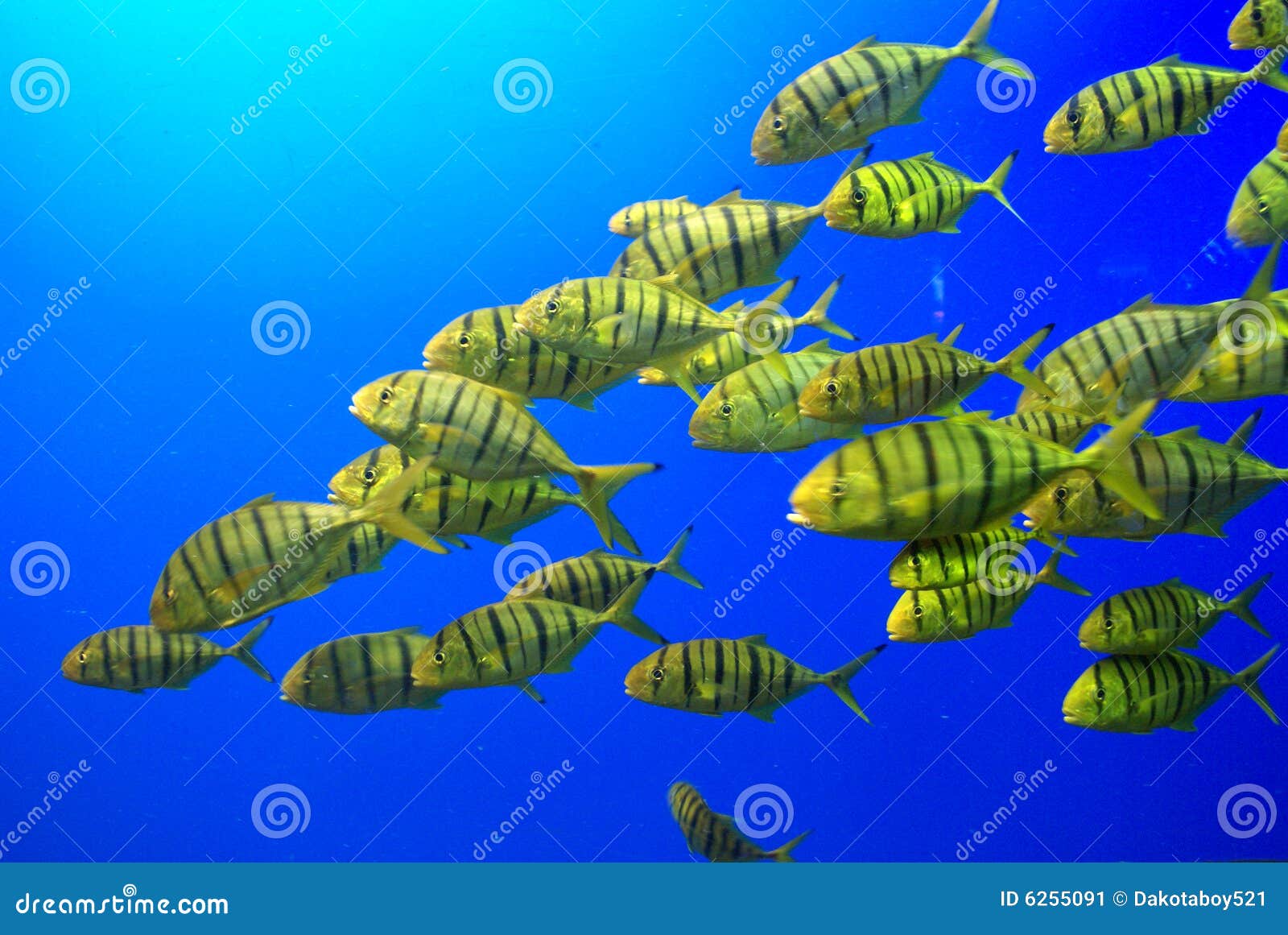
Walk into any decent aquarium shop and you’ll see them. Those bright, twitchy flashes of gold and black. Yellow fish with stripes are basically the "superstars" of the aquatic world because they pop so hard against a blue background. But honestly, most people just point at a tank and say, "I want that one," without realizing that those stripes aren't just for show. Evolution is a weird beast. Whether it's a tiny Bumblebee Goby or a massive Regal Angelfish, those lines are doing some heavy lifting for the fish's survival.
They're not all the same. Not even close.
The Science of Seeing (and Not Seeing)
Why yellow? Why stripes? It seems counterintuitive. If you want to hide, why dress like a neon sign? In the wild, specifically in coral reefs or sun-dappled rivers, yellow is actually a great camouflage color. Sunlight filtering through water creates a yellowish-green tint. Then you add the stripes. This is called disruptive coloration. It breaks up the outline of the fish’s body. When a predator like a barracuda looks at a yellow fish with stripes, its brain struggles to identify where the fish starts and where the reef begins. It’s a visual glitch.
Scientists like Dr. Justin Marshall, who has spent decades studying reef fish vision, have pointed out that fish see the world through a completely different lens than we do. Many of these species see ultraviolet light. So, what looks like a simple yellow and black pattern to us might look like a glowing, complex map to another fish.
Identifying the Most Common Yellow Fish With Stripes
If you're looking to stock a tank or you just saw something cool while snorkeling, you're likely looking at one of these usual suspects.
The Yellow Tang (Zebrasoma flavescens) Okay, usually these are solid yellow. We know that. But juveniles and certain regional variations of Tangs can show faint, horizontal striping or "ghost" lines. They are the lawnmowers of the ocean. They spend nearly every waking second picking algae off rocks. If you put one in a tank that's too small, they get cranky. Fast. They need swimming room. Think of them as the high-energy athletes of the reef.
The Bumblebee Goby (Brachygobius doriae) These guys are tiny. I mean, barely an inch long. They look exactly like their namesake: chunky little yellow bodies with thick black vertical bands. They’re adorable, but they’re also kind of jerks. They’re territorial. They’ll sit on a rock and glare at anything that swims by. Most people think they're freshwater fish, but they actually prefer brackish water—that's the salty-sweet mix you find where rivers meet the sea. If you keep them in pure freshwater, they usually don't live as long.
Regal Angelfish (Pygoplites diacanthus) This is the one everyone wants. It’s the "poster child" of the Indo-Pacific. It has these stunning, alternating bands of yellow, white, and royal blue (which often looks black in deeper water). Here’s the catch: they are incredibly hard to keep alive in captivity. They’re picky eaters. They often refuse anything that isn't a specific type of sponge or tunicate found on a wild reef. Honestly, unless you're a pro, just enjoy them in the wild or at a public aquarium.
Yellowbar Angelfish (Pomacanthus maculosus) These are a bit different. They have a dark body with a massive, irregular yellow "blotch" or stripe right down the side. They’re huge. They can grow to be over a foot long. If you've ever gone diving in the Red Sea, you've probably been followed by one of these curious giants.
Why Vertical vs. Horizontal Stripes Matter
It sounds like a small detail, doesn't it? It isn't.
Vertical stripes (bars) are usually found on fish that live in cluttered environments like coral reefs or tall grass. The vertical lines mimic the shadows of the plants or the cracks in the rocks. Horizontal stripes (racing stripes) are more common in fish that swim fast in open water. These stripes create an optical illusion called flicker fusion when the fish swims quickly. It makes it nearly impossible for a predator to lock onto a single target in a moving school.
Nature is smart. It’s basically physics masquerading as fashion.
Fresh Water Contenders: The Stripes You Can Keep at Home
Most people assume the brightest yellow fish with stripes are all saltwater. That's a mistake. The freshwater world has some absolute bangers.
- Golden Barb: These are hardy. Like, really hardy. They have a metallic gold sheen with vertical black bars. They're great for beginners because they don't die if you look at them wrong.
- Convict Cichlids (Yellow Morph): While the standard is gray, the "gold" or "yellow" varieties still carry those iconic dark stripes. Warning: they breed like crazy. You start with two, and in three months, you have fifty.
- African Cichlids (Labidochromis caeruleus variants): The Electric Yellow Lab is usually solid, but many Mbuna species from Lake Malawi sport yellow bases with bold black horizontal stripes. They are aggressive. They will fight. It’s like a watery soap opera in there.
The "Fooler" Fish: Mimicry in Action
Evolution loves a good lie.
Take the Bluestriped Fangblenny. It’s yellow, it’s got stripes, and it looks almost exactly like a harmless Cleaner Wrasse. The Cleaner Wrasse is a "good guy" of the reef—it eats parasites off bigger fish. The Fangblenny uses this resemblance to get close to a big fish, but instead of cleaning it, it takes a literal bite out of the big fish’s fins. It’s a bait-and-switch. This is called Aggressive Mimicry. If you're a yellow fish with stripes, sometimes you're wearing a costume to commit a crime.
Diet and the "Yellow" Factor
Ever wonder why some yellow fish start looking kind of... beige?
It’s the food. In the wild, yellow fish get their pigment from carotenoids. These are found in the algae and tiny crustaceans they eat. If you’re keeping a yellow fish with stripes at home and it starts fading, you need to change the menu. High-quality flakes or pellets with added beta-carotene or spirulina can make those colors pop again. It's basically the same reason flamingos are pink. You are what you eat.
Setting Up a Habitat for Striped Species
If you're planning on getting some of these beauties, you can't just throw them in a glass box.
Striped fish are often very aware of their surroundings. Because their stripes are designed to blend into specific textures, they feel stressed in a bare tank. You need "broken" sightlines. Lots of rocks. Driftwood. Tall plants like Valisneria or Amazon Swords. This allows them to use their stripes for their intended purpose: hiding. A "hidden" fish is a confident fish. If they know they can disappear in a second, they’ll actually spend more time out in the open where you can see them.
Also, lighting matters. Standard LED strips often wash out the yellows. Look for "full spectrum" lighting that emphasizes the 500-600nm range. It makes the yellow look deep and rich rather than neon-sickly.
The Misconception of "Yellow Fever" in Fish
Sometimes, a fish turns yellow when it’s not supposed to. This isn't a "yellow fish with stripes" species; it's a sick fish. Jaundice isn't really a thing in the way we think of it, but certain bacterial infections or organ failures can cause skin discoloration. However, don't confuse this with Xanthochroism. This is a genetic mutation where a fish that is normally red or brown is born bright yellow. It’s like being an albino, but for yellow pigment. It’s rare, it’s expensive in the hobby world, and it’s usually quite beautiful.
Keeping the Water Right
Most striped yellow fish from tropical regions require specific parameters.
- Temperature: Usually 75°F to 82°F.
- pH: Saltwater needs to stay around 8.1 to 8.4. Freshwater varies, but African Cichlids like it hard and alkaline (7.8+).
- Nitrates: Keep them low. Color is the first thing to go when water quality drops.
A fish that is stressed by "old water" will often "clamp" its fins and its stripes will become dull or blurry. If you notice the black lines on your fish looking more like gray smudges, it’s time for a 30% water change. Immediately.
Why We Are Obsessed With Them
There is something primal about the combination of yellow and black. In nature, it's a warning signal (think bees or coral snakes). It commands attention. For a fishkeeper or a diver, seeing a yellow fish with stripes is a high-contrast experience that cuts through the murky blue of the underwater world.
Whether it's the tiny "Bumblebee" hovering over a sandy bottom or a majestic Angelfish gliding through a reef, these patterns are a masterclass in biological engineering. They provide a way to be seen by mates and hidden from enemies, all at the same time.
Next Steps for Future Fish Owners
Before you run out and buy the first yellow fish with stripes you see, do a quick "compatibility check" on the specific species.
Start by identifying if the fish is freshwater, saltwater, or brackish. This is the biggest mistake beginners make. Once you know the water type, check the "adult size." That cute two-inch juvenile at the store might turn into a fourteen-inch monster that eats its tankmates. Finally, look at the aggression level. Stripes often signal a territorial nature. If you're going for a community tank, stick with Barbs or Mollies. If you want a "personality" fish and have a big tank, look into the Cichlid or Angelfish families.
Verify your water hardness with a liquid test kit before bringing them home. Yellow pigments often look their best in stable, mineral-rich environments.



