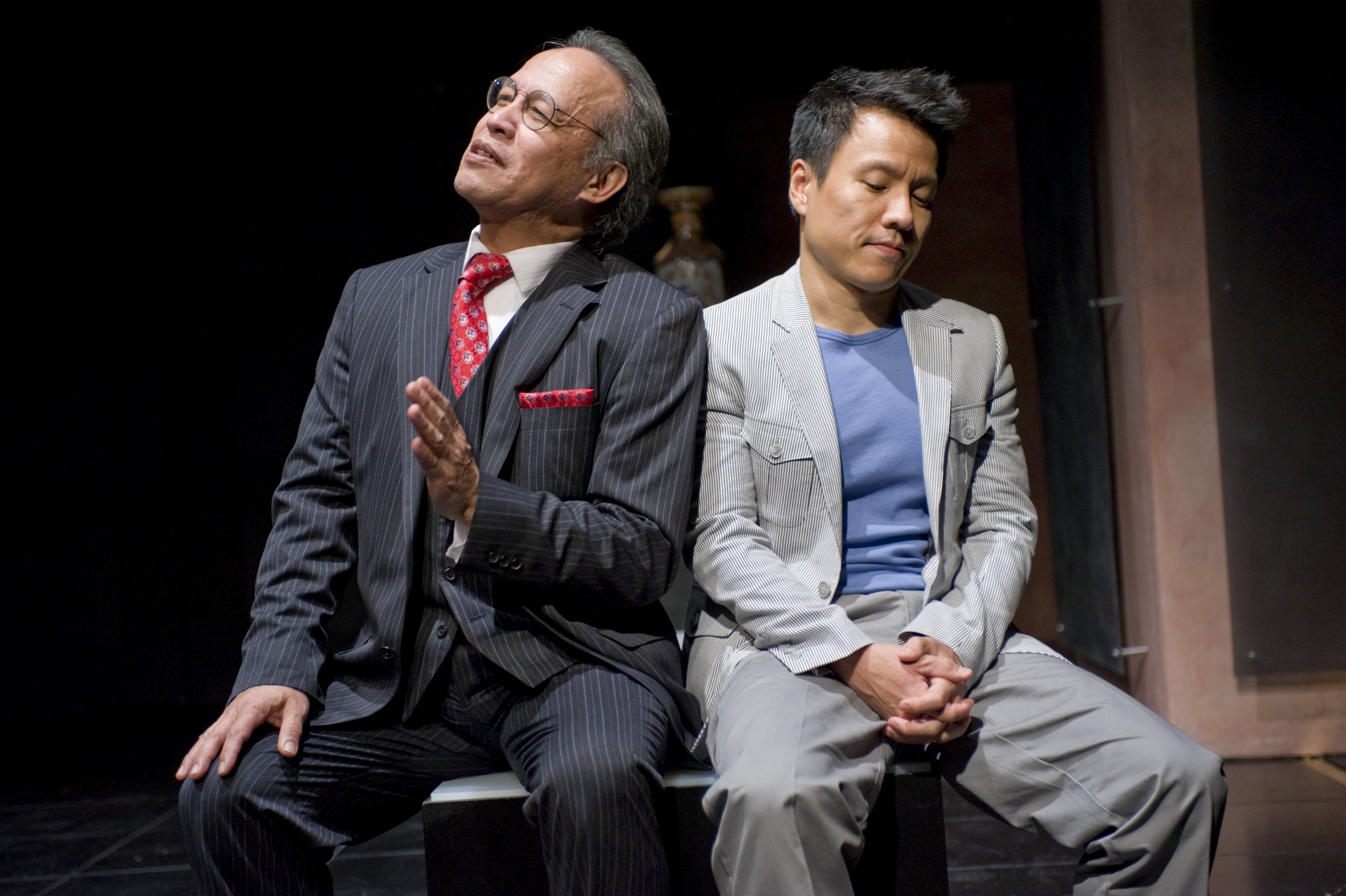
Imagine you’re the most famous Asian American playwright in the country. You’ve just led a massive, high-profile protest against a Broadway blockbuster for casting a white guy in an Asian role. You're the face of the movement. Then, a few weeks later, you accidentally do the exact same thing in your own show.
That is the premise of Yellow Face by David Henry Hwang.
It sounds like a bad fever dream, but for the fictionalized version of Hwang (often called "DHH"), it’s the beginning of a spiral into what he calls an "unreliable memoir." The play, which recently saw a major 2024 Broadway revival at the Todd Haimes Theatre starring Daniel Dae Kim, is basically a meta-commentary on how we talk about race, how we perform it, and how we often trip over our own feet while trying to be "correct."
The Miss Saigon Mess That Started It All
To get why Yellow Face is so biting, you have to look at the real-world history that David Henry Hwang is skewering. In 1990, the musical Miss Saigon was coming to Broadway. The production cast Jonathan Pryce, a white Welsh actor, as the Engineer—a character of Eurasian descent.
Pryce wore yellowface. He used eye prostheses and bronzing cream to look "more Asian."
Hwang was furious. He and actor B.D. Wong (famous for M. Butterfly and Law & Order: SVU) wrote letters to Actors' Equity. They argued that casting a white man in a specifically Asian role was an "affront" to the community. At first, the union actually banned Pryce from performing. But the producer, Cameron Mackintosh, pulled a massive power move: he threatened to cancel the entire $25 million Broadway transfer.
Eventually, the union caved. Pryce performed. He even won a Tony for it.
Yellow Face picks up the pieces of this humiliation. In the play, DHH tries to write a "correct" play called Face Value to protest the Miss Saigon casting. But in a moment of panicked casting, he hires Marcus G. Dahlman, a white actor he thinks is Asian because the guy has a "vibe" and a "look." When DHH realizes his mistake, he doesn't fire him. Instead, he tries to pass Marcus off as a "Siberian Jew"—claiming that since Siberia is in Asia, Marcus is technically Asian.
It's absurd. It’s also kinda painful because you can see how easily a person’s ego leads them into a web of lies.
Why Daniel Dae Kim’s 2024 Revival Hit Different
When Yellow Face first premiered at the Public Theater in 2007, it was a hit and a Pulitzer Prize finalist. But the 2024 Broadway production felt like it was hitting a culture that had finally caught up to Hwang’s cynicism.
Seeing Daniel Dae Kim—who most people know as the tough guy from Lost or Hawaii Five-O—play a neurotic, self-doubting version of David Henry Hwang was a masterstroke. Kim brought a frantic energy to the role. He wasn't playing a hero; he was playing a guy who is so obsessed with his reputation as a "role model" that he loses his soul.
The supporting cast in this revival also killed it. Francis Jue, who won a Tony for his performance, played HYH (Hwang’s father). His character provides the emotional weight of the show. While DHH is running around worrying about "representation," his father is a Chinese immigrant who loves the American Dream and, ironically, loves Miss Saigon. He doesn't see the "problem" the way his son does.
The Blurred Lines of Reality
Hwang calls this play a "mockumentary," and honestly, it’s hard to tell where the truth ends.
- The Scientist: The play incorporates the real-life case of Wen Ho Lee, a Taiwanese American scientist accused of espionage in 1999. It shows how "yellow peril" isn't just about theatre casting; it's about life and death.
- The Father: Henry Y. Hwang was a real person, a successful banker who faced a Senate investigation over campaign contributions. The play weaves his real legal troubles into the fictionalized narrative of DHH’s casting blunder.
- The Actor: Marcus Gee (the stage name Marcus Dahlman takes) becomes a popular activist for Asian Americans in the play, even though he's white. This creates a weird, uncomfortable question: Can you be a better representative of a community if you aren't actually part of it?
What This Play Gets Right About "Identity"
The title Yellow Face isn't just about white actors in makeup. It's about the "masks" everyone wears.
DHH is wearing the mask of a "community leader." Marcus is wearing the mask of an "Asian actor." The government officials are wearing the mask of "protectors of national security" while targeting people based on their last names.
Hwang is basically saying that race is a performance. We’re all just actors trying to figure out which script we’re supposed to be following. It’s a messy, uncomfortable idea. But in a world where we spend so much time arguing about "authenticity" on social media, Yellow Face feels like a cold bucket of water to the face.
It doesn't give you easy answers. It doesn't tell you that DHH is right or that Marcus is a villain. Instead, it leaves you with the image of two guys who have both, in their own way, become trapped by the very labels they tried to manipulate.
How to Engage with Yellow Face Today
If you’re looking to dive deeper into David Henry Hwang’s work or the themes of this play, here is how you can actually engage with it right now:
- Read the Script: Since the Broadway run has concluded, the best way to catch the nuances is to read the published text from Theatre Communications Group. Look for the "revised" versions that include the playwright’s notes on the 2024 production.
- Watch the PBS Broadcast: The Roundabout Theatre Company production starring Daniel Dae Kim was filmed for Great Performances on PBS. Check your local listings or the PBS streaming app to see if it’s currently available in their "Broadway's Best" collection.
- Compare to "M. Butterfly": To see the evolution of Hwang's thought, read or watch his 1988 masterpiece M. Butterfly. While Yellow Face is a satire about "performing" race in the modern world, M. Butterfly is a tragedy about how Westerners "perform" their fantasies of the East.
- Research the Wen Ho Lee Case: To understand the serious political stakes in the second half of the play, read My Country Versus Me by Wen Ho Lee. It provides the factual backbone for the "Operation Kindred Spirit" plotline in the show.
The genius of Yellow Face is that it makes you laugh at things that should probably make you scream. It’s a play about being wrong, being loud about it, and somehow trying to find the truth in the middle of a lie.



