You've probably heard the phrase tossed around during a heated election cycle, usually by someone's grandfather or a political pundit wearing a bowtie. Yellow Dog Democrat meaning isn't just about being a stubborn voter. It's about a level of brand loyalty that would make Apple or Coca-Cola jealous.
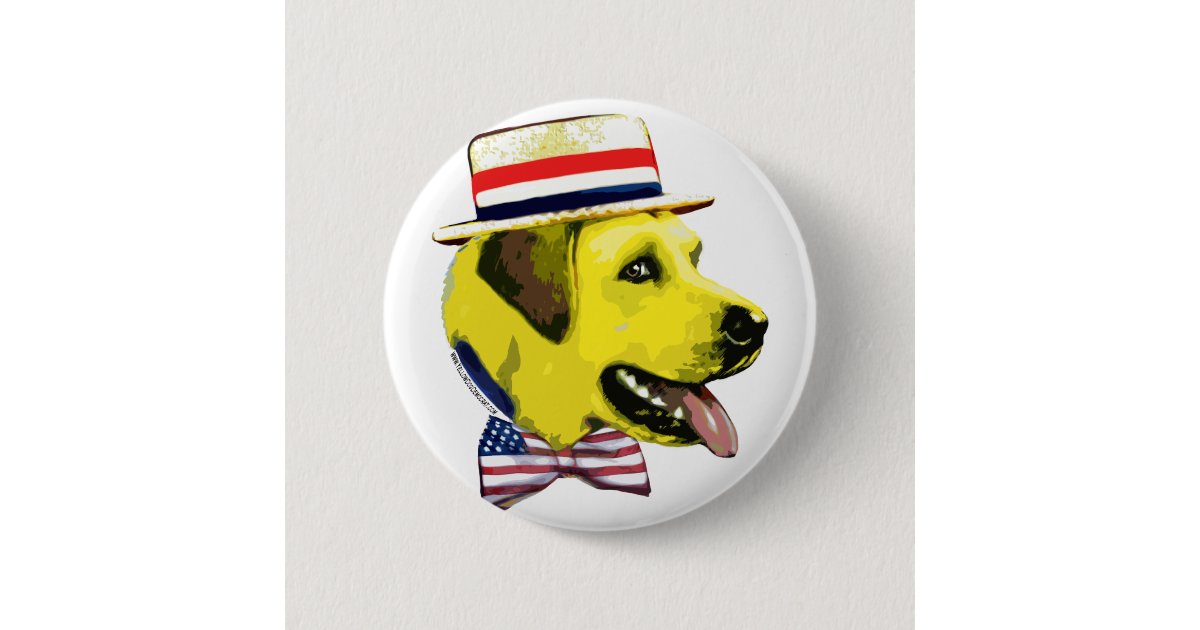
Basically, the term describes a voter who is so fiercely committed to the Democratic Party that they would vote for a "yellow dog" before they ever cast a ballot for a Republican.
It's a weird image. A literal dog on a ballot. But in the 19th and early 20th centuries, particularly across the American South, this wasn't a joke. It was a lifestyle. For generations, the "Solid South" meant that the Republican Party—the party of Lincoln—was essentially non-existent in local and state elections. If you wanted to have a say in how your town was run, you did it through the Democratic primary. By the time the general election rolled around, the choice was already made. You voted for the Democrat. Period.
Where did the "Yellow Dog" actually come from?
History is kinda messy. Most historians, including the folks at the Texas State Historical Association, trace the popularization of the term to the late 1800s. It wasn't meant to be an insult, though. It was a badge of honor.
Imagine a farmer in rural Alabama in 1928. To him, the Republican party represented the Reconstruction era and Northern interests. He might not even like the specific Democrat running for Congress that year. He might think the guy is a crook or a fast-talker. But compared to a Republican? He'd take the dog.
Senator J. Thomas "Tom-Tom" Heflin is often credited with giving the phrase its legs. During the 1928 presidential race, many Southern Democrats were horrified by their own nominee, Al Smith. Why? Because Smith was Catholic and he wanted to end Prohibition. That was a tough pill to swallow in the Bible Belt. Heflin, however, famously stuck to the party line. The sentiment was clear: a yellow dog is more trustworthy than any Republican alive.
It's actually a fascinating psychological study in tribalism. We talk a lot about "polarization" today like it's a brand new invention. It isn't. The Yellow Dogs were the original "vote blue no matter who" crowd, but their reasons were rooted in a very specific post-Civil War trauma and a deep-seated distrust of federal intervention.
The 1928 Election: The Ultimate Test
If you want to see the Yellow Dog Democrat meaning in action, look at 1928. Herbert Hoover was the Republican. Al Smith was the Democrat.
Hoover was a dry, efficient engineer. Smith was a cigar-chomping New Yorker who sounded like a street kid and hated the ban on alcohol. For a rural, Protestant Southerner, Smith was the "other" in every way possible. Yet, in states like Georgia and South Carolina, the Democratic machine held firm.
They didn't vote for Smith because they loved him. They voted for him because the alternative was unthinkable. This created a weird political vacuum. Because the South was so "solid," the real battles didn't happen in November. They happened in the Democratic primaries. If you won the primary, you were the Congressman. That gave certain Southern Democrats immense power in Washington for decades.
Think about guys like Sam Rayburn or Lyndon B. Johnson. They grew up in this world. They understood that as long as you had that "D" next to your name, you had a job for life. But it also meant the party had to be a "big tent." It had to hold together liberal reformers from the North and staunch segregationists from the South.
The slow death of the Southern Yellow Dog
Things started to get shaky in 1948. Strom Thurmond and the "Dixiecrats" walked out of the Democratic National Convention because Harry Truman wanted to integrate the military.
That was the first crack in the yellow dog's leash.
By the time the 1960s rolled around, the Yellow Dog Democrat meaning began to shift. Lyndon Johnson famously predicted that by signing the Civil Rights Act of 1964, the Democrats would "lose the South for a generation." He was right, though it took a bit longer than a single generation.
The "Southern Strategy" employed by Richard Nixon and later refined by Ronald Reagan gave these voters a new home. They became "Reagan Democrats." These were people who still felt like Democrats in their bones—maybe they were union members or relied on Social Security—but they felt the national party had left them behind on social issues.
Eventually, the "Yellow Dog" became an endangered species. In the 1990s, you still saw them in places like East Texas, Arkansas, and North Carolina. They were the "Blue Dogs."
Blue Dogs vs. Yellow Dogs: What’s the difference?
You'll hear "Blue Dog" a lot too. Don't mix them up.
A Yellow Dog is about loyalty. They vote for the Democrat regardless of the platform because they believe the party is the only legitimate vehicle for governance.
A Blue Dog is about ideology. The term was coined in the 90s (specifically 1995) by members of Congress like Glen Browder of Alabama. They said they were "choked blue" by the extreme liberals in their own party. Blue Dogs are fiscal conservatives. They want balanced budgets and a strong military.
By the 2010s, the Blue Dog Coalition in Congress had shrunk to almost nothing. The middle ground just... disappeared.
Does the Yellow Dog still exist in 2026?
Honestly, the term has migrated. It's no longer a Southern thing.
Today, you might find a Yellow Dog in a deep-blue enclave in Brooklyn or a Republican equivalent (let's call them Red Dogs) in rural Wyoming. The modern Yellow Dog Democrat meaning has evolved into a commentary on hyper-partisanship.
When people say "I’d vote for a ham sandwich before I’d vote for the other side," they are channelng that 19th-century energy. It’s the idea that the "other side" isn’t just wrong on policy; they are fundamentally dangerous to the country.
But there’s a downside to this.
When voters are "yellow dogs," politicians don't have to work for their votes. If a district is +30 for one party, the representative has no incentive to compromise or even show up for town halls. They just have to survive a primary. This is why we see so much gridlock in D.C. now. The "yellow dog" mentality creates safe seats, and safe seats create politicians who are more afraid of being "primaried" by a radical than they are of losing a general election.
Misconceptions about the "Dog"
One big mistake people make is thinking these voters were all "liberal." Not even close.
For a hundred years, the most conservative people in the country were Yellow Dog Democrats. They were the "Bourbon Democrats." They were pro-business, anti-tax, and socially traditional. They just happened to hate the GOP because of history.
It’s a reminder that party labels are often just tribal markers rather than a list of beliefs.
Why you should care about this history
Understanding the Yellow Dog Democrat meaning helps you decode the modern electoral map. Why is Georgia suddenly a swing state? Because the old "Yellow Dog" generation has mostly passed away, and the new residents—many moving from other states—don't have those ancestral ties to the party. They are "persuadable" in a way that voters in 1950 weren't.
It also explains the "incumbency advantage." Even today, many voters will stick with a name they know, even if they aren't thrilled with the results, simply because the cognitive leap to the "other" party is too great.
Actionable Insights for the Modern Voter
If you find yourself leaning toward a "Yellow Dog" mentality, or if you're trying to talk to someone who does, here are a few things to keep in mind:
- Check the Primary: In many parts of the U.S., the general election is a formality. If you live in a "safe" district, your most impactful vote happens in the primary. That is where you actually pick the direction of the party.
- Look Beyond the Letter: Try to find the candidate's stance on three specific local issues that affect your daily life (like property taxes, road maintenance, or school board funding). Sometimes the "Yellow Dog" choice isn't actually the one doing the work on the ground.
- Acknowledge the Tribe: Understand that for many people, voting is an expression of identity, not a policy white paper. You can't argue someone out of their identity with statistics.
- Research "Split-Ticket" Trends: Look at how many people in your state vote for a Governor from one party and a Senator from another. This is becoming rarer, but it’s the best indicator of whether the "Yellow Dog" era is truly over in your area.
The yellow dog might be an old, mangy metaphor, but the tribal loyalty it represents is the most powerful force in American politics. Whether it's healthy for a democracy to have millions of people who would vote for a literal canine over a human opponent is a question we're still trying to answer every November.
To dig deeper into how these voting blocks shifted, you can look up the "Realignment of the 1960s" or study the 1928 election results by county. It’s a wild ride through American history that explains exactly why our map looks the way it does today.