Yellow diamonds aren't just for the red carpet anymore. For a long time, if you wanted a "fancy color" diamond, you were basically looking at something that cost as much as a small island. But things have changed. Yellow diamond engagement rings are becoming the go-to for people who want something that feels personal but doesn't feel like a costume. It’s a weird balance to strike. You want it to be unique. You want it to stand out. Yet, you don't want it to look like a piece of plastic.
Honestly, the appeal is simple: they look like sunshine. While a white diamond is the classic "safe" bet, a yellow stone has this warmth that hits differently in natural light. It’s vibrant. It’s loud without being tacky. But there is a massive amount of misinformation out there about what makes a yellow diamond actually good. Most people walk into a jewelry store and think "yellow means cheaper because it's not clear." That is a huge mistake. In the world of GIA grading, there is a massive gulf between a "low-quality white diamond" and a "fancy yellow diamond."
Understanding the Grades (It's Not Just a Bad White Diamond)
If you’re looking at yellow diamond engagement rings, you have to understand the pivot point. In standard white diamonds, the scale goes from D to Z. A "D" is colorless—perfectly clear. As you move toward Z, you get these faint, kinda muddy yellowish or brownish tints. These are generally considered less valuable. They look "off."
But then, something cool happens.
Once you pass "Z," you enter the "Fancy" range. This is where the color is intentional. It’s saturated. The GIA (Gemological Institute of America) starts using terms like Fancy Light, Fancy, Fancy Intense, and Fancy Vivid. A Fancy Vivid yellow diamond can actually be significantly more expensive than a high-quality white diamond of the same size. Why? Because they are rare. Only about one in every 10,000 carats of mined diamonds is a natural fancy color. That’s a crazy statistic when you think about how many rings are sitting in mall windows right now.
Nitrogen is the secret ingredient here. When nitrogen atoms replace carbon atoms in the diamond’s crystal lattice, they absorb blue light and reflect yellow. The more nitrogen, the deeper the yellow. It’s a literal freak of nature.
The Celebrity Effect and Why They’re Everywhere Now
You can't talk about yellow diamond engagement rings without mentioning the people who made them famous. We’ve seen them on everyone from Jennifer Lopez to Heidi Klum. But the most iconic one in recent memory has to be the Tiffany Diamond worn by Beyoncé and Lady Gaga. It’s a massive 128.54-carat cushion-cut stone. While nobody is walking down the aisle with a 128-carat rock on their finger, that "canary" look trickled down into the mainstream.
It changed the perception.
People stopped seeing yellow as a flaw. They started seeing it as a choice. A bold one.
Picking the Right Metal is Everything
This is where most people mess up. If you put a yellow diamond in a platinum or white gold setting, you’re basically fighting the stone. The silver-toned metal creates a contrast that can actually make a "Fancy Light" yellow diamond look washed out or even a bit dirty.
Expert tip: Use yellow gold for the basket.
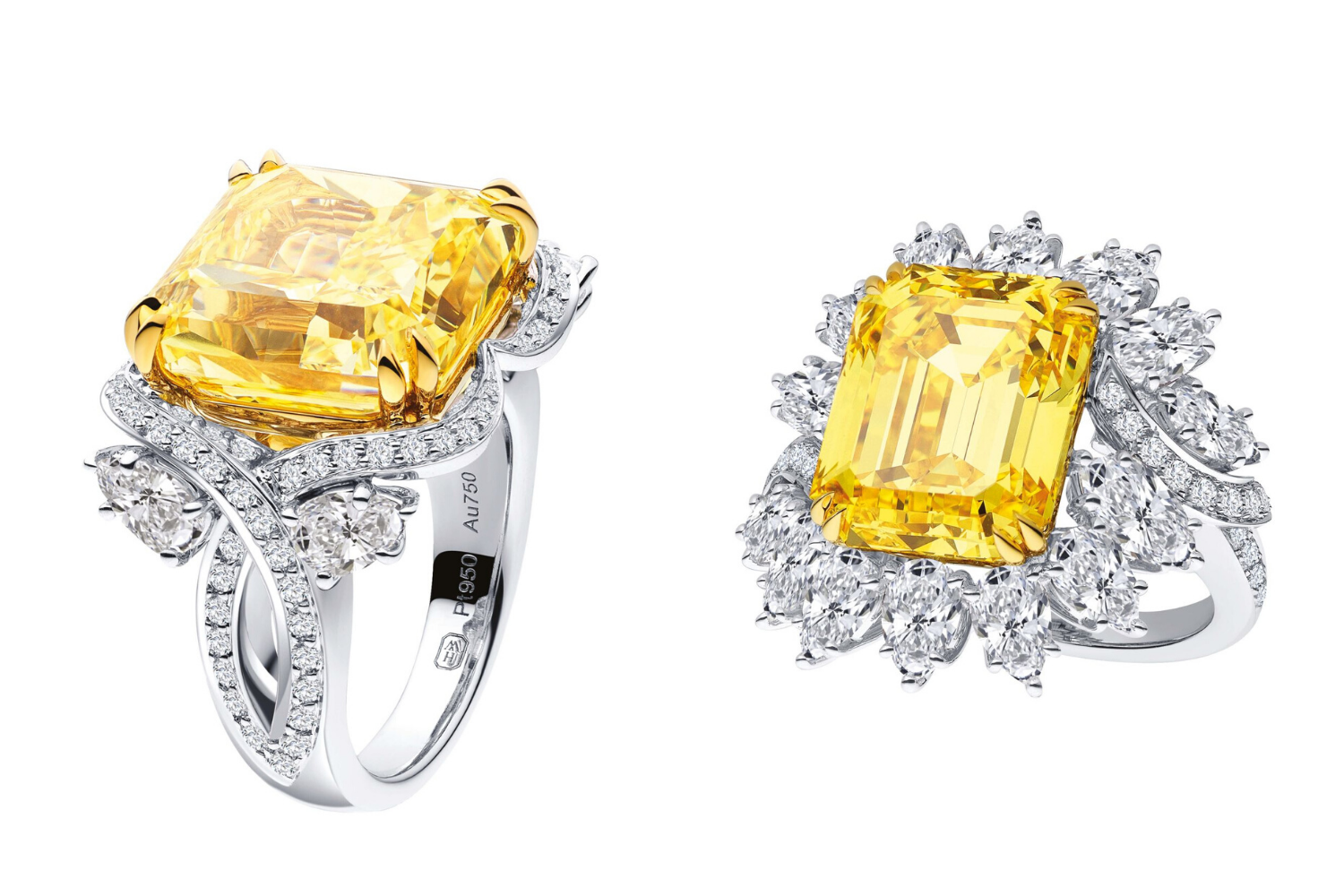
Even if you want a platinum band, you should have the "head" (the part holding the diamond) made of 18k yellow gold. This acts like a secret filter. The yellow metal reflects through the stone, making the color appear deeper and more saturated than it might actually be. It’s a legal "cheat code" in the jewelry world. It lets you buy a slightly lower color grade—saving thousands—while still getting that "Intense" look.
But don't go too far. If you put a very pale yellow diamond in a heavy rose gold setting, the colors might clash and look muddy. You want harmony, not a fight.
The "Canary" Myth
You’ll hear the word "Canary" a lot. Just a heads up: "Canary" isn't an official technical term. It’s a marketing word. No GIA report will ever say "Canary Yellow." It’s just a way for jewelers to describe a stone that is very bright and very yellow, usually in the Fancy Intense or Fancy Vivid range.
If a jeweler is charging you a premium specifically because they called it a "Canary" diamond, ask to see the GIA certificate. The certificate is the only thing that matters. It’s the "receipt" of the diamond’s soul. It tells you if the color is natural or if it’s been messed with in a lab.
Lab-Grown vs. Natural Yellow Diamonds
We have to talk about the elephant in the room. Lab-grown diamonds.
Technically, they are chemically identical to mined diamonds. If you’re on a budget, lab-grown yellow diamond engagement rings are a game changer. You can get a 2-carat Fancy Vivid yellow lab diamond for a fraction of the price of a natural one. For some, the "natural" aspect is everything—the idea that the earth made this over billions of years. For others, the lab-grown option allows them to get the "look" without the five-figure price tag.
There is no "right" answer here. It’s about what you value. However, be aware that natural fancy color diamonds hold their value much better over time because of their extreme rarity. Lab diamonds are being produced in higher volumes every year, which usually means the resale value is pretty much zero. If this is a "forever" ring and you don't care about resale, lab is great. If you see it as an heirloom or an investment, natural is the move.
Shape Matters More Than You Think
With white diamonds, the "Round Brilliant" is king. It’s designed to reflect white light. But with yellow diamonds, the round cut is actually kinda bad. It’s too good at reflecting light, which can actually "dilute" the color.
You want "Fancy Shapes."
- Radiant Cut: This is arguably the best cut for yellow diamonds. The facet pattern is designed to bounce light around inside the stone, which intensifies the yellow hue.
- Cushion Cut: These have a soft, romantic feel. They hold onto color really well and give that vintage, "old money" vibe.
- Pear and Oval: These are great for making the finger look longer, and they tend to show off color saturation near the tips.
If you see a round yellow diamond, it’s probably going to look lighter than a radiant cut of the same color grade. That’s just physics.
The Cost Factor: What to Expect
Let's get real about the money. A 1-carat, natural, Fancy Yellow diamond (SI1 clarity) will likely run you somewhere between $4,500 and $7,000 for the stone alone. If you jump up to "Fancy Vivid," that price can easily double or triple.
Compare that to a 1-carat D-color (colorless) diamond, which might cost $6,000 to $9,000.
In the middle ranges (Fancy Light), you might actually find that yellow diamonds are cheaper than high-end white diamonds. It’s a weird market. It’s all about the specific intensity. Once you hit that "Vivid" mark, though, the prices skyrocket because they are just so hard to find in nature.
Setting the Scene: Beyond the Solitaire
While a single stone is classic, a lot of people are opting for "Halo" settings with yellow diamond engagement rings. But here’s the trick: use white diamond melee (the tiny diamonds) in the halo to surround the yellow center stone. The contrast makes the yellow "pop" like crazy. It’s like putting a frame around a painting. It defines the color.
Another popular choice is the "Three-Stone" design. Usually, this features a yellow center diamond with two white side diamonds (often trapezoid or half-moon shapes). This is a very "Harry Winston" look. It’s sophisticated. It says you know what you’re doing.
Real World Advice for the Buyer
Don't buy a yellow diamond online without seeing a video. Seriously.
The GIA grade tells you the category, but it doesn't tell you the character. Two diamonds can both be graded "Fancy Yellow," but one might have a slight green undertone (which can look electric and cool) and the other might have an orange undertone (which looks warm and rich). You need to see how the stone moves.
Also, check the fluorescence. In white diamonds, strong blue fluorescence is often seen as a negative because it can make the stone look milky. In yellow diamonds, blue fluorescence can actually neutralize the yellow, making it look duller. You generally want "None" or "Faint" fluorescence for a yellow stone.
How to Care for Your Ring
Yellow diamonds hide dirt a little better than white ones, but they still need love. If the "basket" underneath the stone gets dusty or oily, it will block the light and kill that yellow glow.
- Soak it in warm water with a bit of mild dish soap.
- Use a very soft toothbrush to get under the stone.
- Dry it with a lint-free cloth.
- Avoid harsh chemicals.
Actionable Steps for Finding the Perfect Ring
If you’re ready to pull the trigger, don't just walk into a big-box mall jeweler. They usually don't carry a wide selection of fancy colors. You want a specialist.
- Step 1: Define your budget and your priority. Do you want a big stone that’s a lighter yellow, or a smaller stone that’s "Vivid"? You usually have to pick one.
- Step 2: Insist on a GIA report. Don't accept "in-house" grading or lesser-known labs for fancy colors. The GIA is the gold standard for color accuracy.
- Step 3: Look at the stone in different lighting. Check it under the jeweler’s bright lights, but also take it over to a window and look at it in natural daylight. That’s where the "true" yellow comes out.
- Step 4: Choose the metal wisely. Remember the 18k yellow gold basket trick. It’s the difference between a ring that looks "okay" and one that looks "breathtaking."
Yellow diamonds are a statement. They aren't for the person who wants to blend in. They are for the person who wants a piece of jewelry that feels alive. Whether it’s a tiny 0.5-carat accent or a 5-carat showstopper, the warmth of a yellow diamond is something you just don't get with any other gemstone. It’s classic, but with a twist. And honestly, that’s exactly what an engagement ring should be.